


The outline of the 15th Five-Year Plan (2026-2030) for national economic and social development aims to basically establish a clean, low-carbon, secure and efficient new energy system.
Building a new energy system is a critical pathway to making China strong in the energy sector, a key measure for achieving carbon peaking and carbon neutrality, and a priority area for developing and expanding new quality productive forces, said Lyu Wenbin, director and research fellow at the Energy Research Institute of the National Development and Reform Commission, when hosting People's Daily's "Stories of High-Quality Development."
Lyu said the new energy system does not mean abandoning coal or oil and gas. Rather, it is being built step by step on the foundation of the traditional energy system, with non-fossil fuels as the main source of supply and fossil fuels serving as a backstop for energy security. A new power system provides key support, and energy use is guided by green, smart and conservation-minded principles, forming a clean, low-carbon, secure and efficient energy system.
Building a new energy system requires a systemic reshaping of the entire chain, from energy production, processing and conversion, and transportation to end-use consumption.
On the production side - Secure a solid foundation and diversity of the energy mix
Shengli Oilfield in Dongying, east China's Shandong Province, sits on complex geological formations, and after 65 years of extraction, its shallow oil reserves have grown increasingly scarce. To secure the foundation of the country's oil and gas supply, Jiang Long, senior expert for shale oil development research at Sinopec's Shengli Oilfield branch, decided to lead his team in an all-out effort to tap shale oil more than 3,500 meters underground.
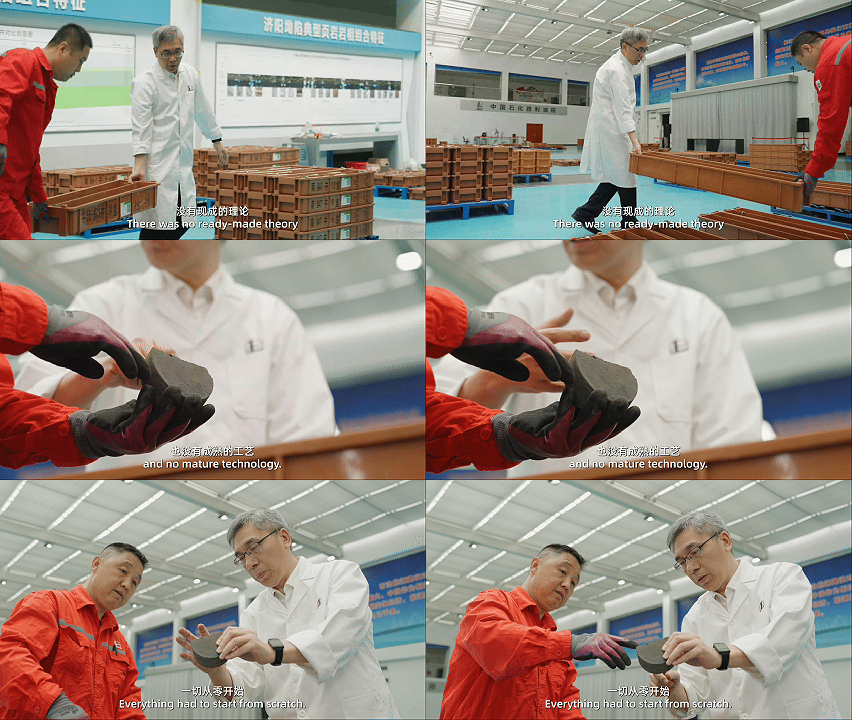
The team measured 20,000 meters of core samples, conducted over 100,000 laboratory analyses and broke through the global lower limit of maturity for shale oil development. Subsequently, the drilling period for wells at 6,000-meter depth was cut from 133 days to as fast as 17 days. Today, cumulative output at Shengli Oilfield's Jiyang Shale Oil Demonstration Zone has topped 2 million tonnes, with newly added proven reserves of 327 million tonnes. Built from scratch and carried from theory into practice, it amounts to a whole new Shengli Oilfield.
Meanwhile, in the Gobi Desert in Kuqa city, northwest China's Xinjiang Uygur Autonomous Region, with no precedent to draw on, China built its first 10,000-tonne-scale photovoltaic green hydrogen project, adding a new dish to the energy rice bowl.
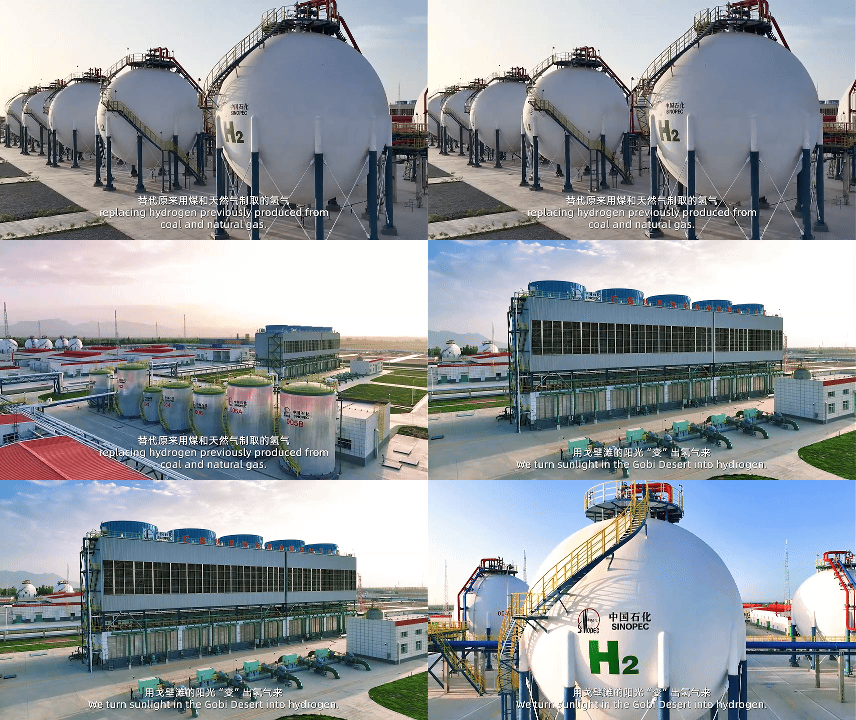
An intelligent control system has solved the instability of photovoltaic power generation. Whatever amount of power the solar panels generate, the system automatically matches it with the hydrogen production load. To date, the project has operated safely and smoothly for over 1,100 days.
From a drop of oil to a wisp of hydrogen, one is old and one is new; one provides stability, the other drives progress. This contrast captures the shift in the supply structure. And this shift is not only important but urgent, said Lyu.
According to China's 15th five-year plan for the development of a new energy system, non-fossil energy should account for 25 percent of China's energy consumption by 2030, and wind and solar power are to make up more than 50 percent of installed generation capacity, becoming the mainstay of the power mix. The share of non-fossil energy in electricity generation should reach 50 percent, making it the main source of electricity.
On the transmission side - Wind power from afar lights up China's 'city of the future'
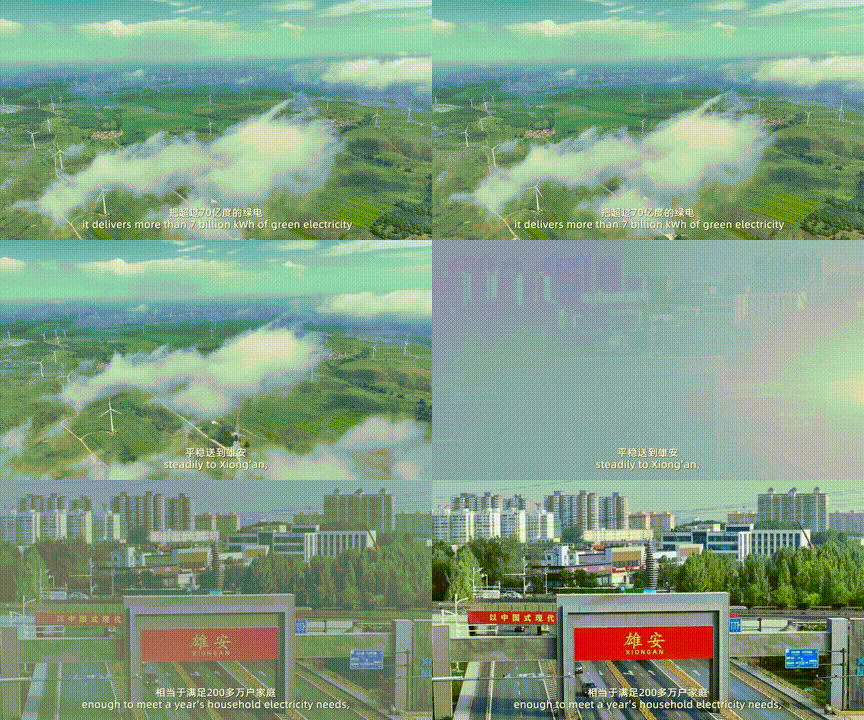
Jucun substation, hidden beneath a city park, links green wind and solar power from Zhangbei county with tens of thousands of households in the Xiong'an New Area, serving as the power hub for the 130,000 residents there.
Yet wind and solar power are inherently variable, making the grid less stable. How can that green electricity be reliably taken up and precisely delivered to users?
On the generation side, ultra-high-voltage controllable shunt reactor technology acts like a sentinel guarding the transmission corridor, holding voltage steady. It monitors the system in real time and responds as soon as voltage becomes unstable, smoothing out fluctuations instantly. Every year it delivers more than 7 billion kWh of green electricity to Xiong'an.
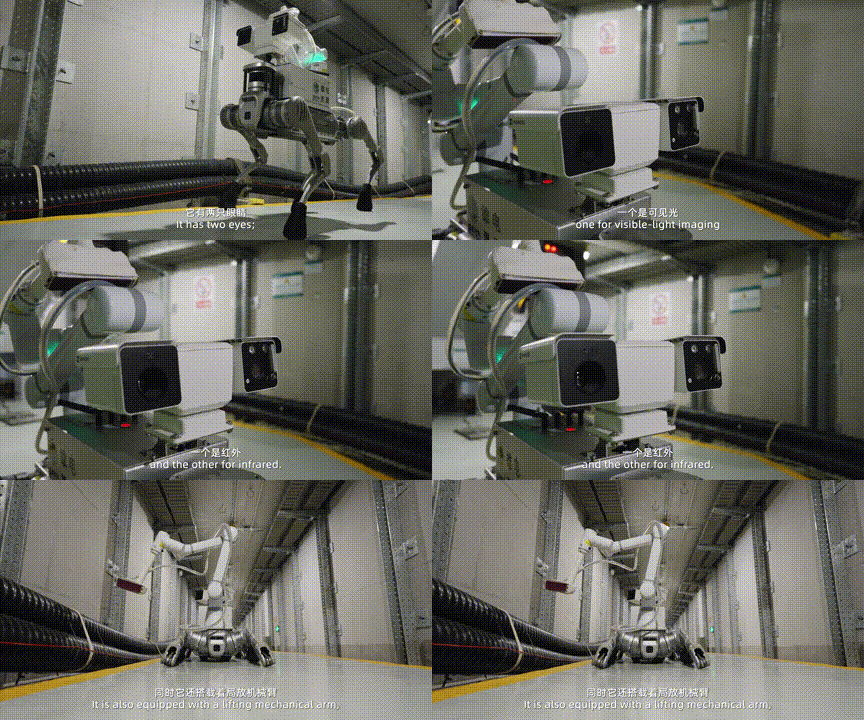
On the consumption side, an intelligent "brain" picks up on changes in downstream demand as they happen. It can also detect and pinpoint outages automatically.
From building the power station, to bringing green electricity into the grid, to making the system smarter, the transformation of a single substation reflects the central challenge of building a new power system: how to coordinate generation, the grid, demand and storage. Unlike traditional power systems, in which generation follows demand, the new power system integrates generation, grid, demand and storage, with different energy sources complementing one another. It ensures that green electricity can be generated, taken up by the grid and put to good use at the point of consumption, making it a key avenue for implementing the new energy system, Lyu said.
On the consumption side - PV panels and tiles help south China island achieve zero-carbon status
A forum with 1,000 participants generates carbon emissions from conference screens, guest room air conditioners and restaurant kitchens. How can all of it be brought to zero?
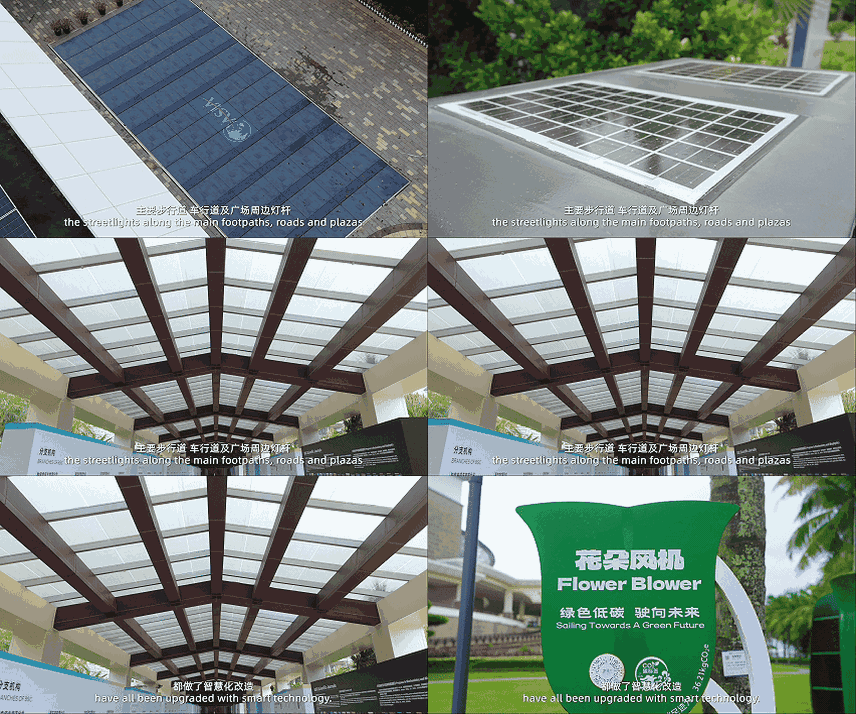
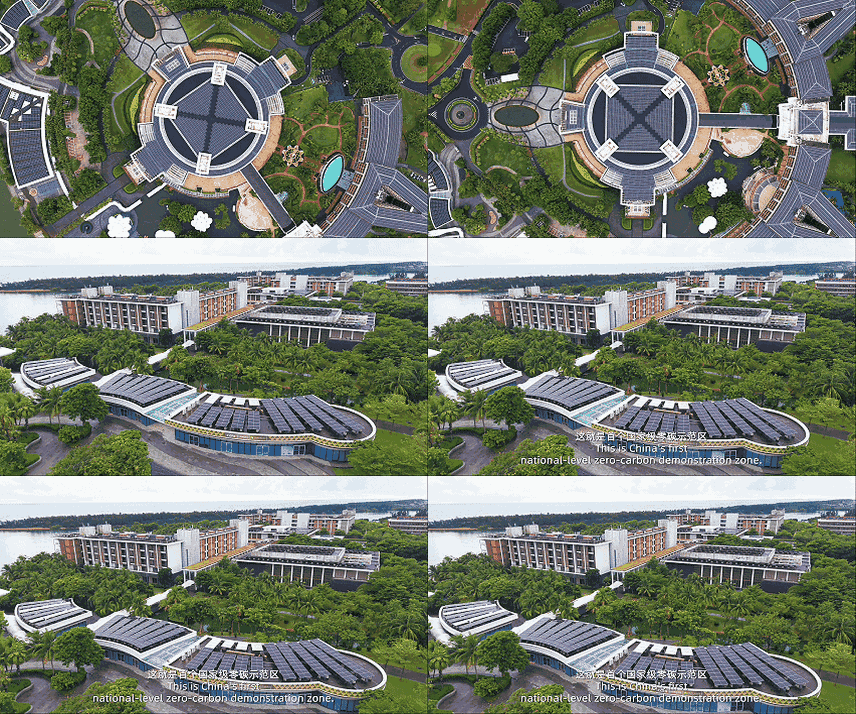
At China's first national-level zero-carbon demonstration zone, located on Dongyu Island in Boao town, Qionghai city, south China's Hainan Province, green energy has been built into every brick and tile. By balancing what goes out against what comes in, carbon balance has been achieved.
Transportation is a key part of green energy use. On Yuanyang Avenue, 66 streetlights can generate their own solar power and dim automatically to save electricity. A total of 204 flexible EV chargers are in place to keep the island's new energy vehicles charged with green power. From the moment guests set foot on the island, they have access to green power everywhere.
A few kilometers away is an agrivoltaic power station. Solar panels sit on top of the greenhouses, with Chinese medicinal herbs and vegetables growing underneath. It sends nearly 28 million kWh of green electricity to the island each year. The shuttle buses running around the island and the ferries crossing the water have all given up fossil fuels for electric power.
Efforts are made to expand supply on one side and curb demand on the other. Adding up the year's totals, the island not only reaches net-zero carbon emissions but goes beyond, into negative emissions.
Lyu said that China has entered a critical stage in reaching peak carbon emissions and accelerating the green transformation of economic and social development across the board. It is imperative to rely on innovation in policy, technology and development models to achieve breakthroughs. The national-level zero-carbon demonstration zone in Boao has achieved "zero-carbon operation" through renovation and upgrading, providing replicable green experience for zero-carbon management in other regions.
From generation at the source, to supply and distribution, and finally to consumption at the end, these three real-life examples together form the full chain of building a new energy system.
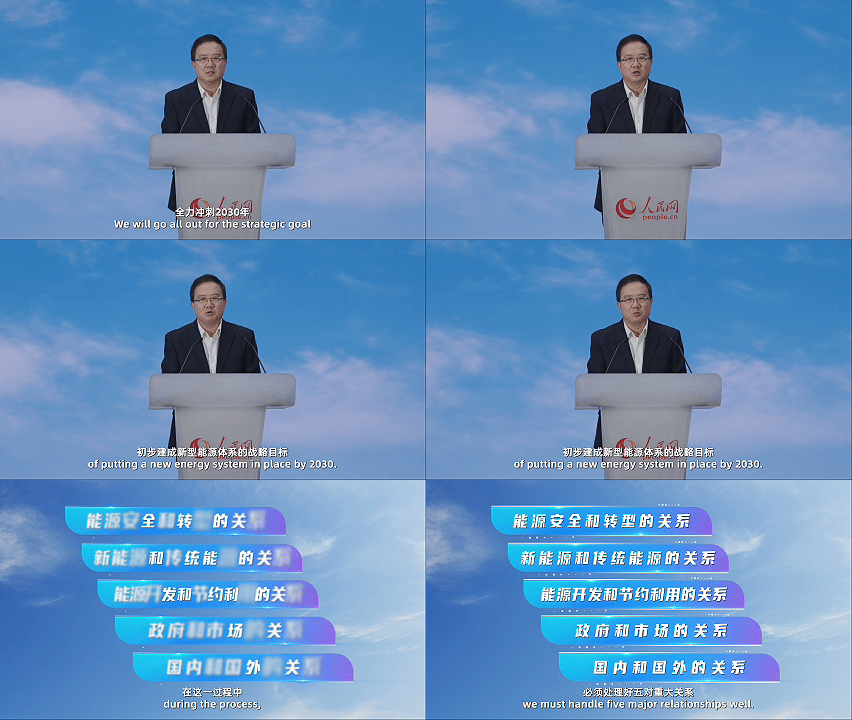
The 15th Five-Year Plan period will be a crucial stage for laying the foundations of this work, Lyu said. China will keep raising the share of new energy in supply, push forward the clean and efficient use of coal, move faster to build a secure and resilient new power system, and drive the green, low-carbon transition in energy use across the board. It will concentrate on breakthroughs in core energy technologies, build up strength in energy science and technology, and keep refining the national unified electricity market and price regulation mechanisms to better suit the new energy system. The country will go all out for the strategic goal of initially putting a new energy system in place by 2030, Lyu said.