


Questioning death: Cell biologist Yuan Junying's scientific quest
What if cell death, rather than being a passive consequence of injury or starvation, were governed by precise molecular instructions?
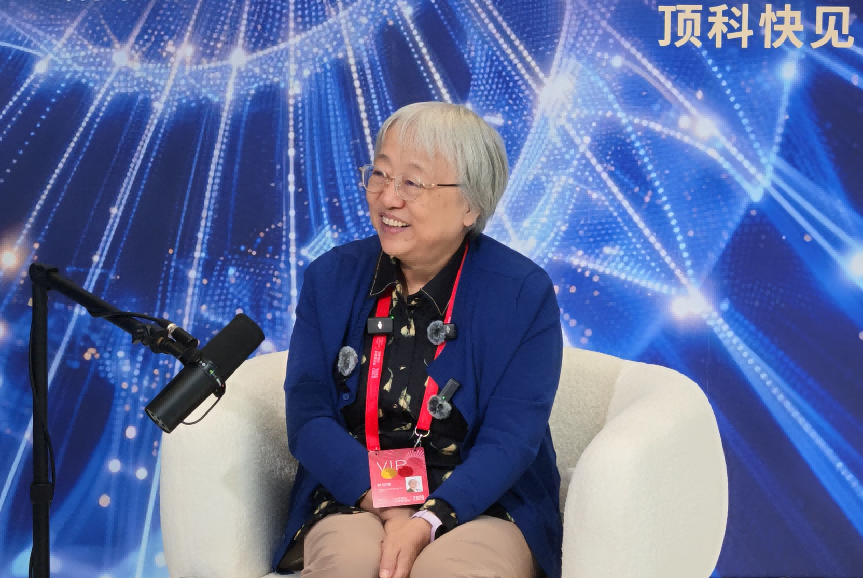
Yuan is interviewed by People's Daily. (Photo: Luo Danyangzi)
The scientist who would spend more than four decades exploring that question once worked at a cotton mill in Shanghai.
Yuan Junying left the factory in 1977, after years of self-study won her a place at Fudan University. Today, she is recognized as a pioneer in the study of cell death, whose work has helped open new avenues for disease treatment.
"How could it be boring? I find research itself fascinating. It's like solving a puzzle," Yuan replied when asked whether research ever becomes tedious.
In 2026, she received the World Laureates Foundation Prize in Life Science or Medicine, adding to a series of honors recognizing her contributions to the study of cell death.
A question others had overlooked
As a graduate student at Harvard in the 1980s, Yuan attended lectures by leading physicians on neurodegenerative diseases, expecting to learn what caused them. What surprised her was how little was actually known about the mechanisms behind these conditions.
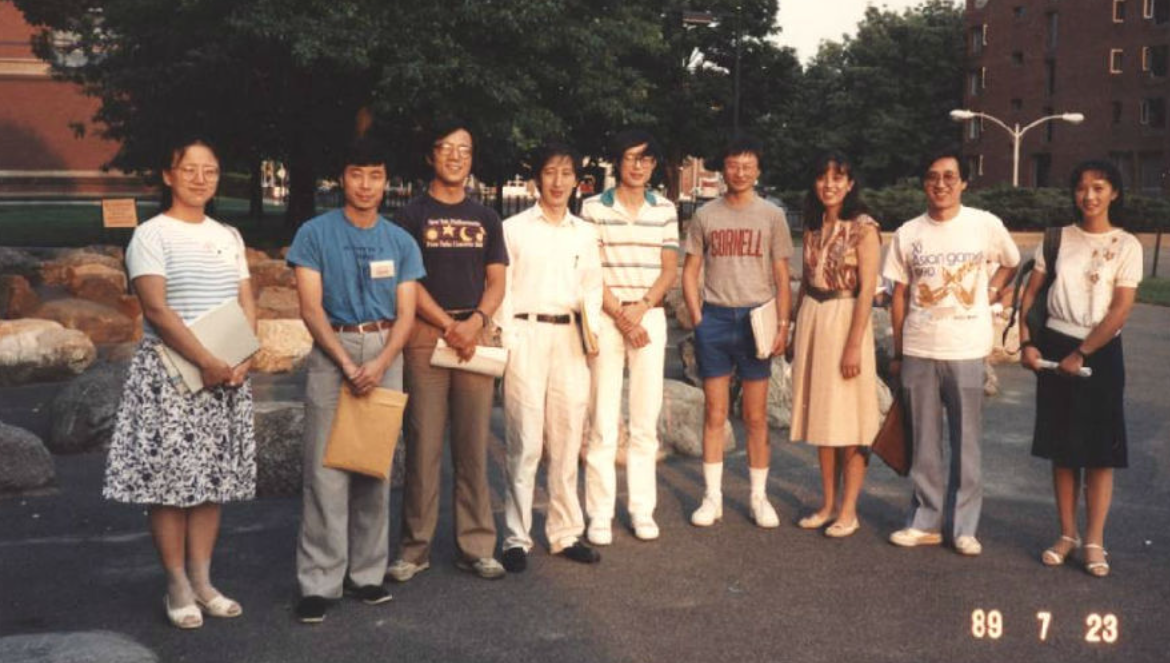
Yuan (far left) with her classmates at Harvard University (Source: Fudan University School of Life Sciences)
"All they could tell the patient was which way they were going to die," she recalled. "And if I were the patient, I really wouldn't care which way it was; they were all pretty bad."
Two observations deepened Yuan's interest in the subject: patients with neurodegenerative diseases lose specific groups of neurons, while up to half of the neurons produced during development are eliminated as the nervous system takes shape.
Yuan found this explanation difficult to accept. If the nervous system developed according to an orderly program, why should the death of so many cells be regarded as a random process?
She took the question to professors, but received little encouragement. One prominent professor told her that cell death could not be regulated. Undeterred, Yuan continued to pursue the question. Years later, when they revisited the conversation, he admitted that he had been wrong.
Yuan joined Robert Horvitz's laboratory at MIT, where researchers had identified two genes, ced-3 and ced-4, as key regulators of programmed cell death in the tiny worm C. elegans. Building on this work, Yuan helped establish how the molecular machinery of apoptosis operates in mammals and showed that this machinery is remarkably conserved across species.
But Yuan was not content to stop there. Another form of cell death, necrosis, had traditionally been regarded as an uncontrolled response to injury and remained poorly understood.
As apoptosis drew researchers around the world, Yuan turned to whether necrosis, too, could be regulated. "I could have ridden the wave for a while," she said. "But I felt this was a question I could not sidestep."
Using chemical biology, she and her collaborators discovered Necrostatin-1 (Nec-1), a small molecule that blocks this process. Their work helped establish the concept of necroptosis — a form of cell death that, contrary to earlier assumptions, is regulated by specific molecular mechanisms. In 2008, further research identified RIPK1 as a key target of Nec-1.
The findings showed that even forms of cell death once thought to be uncontrolled could be regulated — and potentially targeted by drugs.
Curiosity, on her own terms
"That's just my habit," Yuan said. "Like cooking, I don't really like doing the same thing as everyone else. If everyone is crowding into the same area, I want to find a new path."
When she worked in the United States, she often invited students and friends over, experimenting with recipes that blended Chinese and Western flavors. "I can't really say I have a signature dish now, because I'm always trying new recipes," she said.
Li Yang, who has worked in Yuan's group for a decade, calls her a "high-energy research girl." What has influenced him most, Li Yang says, is her principle of finishing each day's work on the same day.
Yuan can settle down to work almost anywhere, giving a task her full attention. "I think research is actually a profession particularly well suited to women," she said. "You can write papers and read literature while sitting beside your children as they take piano lessons or play soccer." That's what she did when her children were young.
The scientific world can be full of distractions, from pressure to produce quick results to the temptation to follow fashionable topics. "Decide what you genuinely want to do, do it well, and don't worry too much about how others judge you," she tells her students. "Believe in yourself."
Building bridges across disciplines
In 2012, Yuan helped establish the Interdisciplinary Research Center on Biology and Chemistry at the Chinese Academy of Sciences' Shanghai Institute of Organic Chemistry. She returned to Shanghai full-time in 2020 to lead the center.
Yuan's own research showed her why collaboration across disciplines was essential. Identifying a biological process or target is one task; developing a small molecule that can act on it is another.
"We are biologists," Yuan said in an earlier interview. "If we want to work with small molecules, we definitely need to collaborate with chemists."
She describes the center's guiding principle as creating a "critical mass" of expertise: bringing researchers from different disciplines together so they can tackle problems from multiple angles.
As a Chinese proverb she often quotes puts it, "Stones from other mountains can serve to polish jade."
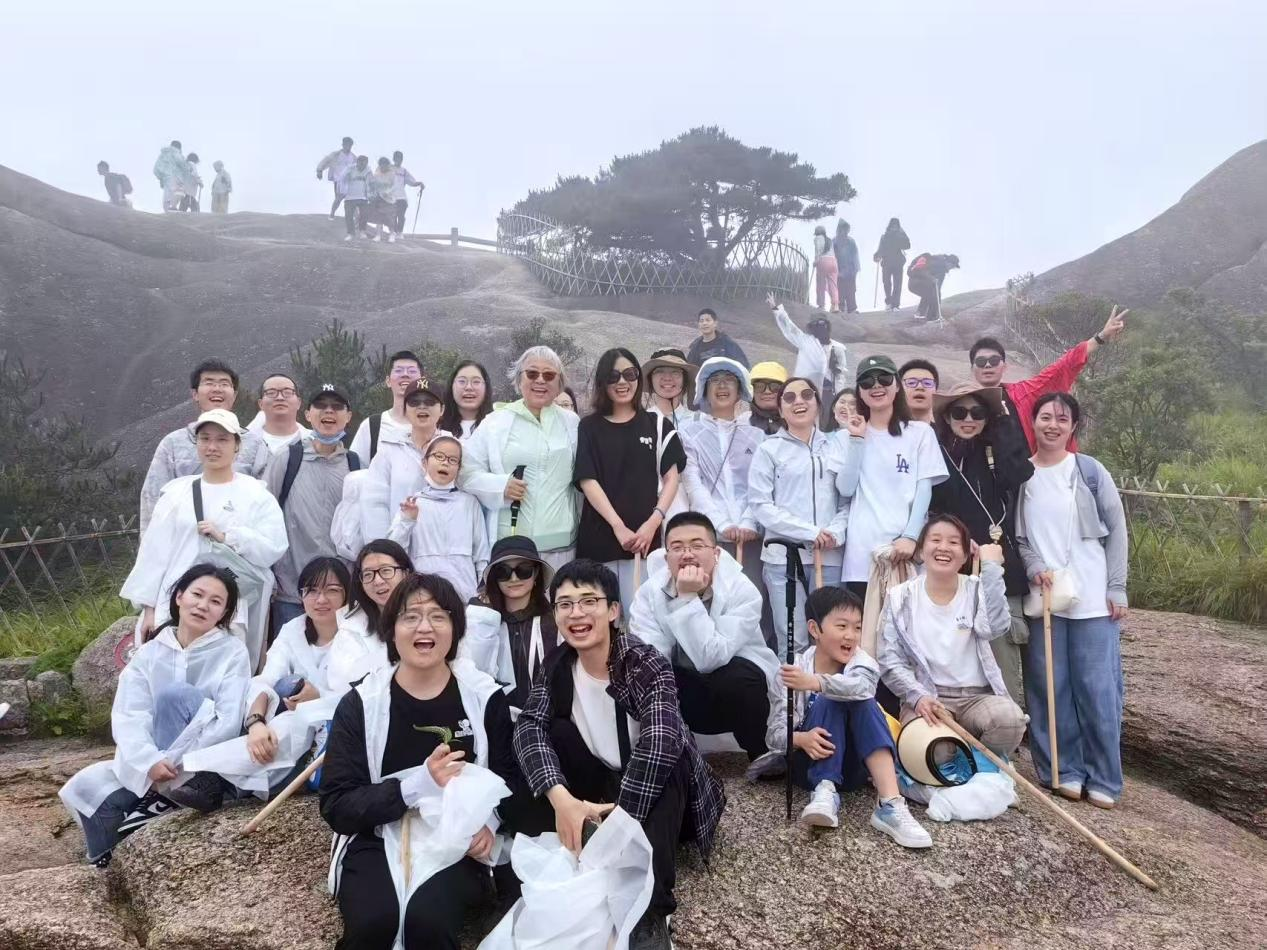
Yuan hikes with students from her research group. (Source: Interdisciplinary Research Center on Biology and Chemistry)
As director, Yuan focuses less on publication counts or journal rankings than on the questions researchers are pursuing and the progress they are making. "I keep track of the direction, not only the broad direction, but also the more specific areas," she said.
Students meet with her individually at least once a month, and her office door is usually open. Her student, Yu Zhen, recalled a discouraging period when weeks of experiments produced negative results. Yuan sat down with her to review the project and work out possible next steps.
Yuan knows that failed experiments are part of research. At a group meeting, she invoked the familiar saying, "Don't throw the baby out with the bathwater."
Her goal is to help students develop the scientific judgment and independence needed to lead their own research.
Bring discoveries closer to patients
The center's work brings Yuan's research back to the question that first inspired her: how can understanding the mechanisms of disease lead to better treatments?
One example is the development of drugs targeting RIPK1, a protein identified through Yuan's research on Nec-1. Several RIPK1 inhibitors have since advanced into clinical trials.
Her team is also exploring new molecules that could help treat diseases involving abnormal protein accumulation. In one project, researchers screened approximately 170,000 compounds and identified a promising candidate, later developed into a molecule called Apostatin-1. In preclinical studies, the compound showed potential in a mouse model of tau-related disease, reducing abnormal protein accumulation and cell death.
Her ultimate goal is to translate discoveries about cell death into new approaches to treating disease.
"If basic research leads to a drug that actually treats patients, that is the best form of science communication," she said.
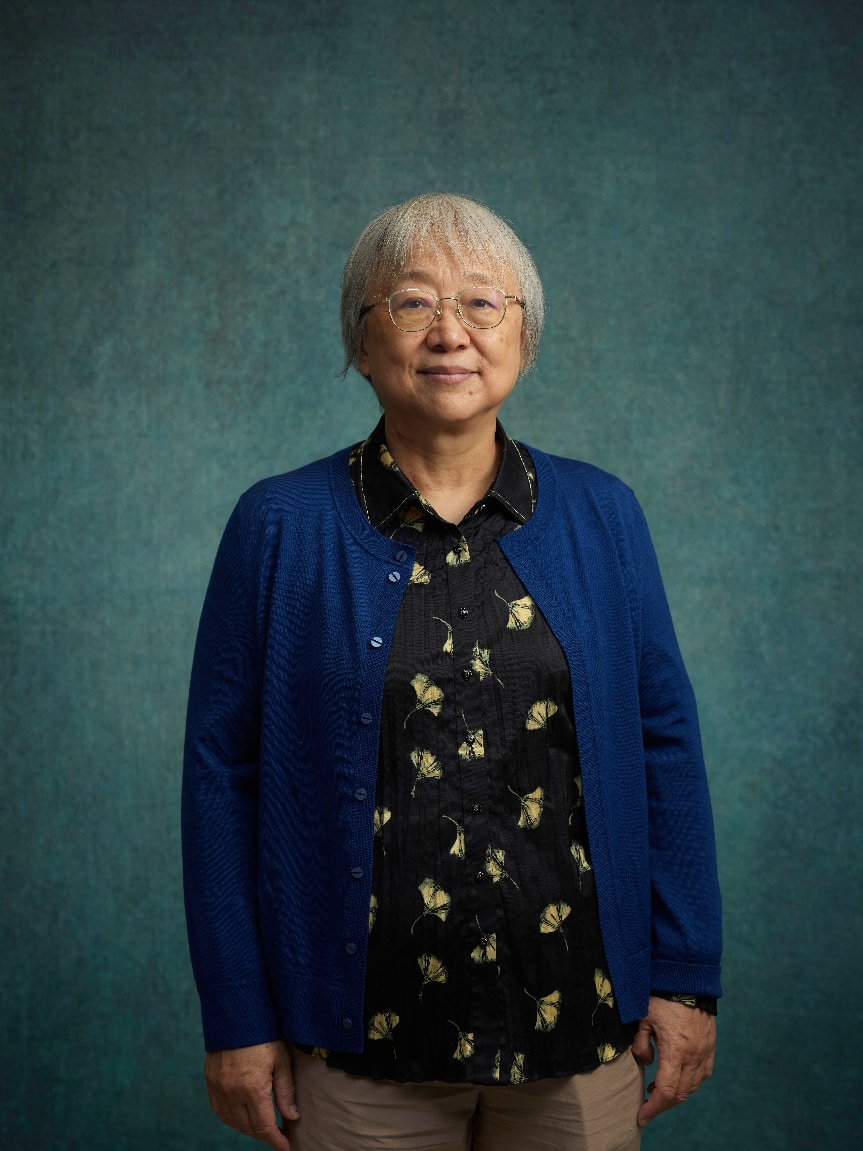
Yuan Junying. (Photo: Jin Liwang)
The remark brings her story back to the lectures she attended as a young student. Troubled that doctors could describe how patients might die but could not fully explain why, she chose to study the mechanisms behind that process. Now, after more than forty years, she hopes that this knowledge will help scientists do more than explain disease.
At the World Laureates Forum, Yuan was asked what she hoped to accomplish in the next decade.
"To accomplish the things I want to do," she answered.