


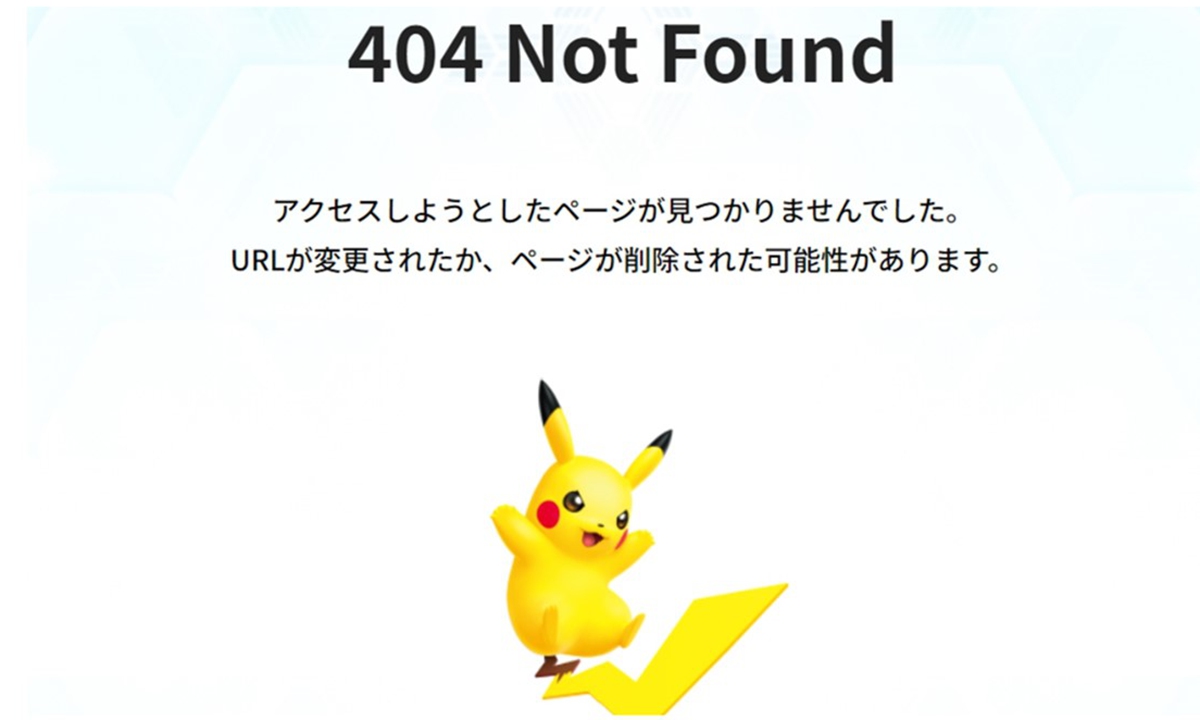
Photo: Web screenshot
Pokémon collaboration products have been taken off shelves by Uniqlo, a Japanese fast-fashion brand, and Li-Ning, a major Chinese sportswear company, across major online platforms and physical stores in China, the Global Times confirmed on Tuesday. Multiple Chinese media outlets - including China Youth Daily and Southern Metropolis Daily - also reported the removals.
The products were pulled following public outrage over a Pokémon -related activity planned at Yasukuni Shrine, widely viewed in China as a symbol of Japanese militarism and wars of aggression.
The Global Times found that Pokémon-branded items have disappeared from Uniqlo's official app, as well as from its flagship stores on JD.com and Taobao. The products are also no longer available at the company's major brick-and-mortar outlets.
Li-Ning's official customer service told the Global Times on Tuesday that "the related products are no longer available for online sale," without offering further details on the reason behind the removal. Staff at two large Li-Ning stores in Beijing separately confirmed that Pokémon collaboration products are currently not being sold in their stores.
At Uniqlo's Sanlitun Global Flagship Store in Beijing - one of the brand's largest outlets in the capital - a customer service representative said all Pokémon-related products had been removed earlier this week. The representative added that it remains unclear whether the products will be put back on shelves.
A customer service representative at Uniqlo's Global Flagship Store at Nanjing West Road in Shanghai gave the same response, noting that the removal of Pokémon products from offline stores was a unified move carried out nationwide.
The controversy erupted after The Pokémon Company, the Japanese firm that manages the globally popular Pokémon intellectual property, was found to have published information on its official website indicating that a related activity was scheduled to be held on January 31 at Yasukuni Shrine.
2026 marks the 30th anniversary of the Pokémon franchise. In the lead-up to the milestone, numerous brands have launched collaboration products with Pokémon. However, many Chinese consumers and media viewed the latest incident as crossing a clear historical and political red line, triggering strong backlash and protests that led the Pokémon website to delete the event page shortly afterward.
On Friday, The Pokémon Company issued a bilingual Chinese-Japanese apology statement on its website, saying that an activity page on its Pokémon card game trainer website had mistakenly listed Yasukuni Shrine as the venue. The company said that a lapse in the review and confirmation process led to the erroneous listing, noting that the information was removed immediately after the issue was identified, confirmed that the activity had been canceled.
It also pledged to fundamentally strengthen its review and verification mechanisms for activity information to prevent similar incidents from occurring again, according to the statement. However, media reports and netizens noted that Pokémon's association with Yasukuni Shrine is not without precedent.
In 2016, Pokémon designated Yasukuni Shrine as an in-game "gym" - a key location for battles - as well as a "PokéStop," effectively making the site a routine stop for players, China Youth Daily reported.
In 2019, a group of employees from Creatures Inc., one of Pokémon's shareholders, were reported to have openly visited Yasukuni Shrine and publicized the visit on social media platform X. After drawing widespread criticism, the posts were deleted, but no clear apology was issued at the time.
Many Chinese consumers said such incidents reflect a persistent disregard for historical sensitivities, particularly given China's importance as a major market for the Pokémon franchise. "China is a key market for Pokémon, and ignoring historical and political realities is something Chinese consumers simply cannot accept," one netizen commented.
"I grew up loving Pokémon, but holding activities at Yasukuni Shrine feels like rubbing salt into historical wounds," another player wrote. "It's hard not to feel that the company is making money from Chinese consumers while hurting their deepest feelings."
A consumer surnamed Chen said that the recent developments had severely undermined her trust in the company. She told the Global Times that repeated missteps on historical and cultural issues - even after an apology - meant she would no longer buy any Pokémon-related collaboration products.
Commenting on the controversy, People's Daily published an opinion piece on Saturday, saying that as a global company with significant international influence, Pokémon should uphold correct values and show respect for the feelings and basic customs of people in different countries.
Observers said that the real test now lies in whether the company can take the incident as an opportunity for serious self-reflection and a thorough course correction - and truly learn how to navigate the global market by respecting historical memory and public sentiment.