


BEIJING, Feb. 6 (Xinhua) -- China will take multiple measures to promote the development of service consumption, the Ministry of Commerce said on a press conference on Friday.
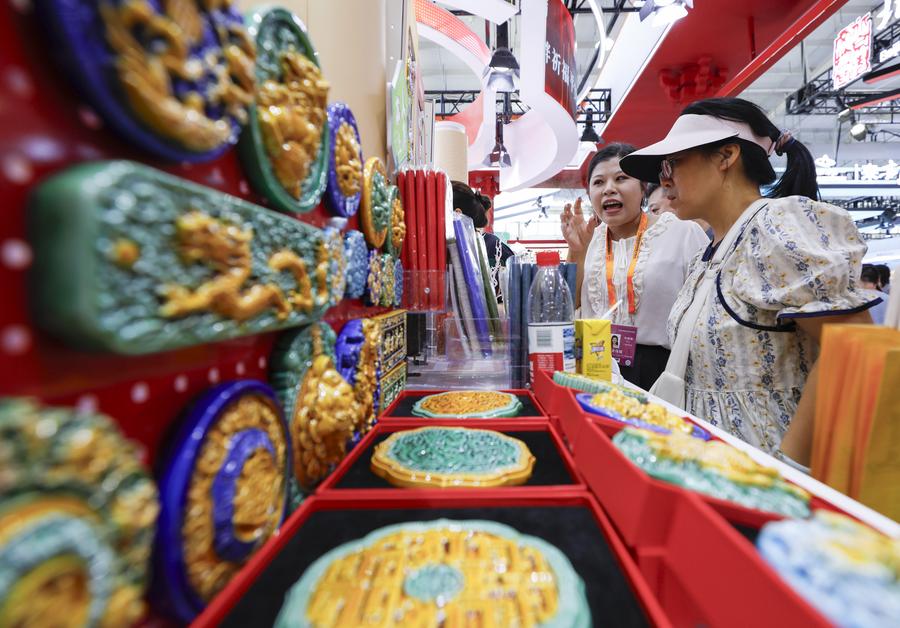
People select cultural and creative products at the Cultural & Tourism Services exhibition area during the 2025 China International Fair for Trade in Services (CIFTIS) at Shougang Park in Beijing, capital of China, Sept. 14, 2025. (File photo: Xinhua)
The country released a work plan last week outlining measures to optimize and expand the supply of services, foster new growth drivers in service consumption, and promote higher-quality development in the sector.
The plan comes amid the increasingly important role of service consumption as a key engine of high-quality economic development, said Kong Dejun, director of the ministry's department of trade in services and commercial services.
From 2020 to 2025, China's per capita service consumption grew at an average annual rate of 8.5 percent, with service spending accounting for 46 percent of residents' consumption expenditure in 2025, Kong said.
The growing vitality of service consumption has been particularly evident in the ice and snow economy. From Nov. 1, 2025 to Jan. 31, 2026, ski resorts nationwide received a total of 118 million visits, including 1.26 million inbound visits, according to official data.
During the same period, robust participation in ice and snow sports spurred related consumption. Total spending at ski resorts and surrounding areas reached 69.15 billion yuan (about 9.94 billion U.S. dollars), while the number of transactions stood at 890 million, up 6 percent year on year.
At the same press conference, Vice Minister of Commerce Yan Dong highlighted China's continued efforts to attract and expand inbound consumption, as the expanded visa-free policy and the optimization of departure tax refund services have further boosted overseas visitors' enthusiasm for traveling and shopping in China.
The ministry will formulate measures to promote the export of travel services and expand inbound consumption, while advancing pilot programs to foster an internationalized consumption environment, Yan said.
Efforts will also be made to increase the number of tax-refund stores, further optimize tax refund services, and enhance convenience for overseas visitors, so as to attract more inbound tourists, he added.