


The recent US Supreme Court ruling that the president lacks authority to impose tariffs under the International Emergency Economic Powers Act (IEEPA) has not only invalidated the Donald Trump administration's sweeping tariff measures justified by "national emergencies," but also imposed a deeper institutional constraint on Washington's increasingly unilateral and instrumentalized trade policy. As the world's largest economy, any shift in the legal boundaries of US trade power inevitably generates external ripple effects, introducing new uncertainties and adjustment pressures for global trading partners, supply chains and the evolution of the international economic order.
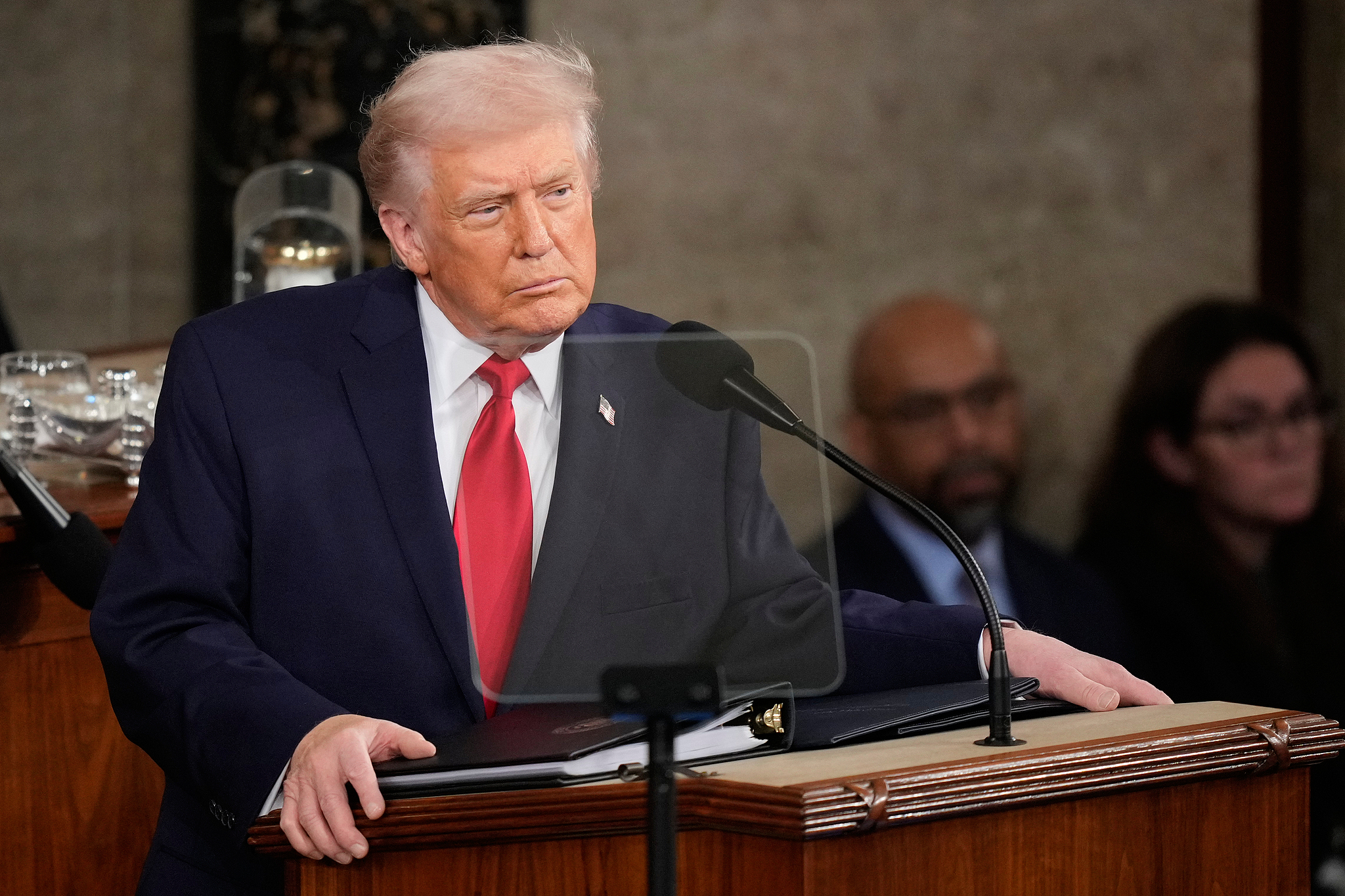
US President Donald Trump delivers the State of the Union address to a joint session of Congress in the House chamber at Washington, the US, February 24, 2026. (Photo: VCG)
From a domestic policy perspective, the ruling curtails the executive branch's ability to expand tariffs indefinitely through emergency powers, returning tariff authority to congressional authorization. The tariffs imposed in 2025 on all Chinese goods under the pretext of the fentanyl crisis, as well as the so-called "reciprocal tariffs" targeting nearly all US trading partners, therefore lose their legal foundation.
While the overall US tariff architecture remains largely intact—with Section 301 measures, Section 232 national security tariffs and anti-dumping duties still forming the backbone of protection—the president's unilateral room for tariff escalation has narrowed significantly. This suggests that US protectionism is shifting from sudden executive-driven tariff actions toward a more legalized and institutionalized path. In other words, US trade policy has not moved toward liberalization but has entered a phase of constrained protectionism.
For global trading partners, the impact of this shift is first reflected in negotiation dynamics and policy expectations. For years, Washington has relied on tariff threats to compel concessions, but the Supreme Court's decision reinforces the domestic legal limits on executive trade authority, providing other economies with new legal and diplomatic arguments in negotiations. China, the European Union and others can now underscore that unilateral US tariffs face constitutional and judicial constraints, thereby weakening the credibility of tariff threats.
At the same time, persistent US policy volatility encourages countries to reduce dependence on the American market and policy cycles through regional trade cooperation and supply-chain diversification. The EU's acceleration of free trade negotiations with Asia-Pacific partners and Southeast Asia's rising exports and industrial capacity linked to the US market essentially represent hedging strategies against US trade policy fluctuations.
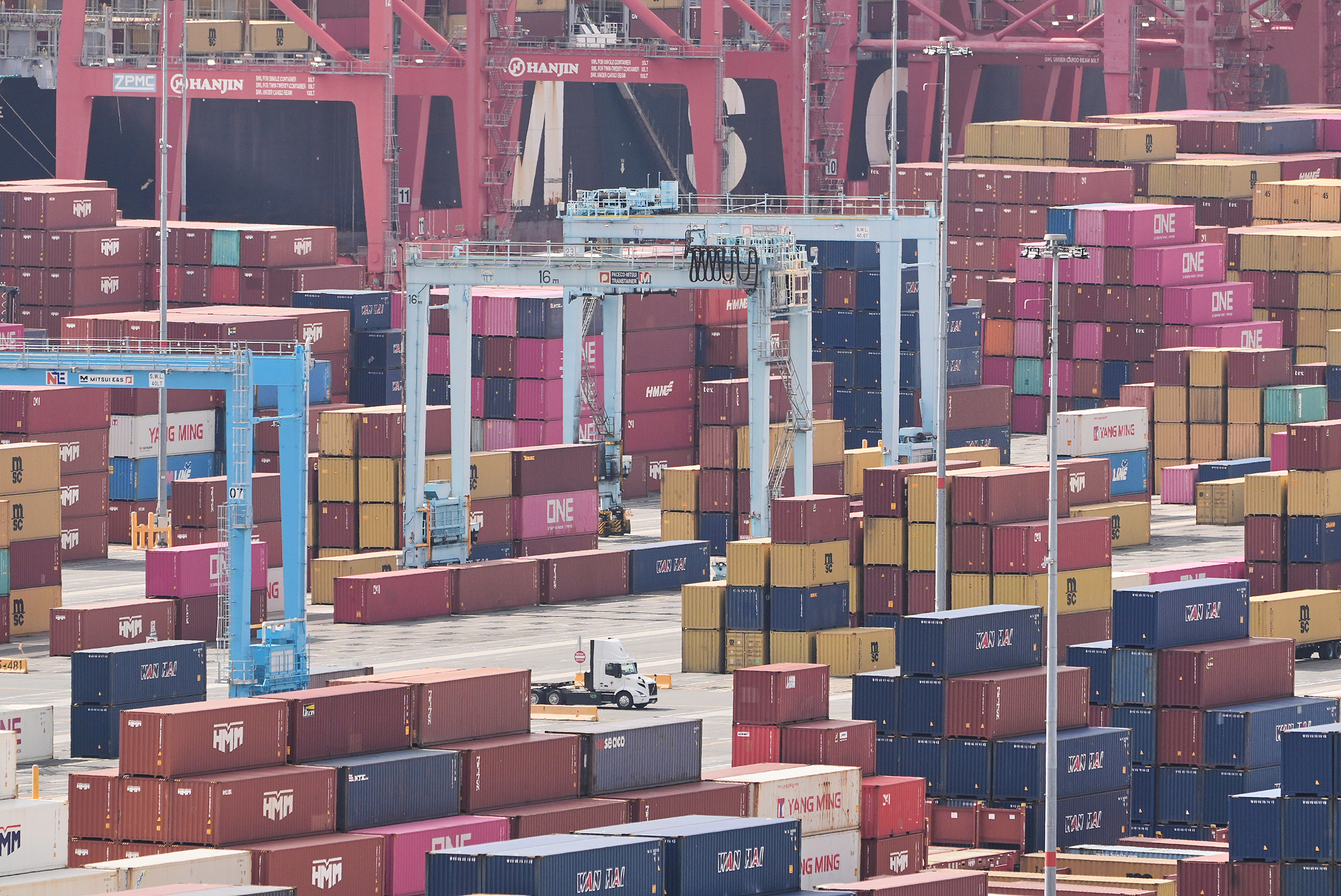
Containers are stacked at the Port of Long Beach in California, US, on February 20, 2026. (Photo: VCG)
At the level of global supply chains, the ruling does not trigger a simple reversal of "de-risking," but rather alters its pace. Over the past several years, US tariffs and technology restrictions have pushed parts of global production networks toward Southeast Asia and Mexico. Yet corporate relocation decisions have largely been driven by expectations of sustained US policy tightening rather than any single tariff measure.
Although the invalidation of IEEPA tariffs reduces uncertainty over further escalation, it does not change the existing high-tariff structure and technology controls. As a result, firms' strategic judgment in favor of diversification and regionalization will not fundamentally reverse. Some cost-sensitive industries may reassess production layouts, but the broader trend of partial easing alongside continued structural adjustment in global supply chains is likely to persist.
More importantly, the tools of US trade pressure may undergo a substitutional shift. Constraints on tariff authority do not necessarily weaken Washington's capacity for economic coercion; instead, they may push it toward alternative legal and policy instruments.
On the one hand, the United States may expand the definition of "national security" under Section 232 to include more sectors such as critical minerals, battery materials and semiconductor equipment, further integrating economic security with industrial policy. On the other hand, Washington retains the ability to impose financial sanctions and secondary sanctions under IEEPA, leveraging the dollar system and financial regulation to exercise extraterritorial jurisdiction over foreign firms and supply chains. Meanwhile, the US may rely more heavily on coordination with allies to construct an "alliance-based economic security framework" through export controls, investment screening and technology standards. In this sense, constraints on tariffs could accelerate a transition in US economic coercion from tariff-led pressure to financial and rule-based instruments, with equally far-reaching external effects.
From the perspective of the global trade order, the ruling carries both symbolic and structural significance. It demonstrates that even amid rising unilateralism, domestic rule-of-law institutions in the United States can still check executive power, thereby weakening the legitimacy of unilateral trade measures and indirectly supporting multilateral trade norms. At the same time, persistent instability and legal disputes surrounding US trade policy continue to erode Washington's credibility as a global trade leader, prompting more countries to diversify risks through regional agreements, South-South cooperation and localized industrial policies. The global trade network is thus becoming more multipolar and regionalized: the US remains a critical market, but no longer the sole center.