


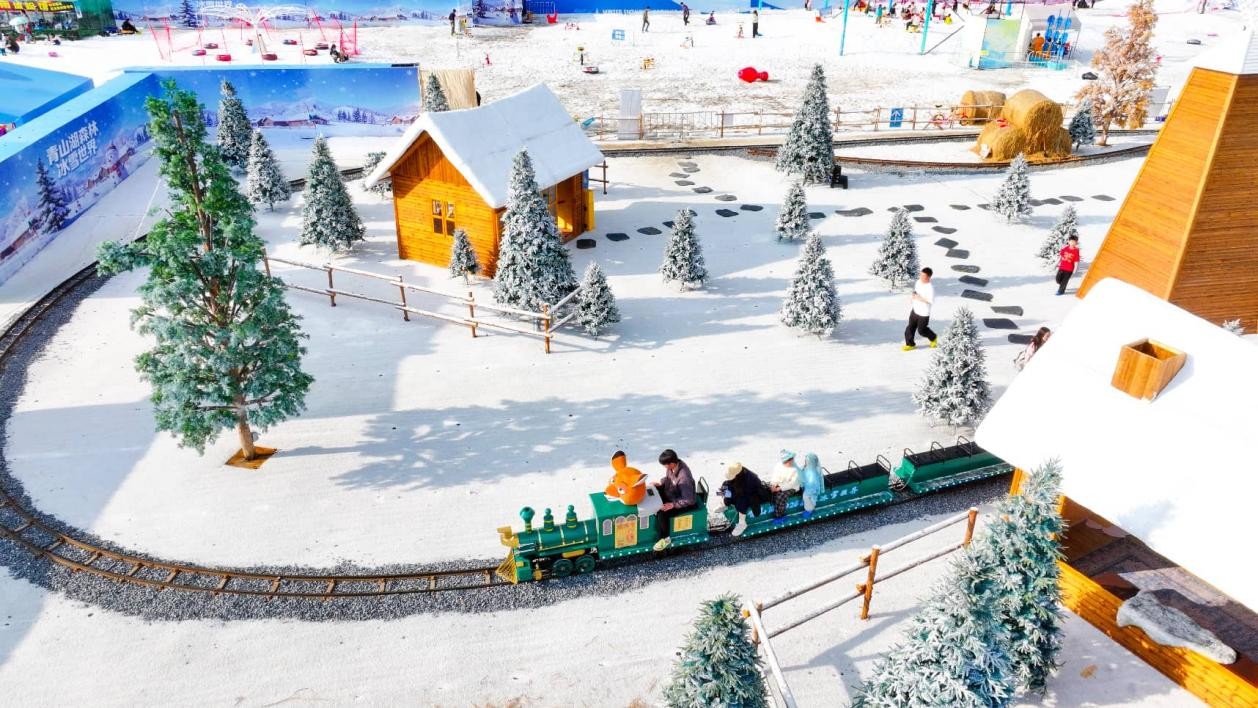
Tourists visit an ice-and-snow themed park in Hangzhou, east China's Zhejiang province. (Photo/Yang Bo)
China's winter tourism industry has demonstrated significant vitality, attracting an estimated 360 million visits during the latest winter season from December 2025 to February 2026, generating 450 billion yuan (about $65.1 billion) in revenue. Of these visits, approximately 220 million were made with ice-and-snow activities as the primary motivation.
According to a report released by the China Tourism Academy, the sector is entering a new phase of sustained prosperity.
This evolution is reflected in changing consumer preferences. For instance, Sun Li, a tourist from Beijing, traveled with her family to Chongli district in Zhangjiakou, north China's Hebei province. Her goal was not just skiing, but also experiencing local cuisine -- a desire increasingly common among modern travelers.

A coach teaches a tourist snowboarding at a ski resort in Yichun, east China's Jiangxi province. (Photo/Zhou Liang)
China's ice-and-snow tourism sector is shifting from single-purpose ski trips to diversified, integrated experiences. As demand surges, the market is increasingly characterized by quality-oriented, personalized and multifaceted consumption.
Data from homestay booking platform Tujia showed that between Oct. 12, 2025 and March 30, 2026, bookings for ski-related homestays in Chongli rose by 60 percent year on year. Nearly 1/5 of these were long-stay bookings of seven days or more, reflecting a broader shift from short-term experiences to extended winter vacations.
Consumption upgrading in the sector is becoming increasingly evident. Ice-and-snow tourism has emerged as a new growth driver in service consumption, with spending gradually shifting from rigid expenses such as transportation and accommodation to more flexible categories including entertainment, wellness and cultural products.
The customer base is also becoming younger, more family-oriented and more diverse. Those born after 1995 now account for 47 percent of ski ticket bookings on leading online lifestyle platform Meituan, making them the core consumer group.
The influx of younger travelers is reshaping ice-and-snow tourism trends. Ski fashion and social media-worthy resort shots are gaining traction online, boosting demand for winter travel photography services.
The report said that China's ice-and-snow tourism products are evolving from being driven primarily by natural resources to a model powered jointly by innovation, technology and culture. The focus is shifting from creating high-quality individual products to building comprehensive, integrated product systems.
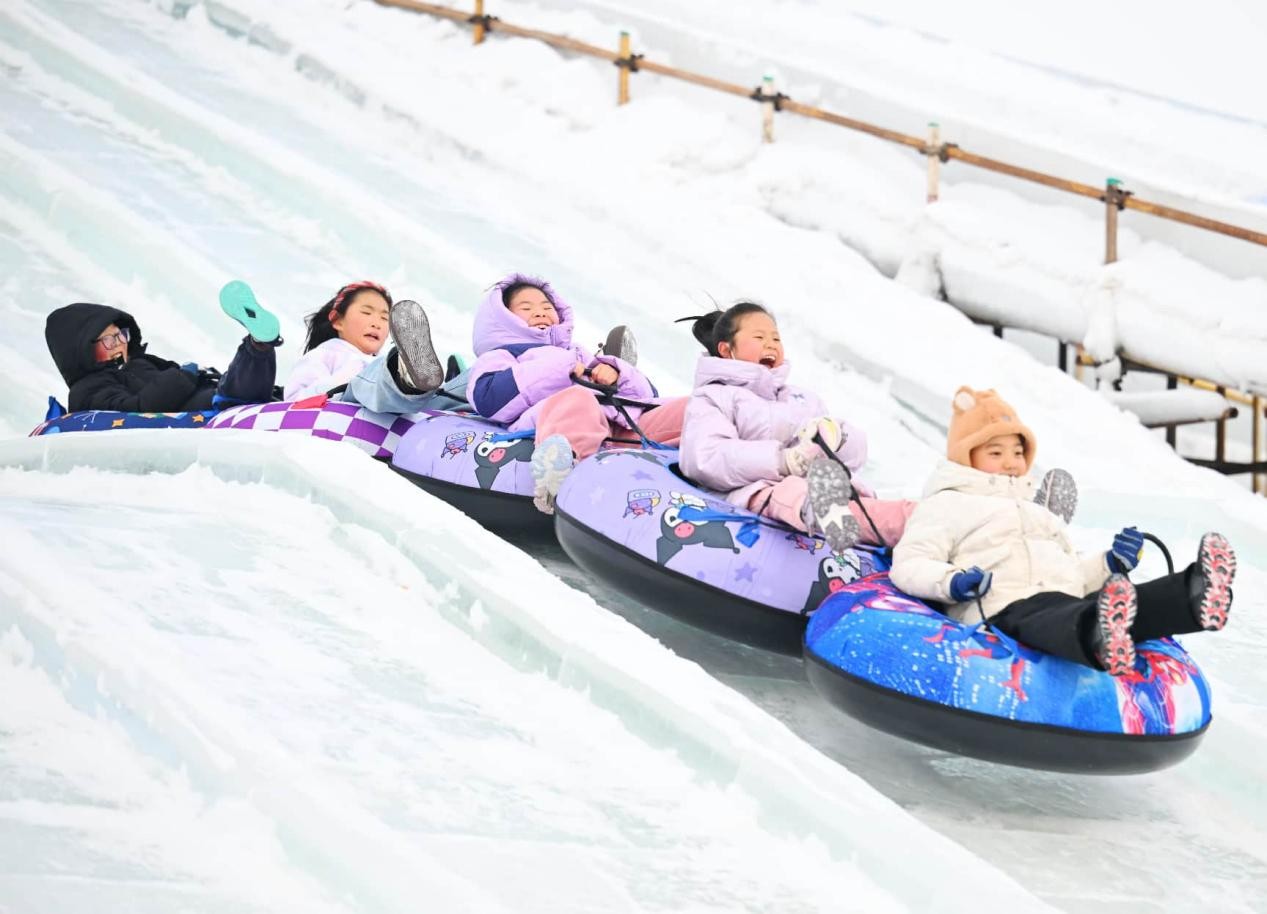
Citizens ride an ice slide in Changji Hui autonomous prefecture, northwest China's Xinjiang Uygur autonomous region. (Photo/He Long)
Han Yuanjun, a researcher at the China Tourism Academy, said that the deep integration of ice-and-snow tourism with multiple industries has created new consumption scenarios, enriched product offerings, and expanded the boundaries of the ice-and-snow economy.
The report also indicated that indoor ice-and-snow complexes are now the most active category for investment among capital-intensive tourism projects. Southern China emerged as the leading region for such investments in 2025.
Complementing indoor developments, outdoor destinations are pursuing distinctive paths. Many are tapping into local cultural resources to enhance appeal and competitiveness.
For example, the Meihuashan International Ski Resort in Liupanshui, Guizhou province, showcases snowy slopes encircled by lush mountains, thanks to its unique low-latitude, high-altitude location. Such destinations in southern China are challenging the long-held perception that ice-and-snow tourism is exclusive to the north.
Across China, destinations are enhancing visitor experiences with thoughtful services. Many ski-town homestays now personalized touches like meal delivery and equipment maintenance, while hotels incorporate local culture through themed rooms and regional cuisine. Travel convenience is also improving; high-speed trains on the Beijing-Zhangjiakou line and in northeast China now provide streamlined transport for ski equipment.
Digital technologies are playing a key role in upgrading the sector. At many ski resorts, intelligent slope monitoring systems operate around the clock, providing real-time safety alerts. Some resorts have also introduced smart rental systems, allowing visitors to rent and return equipment simply by scanning a code with their phones.