


Meta plans 20% layoffs to fund an industry-wide AI spending spree
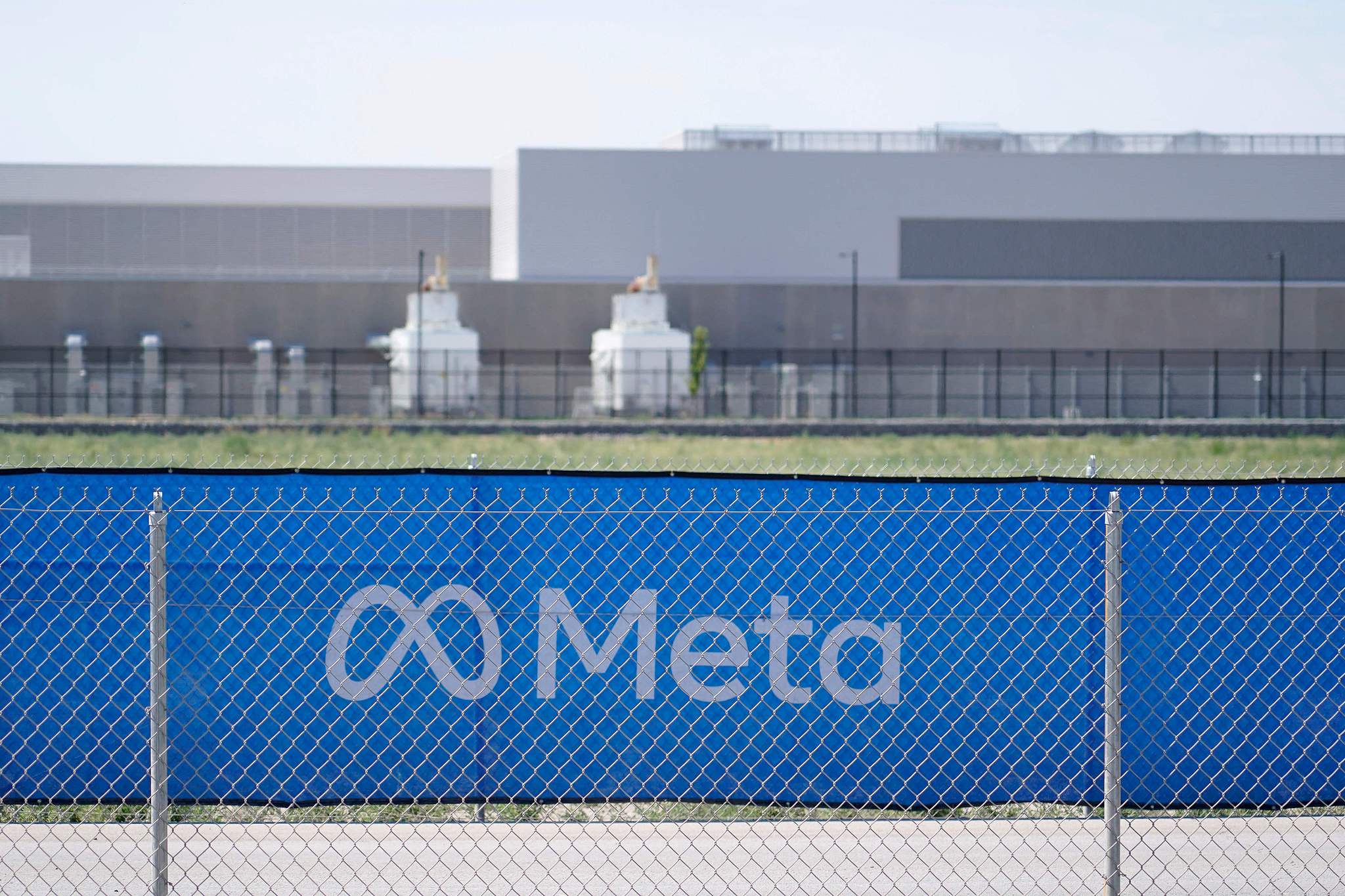
Outside view of the newly completed Meta's Facebook data center in Eagle Mountain, Utah on July 18, 2024. (Photo: VCG)
Meta is reportedly planning to lay off 20% or more of its workforce, pivoting more resources toward costly AI investments, according to Reuters, as more US tech firms rapidly scale down their human workforce to make room for an AI capital-expenditure spree.
Although no date or specific scale for the job cuts has been finalized, Meta's top executives have signaled to other senior leaders to begin planning for a scaling back, Reuters reported on March 14, citing anonymous sources.
"This is speculative reporting about theoretical approaches," Meta spokesperson Andy Stone told Reuters when asked about the plan.
Founded in 2004 as Facebook, Meta had an employee headcount of 78,865 people as of December 31, 2025, according to its latest financial report. The 20% layoff would affect over 15,000 people based on the latest available statistics, making it the company's largest single job cut since the restructurings in late 2022 and early 2023. Known as the "year of efficiency," the two rounds of layoffs eliminated 11,000 positions in November 2022 and another 10,000 in March 2023.
Doubling down on AI
Since the end of 2025, Meta has invested significantly in building AI infrastructures and acquiring AI startups, diverging from the metaverse concept that Mark Zuckerberg personally envisioned and rebranded the company under in 2021.
In January, the company cut around 10% of employees from its Reality Labs division, a team of roughly 15,000 employees responsible for making Quest VR headsets and the Horizon Worlds virtual social network.
Yet Meta has decided to significantly increase its spending in 2026. The company announced in January that its capital expenditure forecast for this year is between $115 billion and $135 billion, a major leap from last year's $72 billion.
The company already gives multimillion-dollar offers to lure top artificial intelligence researchers into "Meta Superintelligence Lab," according to The New York Times, and plans to invest $600 billion to build data centers by 2028.
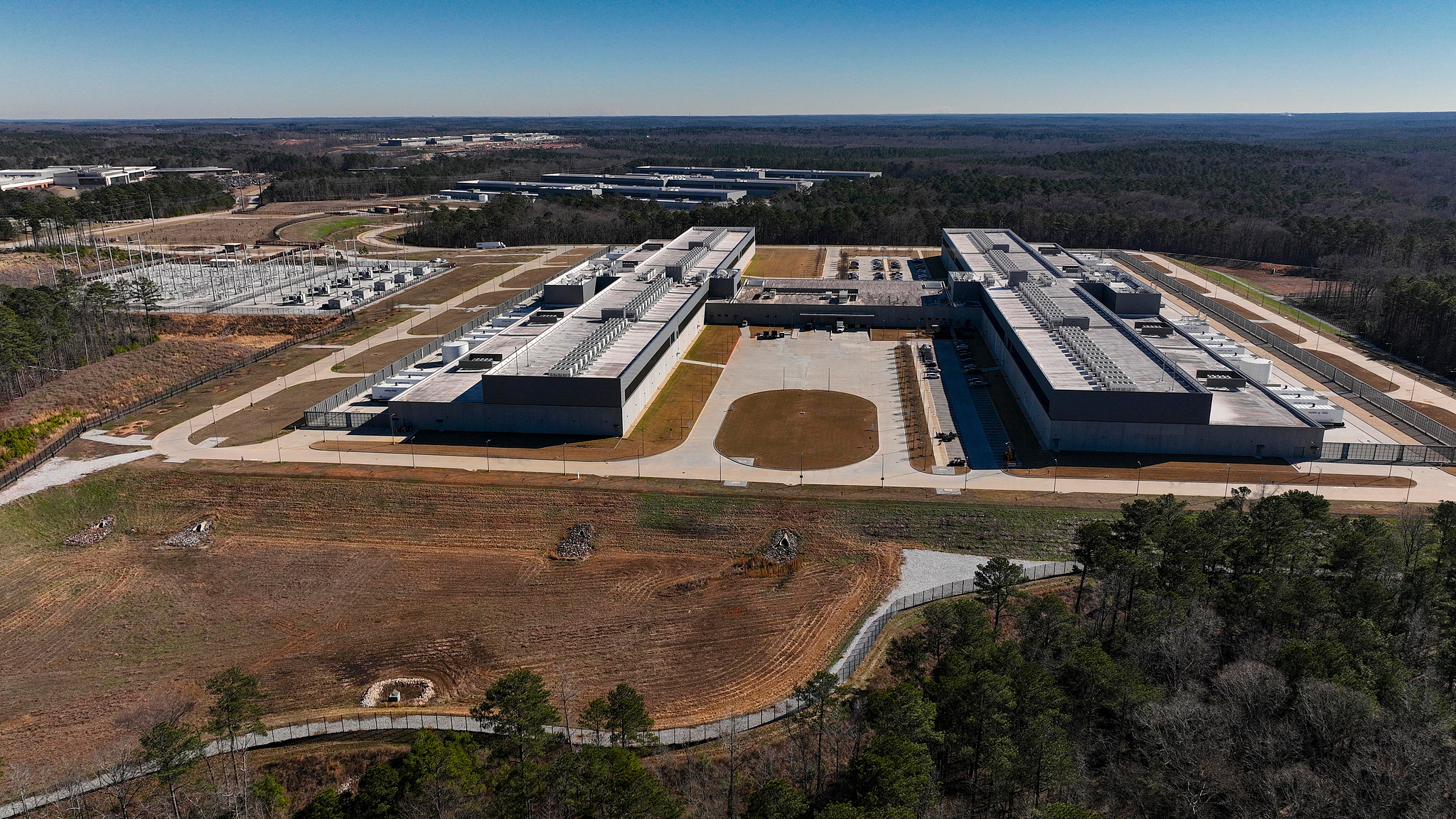
Meta's Stanton Springs Data Center in Newton County, East of Atlanta, seen on Tuesday, Jan. 13, 2026. (Photo: VCG)
Meta is not the only hyperscaler in this year's AI spending spree. Alphabet, Amazon, Meta, Microsoft and Oracle have been leading the way in extravagant spending on large data centers, with almost a trillion ($969 billion) in total committed investments so far and likely to reach $2 trillion over the next 4 years, according to a Moody's analysis published in January.
Financing big tech's AI craze
The rapid growth in capital expenditure could strain the big-techs' cash flow, as Meta already uses revenue from its advertising business to cover the costs of its pursuit of "superintelligence."
Big techs have been using structured finance as their major financing tool for their data center expenditures. More than $9 billion in commercial mortgage-backed securities (CMBS) and asset-backed securities (ABS) have been issued to fuel strong demand for AI infrastructure, according to Moody's.
Yet Meta's AI has been underperforming, as the company is likely to delay the release of its new model code-named Avocado, according to The New York Times. The model outperformed Meta's previous AI but was not powerful enough to surpass Google's Gemini 3.0, released last November. The possibility of Meta temporarily licensing Google's model is also mentioned.
A new labor reality
The most significant spenders in US AI infrastructure have also been pushing for rounds of aggressive layoffs in recent months, citing AI's influence.
The fintech company Block laid off 40% of its employees in late February. The company's CEO, Jack Dorsey, attributed the decision to the productivity increase enabled by AI.
"We're already seeing that the intelligence tools we're creating and using, paired with smaller and flatter teams, are enabling a new way of working which fundamentally changes what it means to build and run a company," Dorsey wrote on X, a social media platform he co-founded and served as its CEO before it was bought by Elon Musk in 2022.
In January, Amazon confirmed it would slash 16,000 of its corporate workforce, fulfilling the plan to cut 30,000 jobs started in October 2025. The layoff accounts for nearly 10% of Amazon's corporate workforce, making it the largest job cut in the company's 31-year history.
"As we roll out more Generative AI and agents, it should change the way our work is done," said Amazon CEO Andy Jassy in a note to employees in June, hinting at the upcoming workforce reshuffle.
"We will need fewer people doing some of the jobs that are being done today, and more people doing other types of jobs," said Jassy.
Tech executives who attended this year's World Economic Forum have largely been optimistic about the future role of AI, claiming that this human-replacing technology is creating new employment opportunities.

Nvidia founder and CEO Jensen Huang speaks during the Annual Meeting of the World Economic Forum in Davos, Switzerland, Wednesday, Jan. 21, 2026. (Photo: VCG)
"Energy is creating jobs. Chips industry is creating jobs. The infrastructure layer is creating jobs," CEO of Nvidia Jensen Huang said at a meeting, claiming the craze for AI infrastructure would create more demand for plumbers, electricians, construction workers, steelworkers and network technicians.
"Jobs, jobs, jobs," said Huang in Davos.
"We've heard that AI will cause a tsunami of disruption… Part of that preparation is incentivizing employers to keep people in work," said Christy Hoffman, general secretary of the UNI Global Union, an international Union Federation for skills and services sectors, during a panel named "Can we save the middle class" in Davos.
Anthropic, the company that created Claude, suggested that AI at its current stage is "far from reaching its theoretical capability." Computer programmers are at the forefront of being replaced by AI, with AI handling and assisting with 75% of daily tasks in this occupation, according to a paper by Anthropic published in March. The customer service representatives and data entry keyers also had the majority of their tasks covered by AI models.
"Workers in the most exposed professions are more likely to be older, female, more educated, and higher-paid," the paper wrote. "We find no systematic increase in unemployment for highly exposed workers since late 2022, though we find suggestive evidence that hiring of younger workers has slowed in exposed occupations."
(With inputs from agencies)