


China ramps up training of 'tech matchmakers' to turn innovation into growth
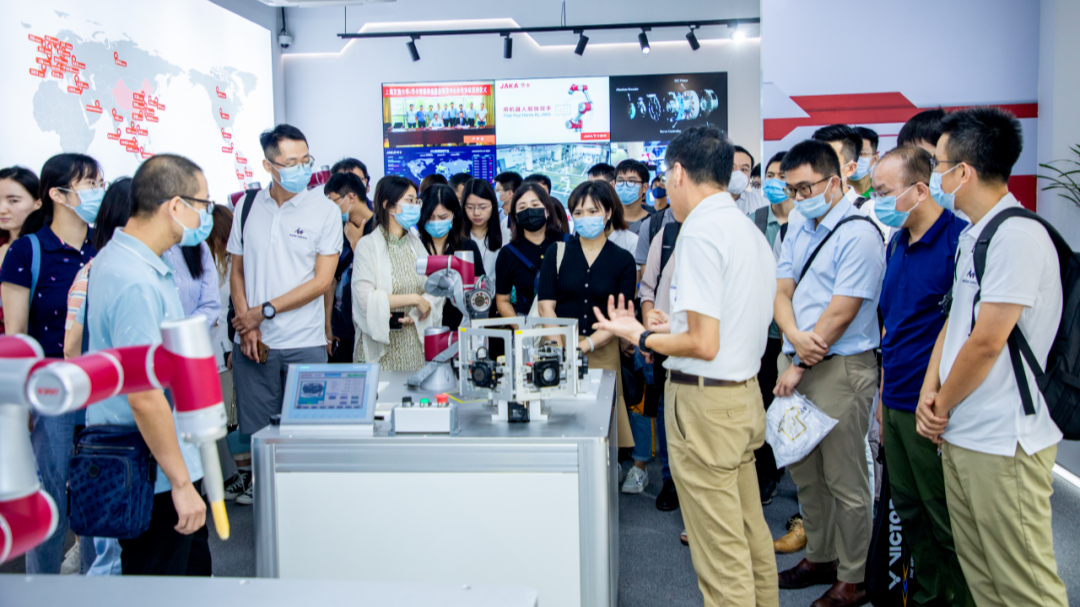
Students of the Master of Technology Transfer (MTT) program at Shanghai Jiao Tong University visit a technology company. (Photo: Shanghai Jiao Tong University)
China is accelerating efforts to cultivate a new generation of "tech matchmakers" to speed up the commercialization of scientific breakthroughs, as it seeks to turn its expanding research strength into a more powerful driver of economic growth.
As the country moves deeper into an innovation-driven growth model, policymakers, universities and industry players are increasingly focused not just on generating cutting-edge technologies, but on ensuring they translate into real-world applications.
At the center of this shift are technology managers. By connecting researchers with investors, companies and markets, these hybrid professionals are bridging the gap between laboratories and the marketplace, while also creating stronger incentives for scientists to take their work beyond the lab.
Liu Shaoxuan, associate dean of the Antai College of Economics and Management at Shanghai Jiao Tong University, told CMG that top technology transfer professionals need a blend of skills: the ability to assess technology, understand market demand, design financial solutions, navigate legal and intellectual property issues, and manage teams and operations.
According to Liu, China currently has around 20,000 such professionals, with demand expected to surge in the coming years. He said, in developed economies, there are typically about four high-level technology managers for every 100 scientists – highlighting the scale of expansion China is now pursuing.
The push is being reinforced at the national level. China's 15th Five-Year Plan (2026–2030) places technological self-reliance and the deep integration of innovation with industry at the core of its economic strategy, calling for faster and more efficient conversion of scientific breakthroughs into commercial applications.
Local governments are moving in the same direction. Cities such as Shanghai have classified technology managers as urgently needed talent, pledging to build a dedicated workforce "in the same way they train scientists."
Universities are emerging as both the primary training ground and a key testing arena for this new profession.
In 2021, Shanghai Jiao Tong University launched the country's first Master of Technology Transfer (MTT) program, targeting sectors critical to national development, including semiconductors, biomedicine, artificial intelligence and advanced materials. Beyond classroom learning, the program emphasizes long-term, hands-on commercialization projects, supported by mentors from industry, finance and legal sectors.
The model is spreading rapidly. Tsinghua University and Nankai University introduced similar programs in 2022, while Fudan University has applied to establish one. More institutions are expected to follow as demand continues to grow.
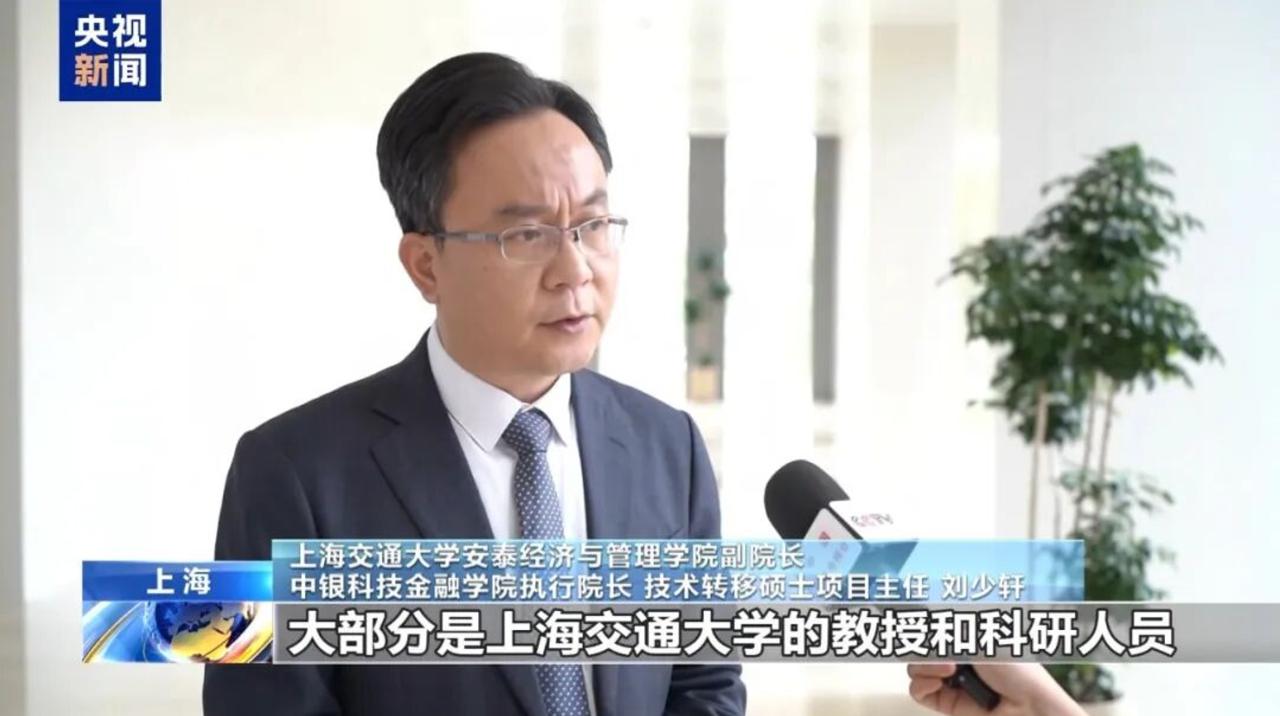
Liu Shaoxuan, associate dean of the Antai College of Economics and Management at Shanghai Jiao Tong University takes an interview from China Media Group. (Photo: China Media Group)
The practical impact of this model is already visible.
Miu Xianpeng, a postgraduate in the MTT program, spent a decade in construction engineering before transitioning into technology transfer. During his studies, he joined a hands-on project with Professor Li Jun's research team, which focuses on new energy.
In April last year, Miu and six classmates formed a team to help commercialize professor Li's research. By September, they had established a technology company, where Miu now serves as Chief of Staff, supporting the transition from R&D to industrial application.
The company now focuses on energy storage and green fuel technologies, including developing cost-effective methods for producing green methanol from biogas. As chief of staff, Miu works across research, financing and industrial deployment – illustrating how technology managers can accelerate the journey from lab to market.
In other cases, their role is less about building companies and more about enabling connections.
At Hubei University of Technology, a team of technology managers works within the university's transfer center to connect academic research with industry needs. One of them, Yang Lei, discovered during a company visit that the firm faced a technical bottleneck: traditional lithium batteries lost capacity quickly and had shorter lifespans in low temperatures. Recognizing a fit with Professor Hu Pei's research, Yang acted as a "matchmaker," facilitating collaboration between the company and the university team.
The collaboration delivered rapid results: battery capacity retention at minus 20 degrees Celsius improved by 30 percent, while cycle life exceeded 12,000 cycles. The partnership, formalized in 2024, quickly translated into commercial success, with the company securing more than 50 million yuan (about $7.19 million) in new orders within a year. It later acquired the technology outright for 10 million yuan.
"Without technology managers, this level of efficiency would have been impossible," Hu said.
Such outcomes are being supported by institutional reforms aimed at streamlining commercialization. At Hubei University of Technology, measures include granting researchers shared ownership rights, capping the university's share of licensing income at 4% to incentivize participation, shortening approval processes, and introducing liability protections.
The results have been significant. By March 2025, the university had completed more than 3,000 commercialization projects, with contract value reaching 1.18 billion yuan – exceeding the combined total of the previous two decades.
Beyond domestic impact, China is also positioning these "tech matchmakers" for a global role.
As Chinese companies expand overseas, the challenge is increasingly about connecting domestic innovations with international markets. That requires professionals who can navigate not only technology and business, but also cross-border regulations, standards and partnerships.
In response, Chinese universities are beginning to recruit international students into technology transfer programs, particularly from Belt and Road countries as well as North America and Europe. "We aim to promote the global reach of China's scientific innovation and bring Chinese solutions and achievements to the world's socio-economic development," Liu said.
From boosting the conversion of scientific breakthroughs at home to supporting the global reach of Chinese innovation, these "tech matchmakers" are becoming a critical force in shaping how ideas move – from lab benches to production lines, and increasingly, to markets around the world.