


Beijing announces business climate guidelines with 28 priorities for 2026
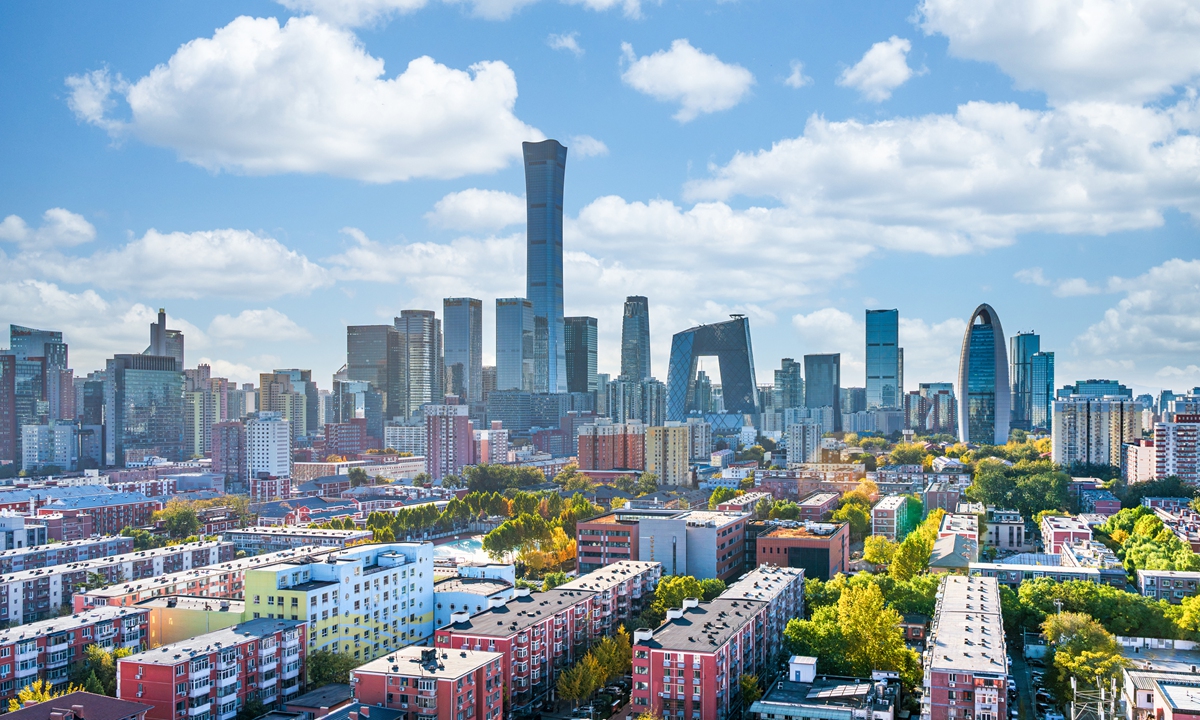
The CBD area of Beijing, China (Photo: VCG)
The Beijing municipal government on Tuesday announced guidelines to comprehensively optimize the city's business environment, with 28 key tasks included, aiming to fully unleash the vitality of business entities and strongly support high-quality development.
It is the latest local government in China that has vowed to comprehensively optimize business environment, amid the nation's modernization drive.
The priorities focus on key tasks across dimensions such as precise empowerment, market fairness, government convenience, legal protection, and open cooperation, covering multiple areas including financing facilitation, talent services, consumption scenarios, anti-monopoly enforcement, data elements, and cross-border trade.
In a move to boost the convenience of corporate financing, Beijing is encouraging banks to issue more loans to technology-based, asset-light businesses and scale up intellectual property pledge financing.
Beijing will increase support for young entrepreneurs by providing 1 million square meters of dedicated entrepreneurial space. The city will expand the youth apartment pilot program, raising funds to create 10,000 apartments for young talent.
Beijing is not alone, and East China's Shandong Province announced similar measures recently. The province said that it will promote fair market competition, improve the social credit system, and rectify "rat-race" competition.
The province will crack down on for-profit compensation claims, innovate financial services for enterprises, and accelerate the cultivation for companies to get listed. Efforts will also be made to strengthen the safeguarding of data elements, regulate bidding and tendering procedures, continuously standardize government procurement, and enhance support for technological innovation, the Jinan Daily reported on March 11.
On February 2, Guangdong released similar measures, and the local government said that it has always prioritized strengthening the supply of production factors such as land, talent, and data as a key part of its efforts to improve the business environment, according to the Nanfang Daily.
Measures include supporting the phased payment of land premiums for industrial projects, requiring only 50 percent of the premium as the initial payment, with the remaining balance to be paid in full within one year without interest, according to Gong Zhenzhi, head of the Guangdong Provincial Development and Reform Commission.
The business environment has been a key area of focus for the government in recent years. It plays a unique role in promoting consumption and advancing the creation of a unified national market, which is why local governments have been introducing policies to improve it, Li Chang'an, a professor at the Academy of China Open Economy Studies at the University of International Business and Economics, told the Global Times on Tuesday.
The importance of improving the business environment was also underscored in a development blueprint for the 2026-2030 period, approved by China's national lawmakers on Thursday. The nation's 15th Five-Year Plan (2026-30) explicitly calls for continued improvements to the business environment, aiming to build a first-class, market-oriented, law-based and internationalized business environment.