


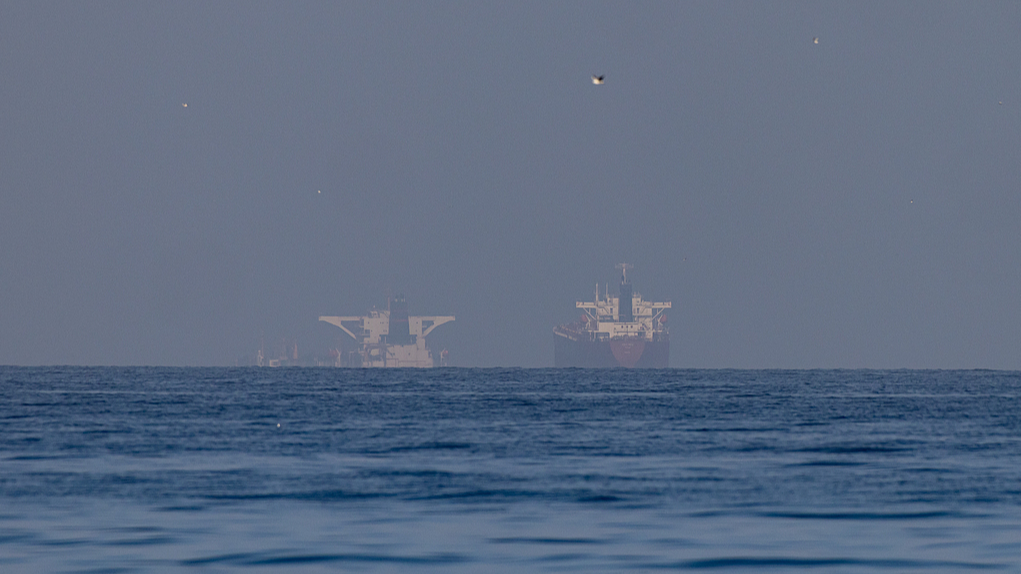
Commercial vessels in the Gulf, near the Strait of Hormuz, March 22, 2026. (Photo: VCG)
Tensions around the Strait of Hormuz are pushing up costs across the global shipping industry, with companies facing an additional 340 million euros (393 million U.S. dollars) in daily fuel expenses, transport and environment, a European clean transport advocacy group, said Friday.
Shipping firms have incurred more than 4.6 billion euros in extra fuel costs since Feb. 28, when the United States and Israel started massive attacks on Iran, the group said in a report.
Marine fuel prices have surged sharply, it said, with very low sulphur fuel oil climbing to 941 euros per ton in Singapore, up 223 percent since the start of 2026. Liquefied natural gas prices have also risen by 72 percent since early March, further increasing operating costs for shipowners.
As 99 percent of the global fleet is still powered by fossil fuels, it said, the industry is "directly exposed" to fuel price volatility and supply disruptions.
"Chaos in the Strait of Hormuz is putting global maritime trade under the spotlight, but its most immediate impact is on oil markets," said Eloi Norde, the organization's shipping policy officer. "The war is costing the industry millions every day."
He said that the current crisis could accelerate investment in cleaner energy solutions and that previous concerns about the high cost of green shipping appear less significant against the scale of disruption now facing the industry.
The report also points to potential pathways to reduce exposure to fuel shocks.
Electrification of short-distance vessels such as ferries and coastal cargo ships is identified as a near-term opportunity, and operational measures, including slow steaming and wind-assisted propulsion, could significantly improve fuel efficiency for long-haul shipping, it said.