


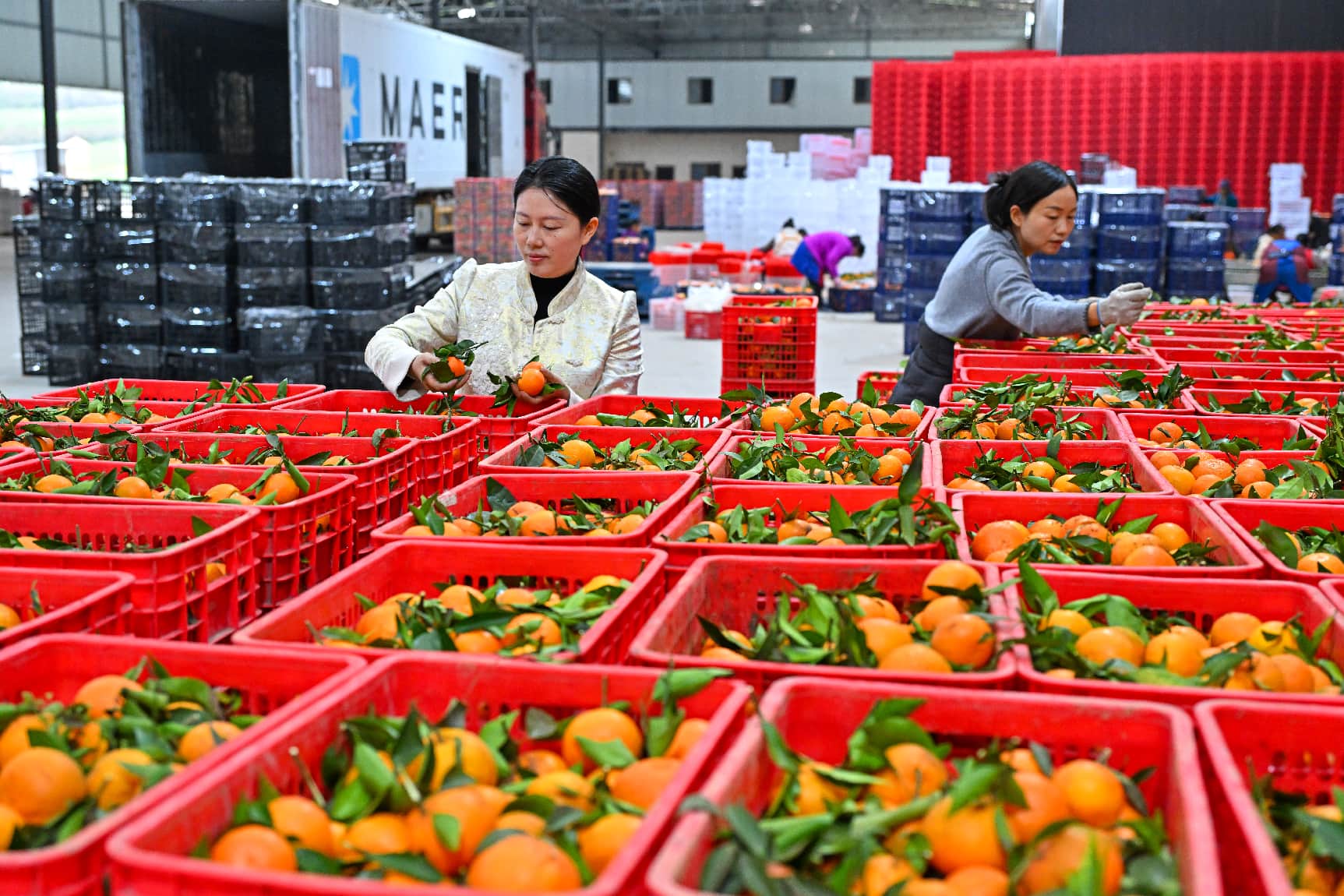
Workers of a fruit company in Meishan, southwest China's Sichuan province sort and pack mandarins bound for overseas destinations. (Photo/Pan Shuai)
From early-spring sugar tangerines to chilled fresh-cut navel oranges in summer, and to the over 1 billion cups of iced fresh lemonade sold year round -- citrus has become a constant presence in Chinese consumption. Now, this ancient fruit is being reshaped by a sweeping transformation across China's entire citrus industry.
According to the latest data from China's national citrus industry technology system, the country's total citrus output exceeded 70 million tons in 2025, with per-unit yield rising by more than 21 percent over the past five years. Globally, one in every three citrus fruits worldwide is grown in China.
China's citrus family is vast, ranging from mandarins and oranges to pomelos and lemons. More than 90 varieties are grown on a large scale. Over the past two decades, Chinese researchers have developed more than 60 percent of the world's new citrus varieties. By optimizing early-, mid-, and late-ripening types, they have extended what was once a seasonal fruit into a year-round supply.
That steady supply is fueling new consumption trends -- especially among younger consumers. In summer, iced lemonade has become a staple drink across China, with much of the fruit sourced from Sichuan and Chongqing in the southwest.
At a smart factory in Chongqing operated by the beverage chain Mixue Ice Cream & Tea, freshly harvested lemons undergo a rigorous selection process. After multiple rounds of washing, the fruit moves along a high-speed sorting line equipped with infrared sensors and high-definition cameras, capturing dozens of images per second to detect even the smallest defects. Top-grade fruit is then stored under controlled conditions for at least 30 days to naturally enhance juice yield.
This level of industrial precision is reshaping life for growers.
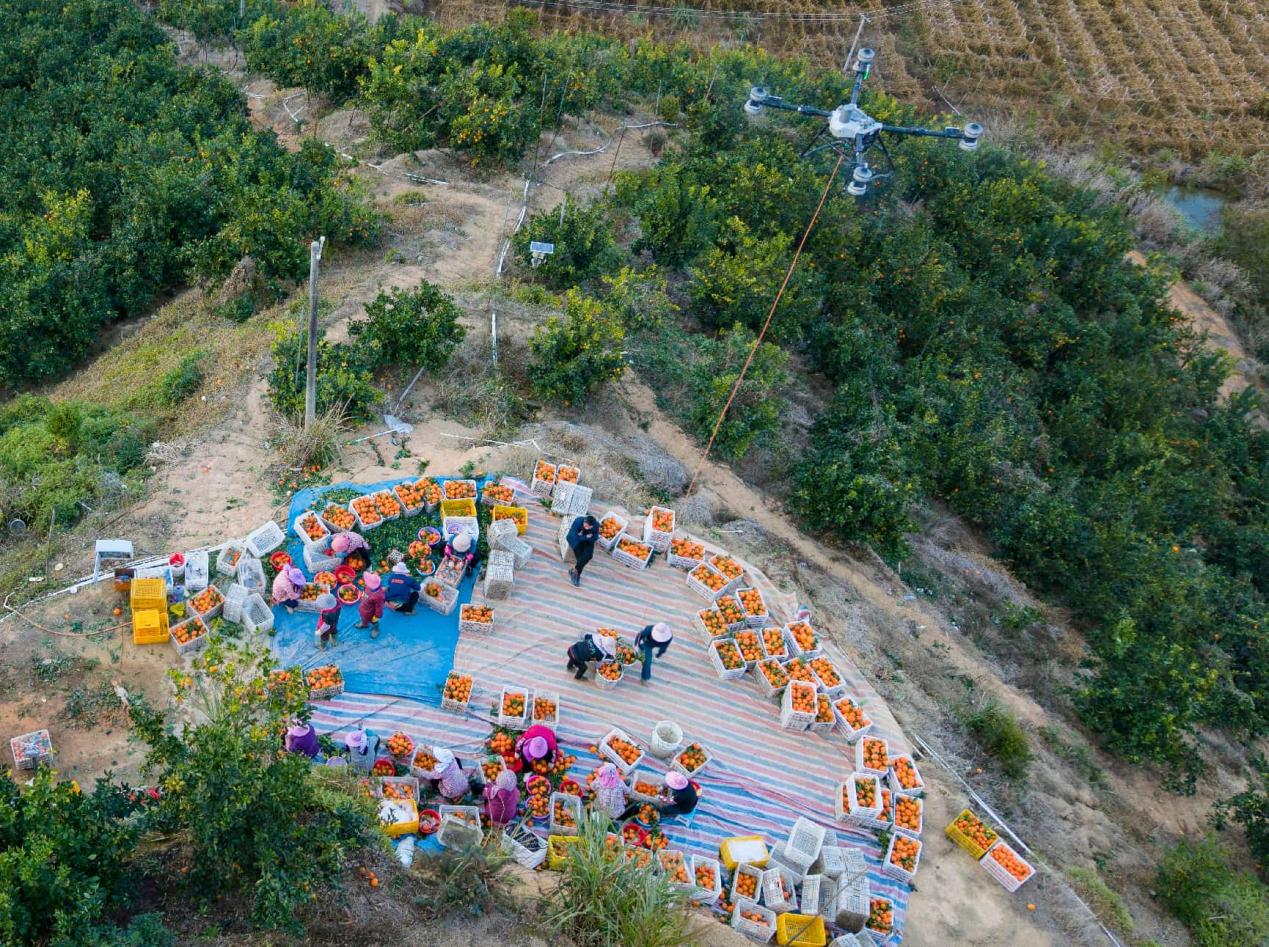
A drone transports freshly picked navel oranges from an orchard in Meizhou, south China's Guangdong province. (Photo/Feng Xiquan)
In Tongnan district of Chongqing, farmer Li Zhi manages a 1,500-mu (100 hectares) lemon orchard. In the past, growers often faced oversupply and falling prices, but now there's guaranteed purchasing, and pricing is quality-based -- the better the fruit, the higher the return, he said.
Modern orchards are equipped with integrated irrigation and fertilization systems, while drones are used for pest control and monitoring. In winter, they can even help protect crops from frost.
Between 2017 and 2025, China established nine modern agricultural industrial parks with citrus as a leading sector. In Wuming district of Nanning, south China's Guangxi Zhuang autonomous region, citrus variety Wogan has become a pillar of local economic growth. AI-powered sorting systems achieve nearly 98 percent accuracy in grading, while technologies such as the Internet of Things and digital twin systems improve efficiency and reduce losses. In 2024, the full citrus chain in Wuming generated close to 10 billion yuan ($1.45 billion) in output value, benefiting more than 240,000 people.
Advances in cold-chain logistics and cross-border trade are further pushing Chinese citrus onto global markets.
In the past, post-harvest losses in China exceeded 30 percent. Today, through technological breakthroughs in green preservation and sterilization, some companies have reduced losses to below 5 percent, significantly extending shelf life. Fresh Chinese citrus is now exported to more than 40 countries and regions.
At the same time, fast-growing cold-chain systems are supporting new retail models. In Qingshen county, Sichuan, organically grown mandarins are harvested and quickly transported via cold-chain delivery networks. In some cases, fruits picked can reach urban consumers within 24 hours.
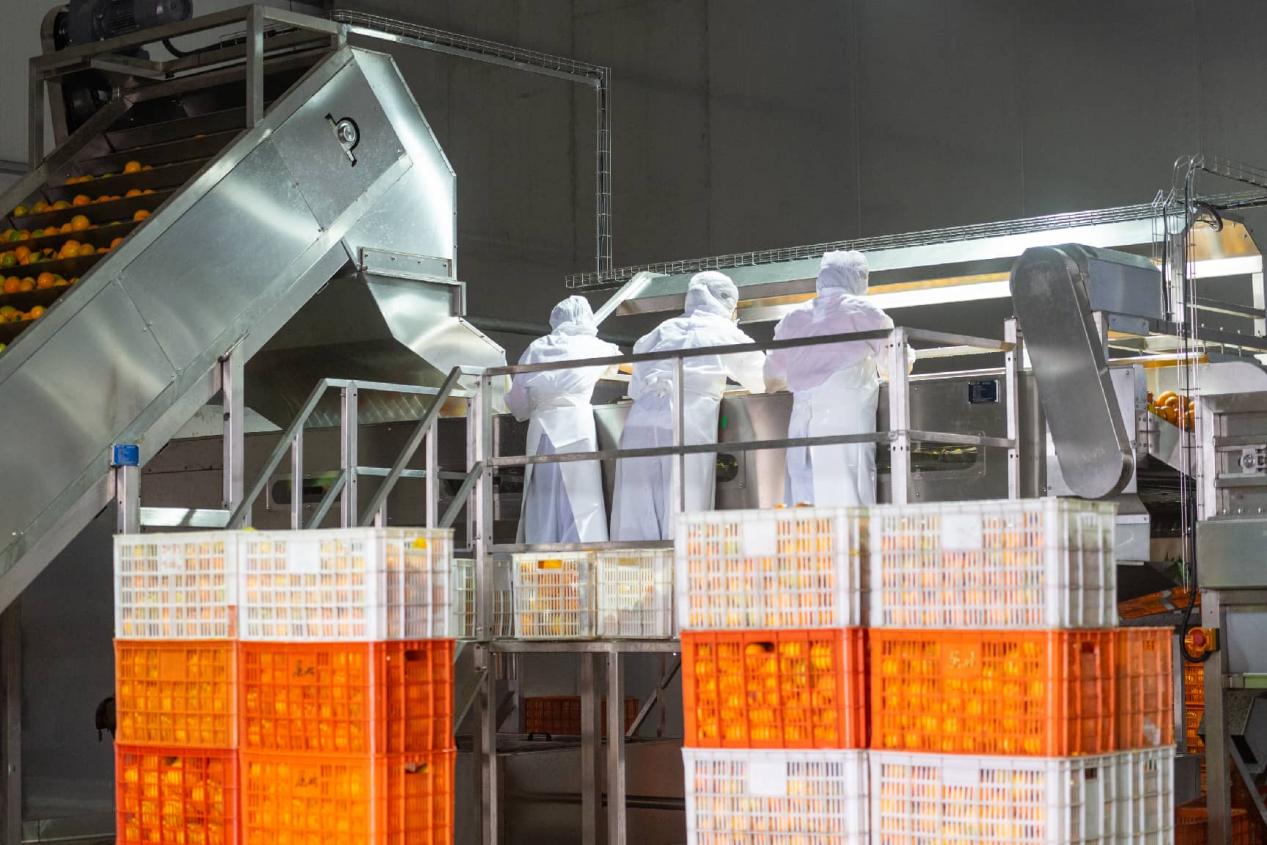
Photo shows a fully automated processing line for citrus syrup of a company in Yichang, central China's Hubei province. (Photo/Lei Yong)
Thanks to rising quality and reliable cold-chain logistics, Chinese citrus is becoming a major export driver.
Ganzhou navel oranges from east China's Jiangxi province, with a brand value of nearly 70 billion yuan, have ranked as China's top fruit brand for 11 consecutive years, reaching markets in 24 countries and regions.
Wushan Liancheng oranges from Chongqing are now sold in supermarkets in Singapore via modern cold-chain delivery. Anyue county in Sichuan province exports as much as 100,000 tons of lemons each year, making them the province's leading fruit export by volume.
Supported by the overseas expansion of tea drink brands, high-quality Chinese lemons are also gaining global recognition.
Driven by technological innovation and new business models, China's citrus industry continues to upgrade across the value chain, bringing more high-quality fruits from Chinese orchards to consumers around the world.