


ICBC rolls out cross-border RMB solutions as world shifts toward currency diversification
China's largest State-owned commercial bank launched on Friday its comprehensive cross-border renminbi financial solutions, highlighting accelerating global momentum behind the currency as investors and policymakers seek alternatives to a single-currency-dominated system amid rising geopolitical uncertainty.
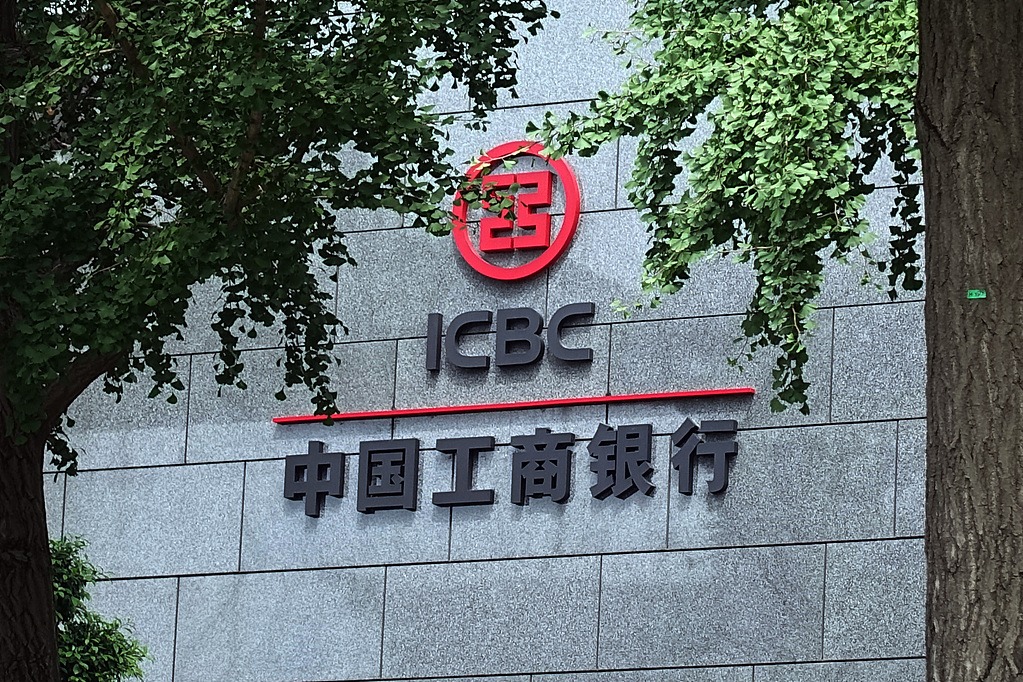
Photo via China Daily
The current volatile international economic and political landscape has made it increasingly clear that building a diversified and balanced international financial system is an urgent priority, Liu Jun, president of the Industrial and Commercial Bank of China, said. He noted that trust in a monetary system dominated by a single sovereign currency is eroding, prompting a growing number of global investors to adopt more diversified currency allocations.
"In the process of pursuing diversified allocation strategies, we aim to further diversify across regions, currencies, instruments and platforms, while leveraging various technological means to effectively mitigate geopolitical risks," Liu said.
He added that reducing the excessive concentration risks associated with a single dominant currency is essential. Efforts will also be made to strengthen direct exchange between the renminbi and other major currencies, helping to lower transaction costs.
"For a major economy like China, which accounts for about 15 percent of global GDP, it is both reasonable and necessary — whether from the perspective of efficiency or security — for its currency to hold a status commensurate with its economic position," Liu said.
"A growing market consensus is emerging that the internationalization of the renminbi has entered an important historical window."
In recent years, cross-border trade and investment activities have become increasingly active, and the use of the renminbi in cross-border transactions has continued to rise. In 2025, renminbi settlement accounted for more than half of China's total cross-border receipts and payments. Among enterprises, the share of goods trade settled in renminbi has risen to nearly 30 percent, Li Bin, deputy head of the State Administration of Foreign Exchange, said.
Tao Ling, deputy governor of the People's Bank of China, also noted that under a supportive policy environment, more and more enterprises, especially centrally administered State-owned enterprises, are recognizing the tangible benefits of using the renminbi in cross-border transactions. These include reduced financial costs, better hedging against exchange rate risks, and improved resilience to external shocks.
The renminbi has become an important payment and settlement tool for Chinese companies expanding overseas. In 2025, the value of cross-border renminbi receipts and payments handled by Chinese commercial banks on behalf of clients reached 71 trillion yuan ($10.3 trillion), up 10 percent year-on-year, with renminbi settlement in goods trade accounting for nearly one-third, Tao said.
Going forward, the People's Bank of China will expand the use of the renminbi in international trade and investment, steadily develop the offshore renminbi market, increase the supply of renminbi-denominated assets, and further open up the capital account, she said.
Also on Friday, ICBC signed a memorandum of understanding on renminbi cooperation with South Africa's Standard Bank, further formalizing and strengthening their collaboration on renminbi internationalization in Africa.
Standard Bank and ICBC have worked together to expand the use of the renminbi across Africa and promote its adoption along the China-Africa corridor, Sim Tshabalala, CEO of Standard Bank Group, Africa's largest bank by assets, said.
The MOU "reflects both the history of the partnership we share and the future we are building together — a future in which financial connectivity between China and Africa becomes more seamless, more digital, and more anchored in the renminbi," Tshabalala said.
He added that Standard Bank views its deeper participation in renminbi internationalization as an opportunity to better serve Chinese and African companies and individuals by making payments cheaper and simpler.
Tao said the renminbi offers a safe and stable currency option for both Africa and the broader global economy. As China-Africa economic and trade ties continue to strengthen and cooperation along the industrial chain deepens, she noted that the use of the renminbi across the continent has broad prospects.
In recent years, China-Africa economic and trade relations have demonstrated strong resilience and vitality. China has remained Africa's largest trading partner for 16 consecutive years.
Starting from May 1, the country will fully implement zero-tariff treatment for 53 African countries with which it has diplomatic relations, injecting new momentum into China-Africa economic and trade cooperation and creating broader space for financial collaboration, including renminbi cooperation, Yuan Xiaoming, assistant minister of commerce, said.
"As China's economy becomes more deeply integrated into global industrial, supply and value chains, it is particularly important to build a high-level cross-border financial services system to match this integration, continuously enhance the use of the renminbi in cross-border activities, support enterprises in international cooperation, and better promote the integrated development of trade and investment," Yuan said.