


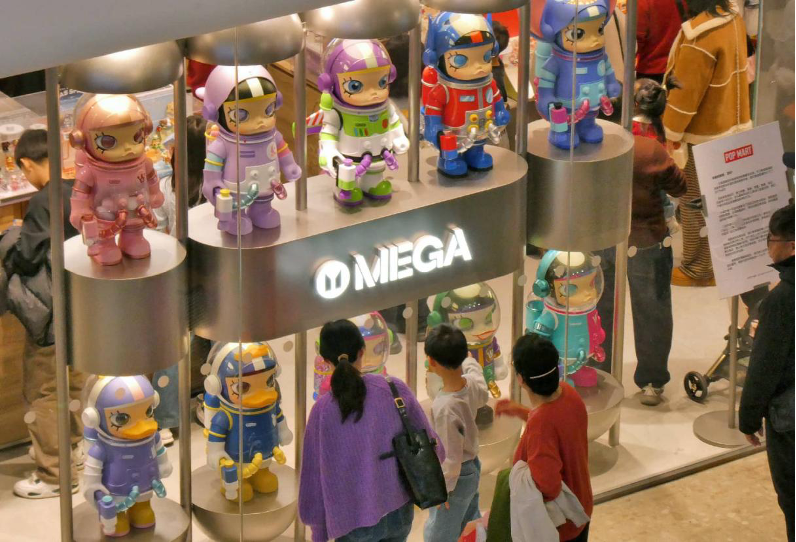
Consumers shop in a Pop Mart store in North China's Tianjin municipality. (Photo: People's Daily)
A significant shift is underway in China's consumer landscape, with emotional fulfillment emerging as a powerful driver of economic growth. This trend, creating a new frontier -- or "blue ocean" -- for consumption, is characterized by consumers prioritizing emotional satisfaction over purely material utility. Purchases such as limited-edition seasonal beverages, solo travel experiences, and meticulously crafted collectibles exemplify this movement.
"For me, buying a new co-branded bubble tea during the week and attending a traditional craft workshop on the weekend is a great way to unwind," explained Qiao Ziyan, a Beijing-based professional born in the 1990s. Her sentiment resonates with many young consumers.
According to a 2025 report on Gen-Z emotion-driven consumption jointly released by the Shanghai Youth and Children Research Center and other institutions, the top five categories of commodities that deliver emotional value include: physical goods such as plush toys, scented products, and stress-relief gadgets; experiential spending like concerts, stand-up comedy shows, and psychological counseling; social consumption; digital consumption such as avatars and virtual pets; and IP- or co-branded purchases.
Globally, emotion-driven consumption has already spread across multiple sectors, from designer toys and retail to culture and tourism, pets, technology, and dining, emerging as a powerful new engine of consumption growth.
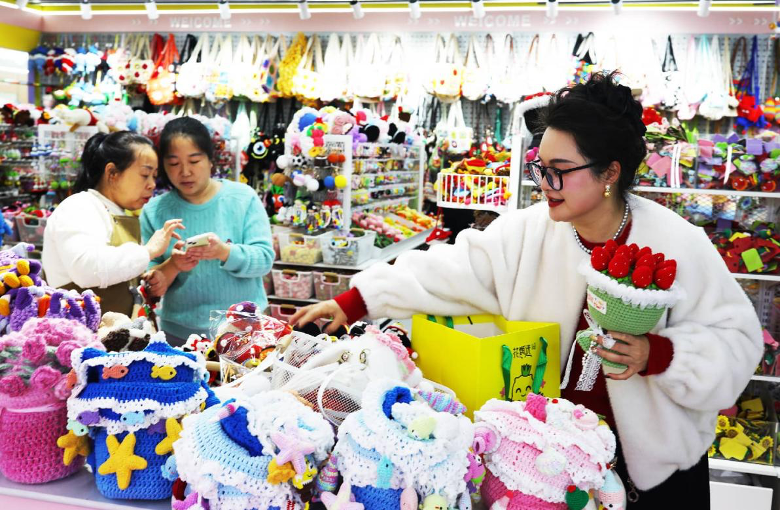
A woman buys fashionable handmade toys at the Global Digital Trade Center in Yiwu, East China's Zhejiang Province. (Photo: People's Daily)
Liu Shengzhi, a communication professor at Beijing University of Posts and Telecommunications, said that consumer values have shifted from practicality and frugality to emotional experiences. Young people today are more willing to spend money on rewarding themselves and fulfilling their emotional needs.
Today, emotion-driven consumption is constantly giving rise to new scenarios and business models.
Take Perler beads as an example. Once seen as a children's educational activity, this craft has quickly become a hit among young people. It is highly social, as people make creations for themselves or give them as gifts to friends.
Data shows that since 2026, searches for multiple keywords related to Perler beads have surged more than 10 times year-on-year, and transaction orders have doubled. People aged 20-25 account for the largest share of searches for Perler bead experiences, at nearly 40 percent.
Meanwhile, searches for keywords related to pet photography have risen by over 40 percent year-on-year. Those aged 25-35 make up more than half of all searches, becoming the main consumer group.
Simultaneously, "healing travel" has gained immense popularity, as individuals seek respite from urban pressures in mountains, lakes, ancient towns, and villages, finding solace in nature and simpler lifestyles. AI emotional companionship services are also booming, using technology to break the limits of time and space and offer accessible emotional relief.
New experiences such as intangible cultural heritage handcraft workshops and pet companionship have also gained traction.
Together, these new formats continue to enrich the scope of emotion-driven consumption, catering to the personalized needs of different groups.
In 2025, China's mini-drama sector experienced explosive growth, attracting nearly 700 million domestic users and achieving a projected market size exceeding 100 billion yuan (about $14.63 billion), doubling the figure in 2024. Popular filming locations of these micro-dramas have sparked a "micro-drama-themed tourism" trend, boosting local boosted consumption and driving upgrades in related industries.
"Cute, adorable WAKUKU, the fresh and stylish SiiNONO, and ZIYULI with its Hanfu-inspired elements… these trendy toys are hard to resist," said Zhang Wenbing, a Gen-Z consumer, at a pop-up event near THE BOX shopping mall in Beijing's Chaoyang district, where he purchased several items.
Emotion-driven consumption has solidified into a major economic driver. According to iiMedia Research, China's "emotion-driven economy" reached 2.3 trillion yuan in 2024 and is expected to exceed 4.5 trillion yuan by 2029.
The ACGN (Anime, Comics, Games, Novels) derivative economy, featuring designer toys and figurines as flagship products, has shown outstanding performance. It achieved a market size of 168.9 billion yuan in 2024, representing a significant year-on-year increase of 40.63 percent.
"The ACGN derivative economy revolves around IP symbols as a core connection," explained Zhou Zhiqiang, a professor at Nankai University's School of Literature. "It transforms emotional resonance from the virtual world into tangible consumption. Through activities like collecting and social interaction, it precisely meets Generation Z's core needs for emotional connection, self-expression, and a sense of belonging."
This consumption trend is also reshaping commercial spaces, industrial ecosystems, and employment patterns. Major cities like Shanghai and Guangzhou have revitalized older shopping centers by introducing ACGN stores, night schools, and stress-relief spaces, boosting revenue per square meter by two to four times.
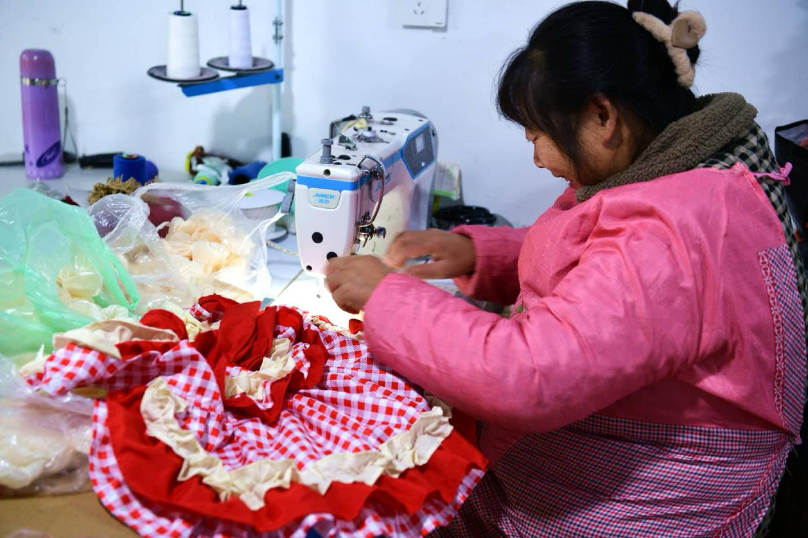
An employee of an e-commerce company makes pet clothes in Huai'an, East China's Jiangsu Province. (Photo: People's Daily)
According to e-commerce data from short video platform Douyin, consumption trends focused on emotional value are fueling a unique business phenomenon known as interest-driven industrial clusters, boosted by engaging content that stimulates consumer desire.
Over the past year, more than 9,800 merchants in these clusters have grown their sales from zero to over 1 million yuan, while over 200 have expanded from 1 million to more than 100 million yuan.
The platform is now home to 491 interest-driven industrial clusters with annual sales surpassing 100 million yuan. Among them, 108 are based in county-level regions, accounting for one-fourth of total cluster sales.
Data from Xianyu, China's leading secondhand and lifestyle services platform, shows that new occupations centered on emotional support have seen strong growth.
Over the past year, the number of sellers offering emotional companionship services rose by 42.91 percent year on year, with their per capita income increasing by 7.43 percent.
In total, 96 new types of "emotional support occupations" have emerged, ranging from medical accompanists and pet sitters to emotional healing therapists, greatly expanding new employment channels.