


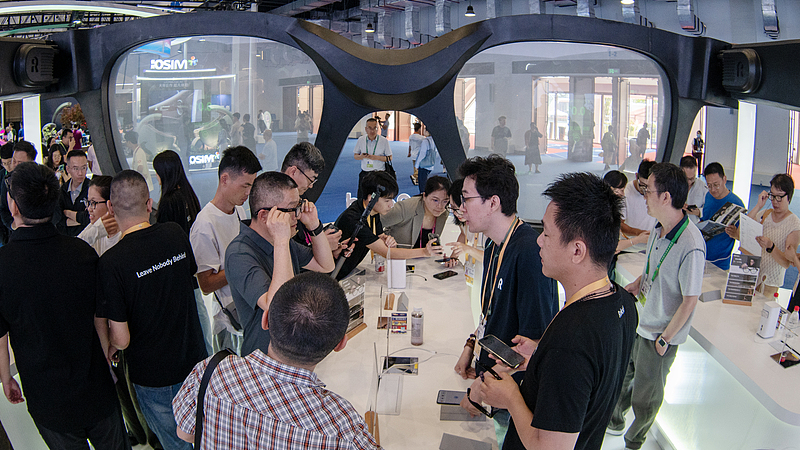
Visitors experiencing AI glasses at the Leqi booth, at the 6th China International Consumer Products Expo held at the Hainan International Convention and Exhibition Center in Haikou, Hainan Province, April 15, 2026./VCG
Editor's note: Peter T.C. Chang is a research associate at the Malaysia-China Friendship Association. The article reflects the author's opinions and not necessarily the views of CGTN.
The on-going 6th China International Consumer Products Expo (CICPE) in Haikou is more than a showcase of goods — it offers a window to observe the evolving dynamics of China's consumer market and its emergence as a "world's market". Once defined by outbound demand, with Chinese consumers looking overseas for quality and diversity, the market is now undergoing a profound transformation. Today, China is increasingly a destination where global brands come not just to participate, but to compete, localize, and thrive.
For years, the phrase "buying globally" captured the essence of Chinese consumption. Rising incomes, expanding middle-class aspirations, and digital connectivity have fueled demand for international products, from luxury goods to everyday essentials. Cross-border e-commerce has boomed, and overseas shopping has become commonplace. However, this outward flow has gradually given way to a more balanced, two-way exchange.
China's consumer market is now shifting toward a model where global brands are "selling globally" within China itself. Several factors have contributed to the change.
Firstly, the country's continued economic resilience and consumption upgrading have made it one of the most attractive markets in the world. Secondly, improvements in domestic retail infrastructure — from logistics to digital payment systems — have made market entry smoother and more scalable for international companies. Thirdly, policy support for opening up has reduced barriers and created a more predictable business environment.
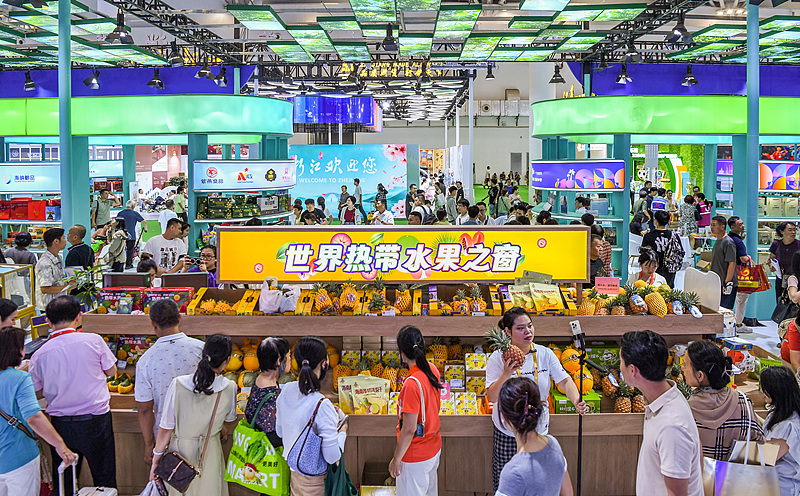
Visitors throng the Hainan Pavilion at the 6th China International Consumer Products Expo, April 16, 2026.(Photo: VCG)
Platforms like the CICPE have played a pivotal role in this transformation. These events act as gateways, lowering the threshold for global brands to access Chinese consumers. For many companies, especially small and medium-sized enterprises, such expos provide a first point of contact with local distributors, partners, and customers. They also offer invaluable insights into consumer preferences, enabling brands to adapt their strategies in real time.
More importantly, these platforms symbolize a broader shift toward mutual market integration. Rather than a one-sided flow of goods, China is fostering an ecosystem where domestic and international players interact, collaborate, and co-create value. Global brands are not only exporting products to China but are increasingly tailoring them for Chinese tastes — whether through localized flavors, culturally relevant branding, or digital-first engagement strategies.
This two-way openness benefits both sides. Chinese consumers gain greater access to diverse, high-quality products without leaving the country, while international brands tap into one of the world's largest and most dynamic consumer bases. At the same time, domestic companies are exposed to heightened competition, encouraging innovation and quality improvements that strengthen the overall market.
As the expo unfolds in Haikou, it sends a clear message: China's consumer market is no longer just a destination for goods, but a hub of global commercial exchange. The transition from "buying globally" to "selling globally" within China reflects not only an economic evolution but also a deeper integration into the global marketplace. In this new landscape — where China is becoming a "world's market" — openness is no longer a policy slogan, but a living reality that shapes the future of consumption.