


Hormuz's open-and-close crisis is repricing global supply chains
Editor's Note: Li Haoran is an assistant professor at the School of Applied Economics and the associate director of the Center for Research on Global Energy Strategy at Renmin University of China. The article reflects the author's opinions and not necessarily the views of CGTN.
Markets still talk about the Strait of Hormuz as if the real question were whether it is open or closed. In practice, the bigger danger is the stop-start pattern now hanging over the route: partial reopening, renewed restriction, a burst of optimism, then another threat. Global trade can survive a short shock. What it struggles to absorb is instability that returns before firms have time to reset. The current situation is no longer just a shipping story, but increasingly a pricing, planning and political-risk story.
Hormuz remains one of the world's central energy chokepoints. According to the US Energy Information Administration, in 2025, nearly 20 million barrels per day of crude oil and oil products moved through the Strait, roughly a quarter of the world's seaborne oil trade, and about 80 percent of those flows were headed to Asia. That is why instability in Hormuz hits Asia first, even if the consequences never stay there. More importantly, the current moment is becoming more damaging because uncertainty is now coming from two directions at once. Iran is using the Strait as leverage, while Washington is adding another layer of instability through threats, pauses, deadlines and mixed signals.
Such a combination is corrosive. Markets can handle bad news more easily than confusing news. A route that is clearly closed is a crisis. A route that is neither reliably open nor definitively shut can be even harder to price. Businesses do not know whether to wait, reroute, restock or simply brace for the next reversal.
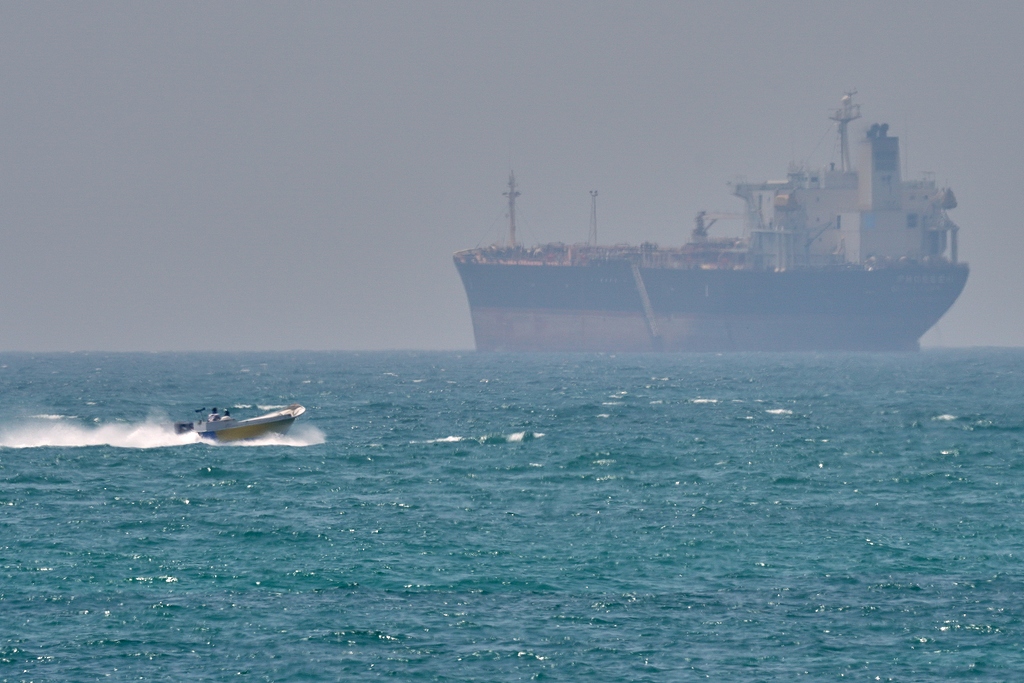
A boat sails past a tanker anchored on the Strait of Hormuz off the coast of Qeshm island, Iran, April 18, 2026./VCG
A short disruption is painful, but the playbook is familiar. Firms draw down inventories, delay cargoes, pay more for freight and insurance, and hope conditions normalize. Much harder to manage is a corridor that keeps swinging between tension and temporary relief. At that point, uncertainty itself becomes part of the cost.
Here is where the real economic damage begins. Modern supply chains do not run on physical movement alone. They run on confidence: confidence that contracts can be honored, delivery windows trusted and insurance priced without a fresh political shock every few days. Once confidence weakens, usable capacity begins to shrink even before any formal closure takes place. The route may still be open on paper, but economically, it is already becoming less dependable.
This is where the certainty premium arises. A high but stable cost can be budgeted. An unstable cost changes behavior. When businesses no longer trust next month's shipping conditions, they start booking earlier than they want to, holding more inventory than is efficient, lining up backup suppliers and paying for redundancy they would normally avoid. They are no longer just buying energy. They are buying predictability.
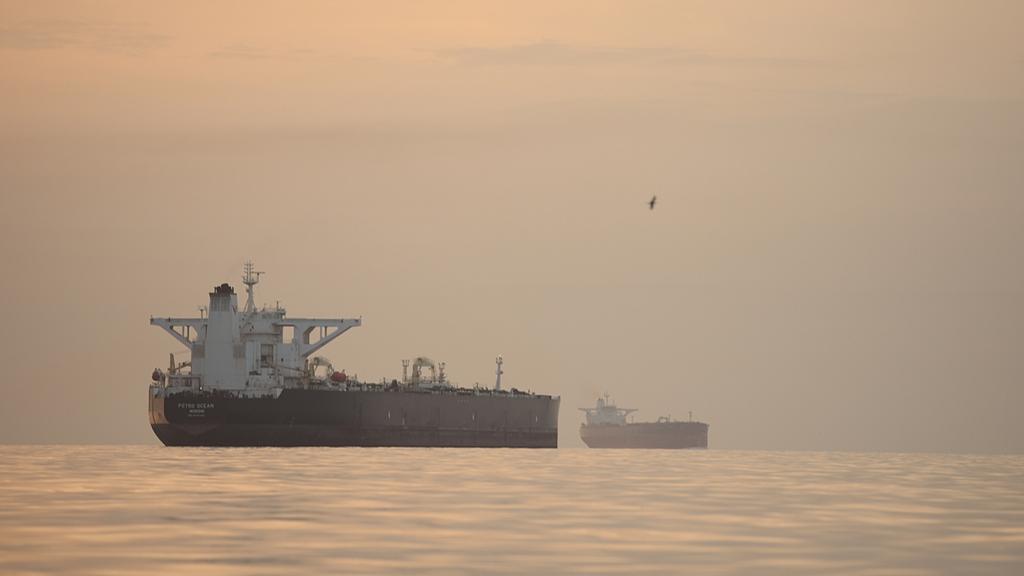
Tankers anchored in the Strait of Hormuz off the coast of Qeshm Island, Iran, April 18, 2026. /VCG
In the current crisis, that premium is not being driven only by what Iran may do in the waterway. It is also being driven by the stop-start nature of US policy. Trump's defenders may call it tactical flexibility. Markets are more likely to call it policy whiplash. One day the message is that the Strait is reopening and progress is possible. The next day, coercive pressure remains in place, the rhetoric hardens again and the path forward looks less clear than before. Signaling of that sort does not calm markets. It tells firms they must hedge not only against disruption in Hormuz, but also against abrupt changes in the political line coming out of Washington.
The market, in other words, is no longer dealing with one source of instability but two. Iran can threaten the corridor physically. Trump can unsettle expectations politically. For global supply chains, those risks reinforce each other. The result is a wider zone of doubt around contracts, inventories, delivery schedules and sourcing decisions.
Seen from that angle, the usual question "Can oil still pass through Hormuz?" misses the deeper issue. What matters is whether companies still believe the route can be treated as dependable. Once the answer becomes uncertain, firms stop treating the disruption as a temporary emergency and start reorganizing around instability itself.
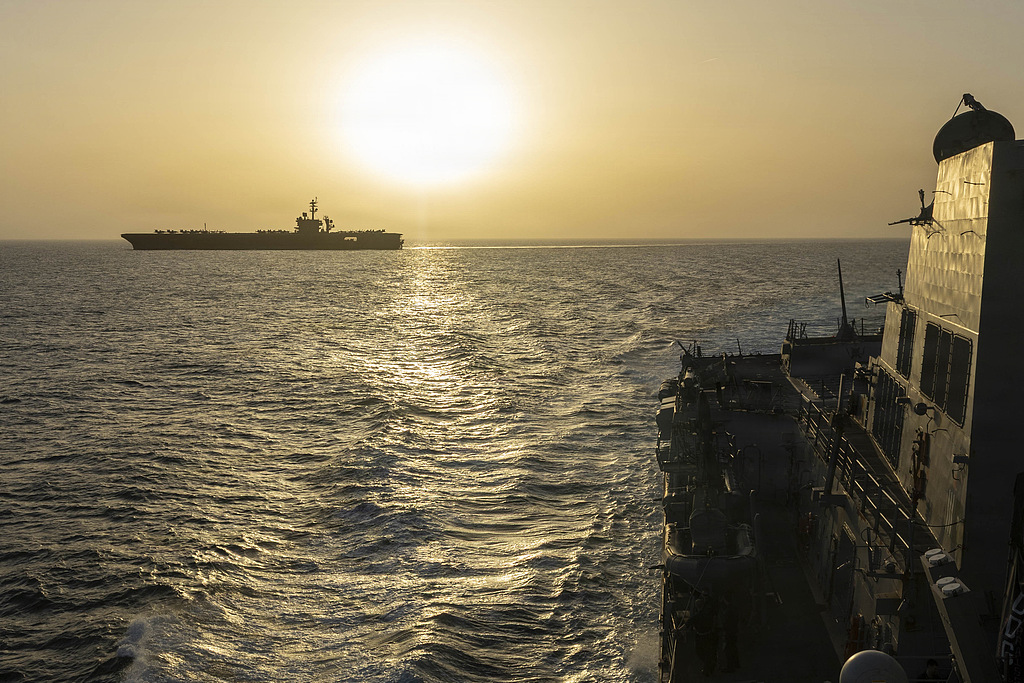
USS Abraham Lincoln (CVN 72) conducts US blockade operations related to the Strait of Hormuz in the Arabian Sea, April 16, 2026. /VCG
That is the moment when repricing moves from the spot market into corporate strategy. Inventories rise. "Just-in-time" gives way to "just-in-case." Supplier diversification becomes more attractive. Backup logistics that once looked wasteful begin to look prudent. Even if the physical disruption proves intermittent rather than total, the commercial response can still be lasting.
If uncertainty persists, countries and firms will do what they always do when they lose faith in a corridor: they will try to build around it. More pipelines, more alternative export routes, more storage, more redundancy. Such decisions are expensive and slow, which is exactly why they matter. They are not a response to a one-week shock. They are a response to the belief that instability has become structural.
Once that belief takes hold, the consequences do not disappear when ships move again. Trade patterns begin to shift. Old routes lose part of their centrality. Investment decisions start reflecting not just today's disruption, but tomorrow's fear of repetition.
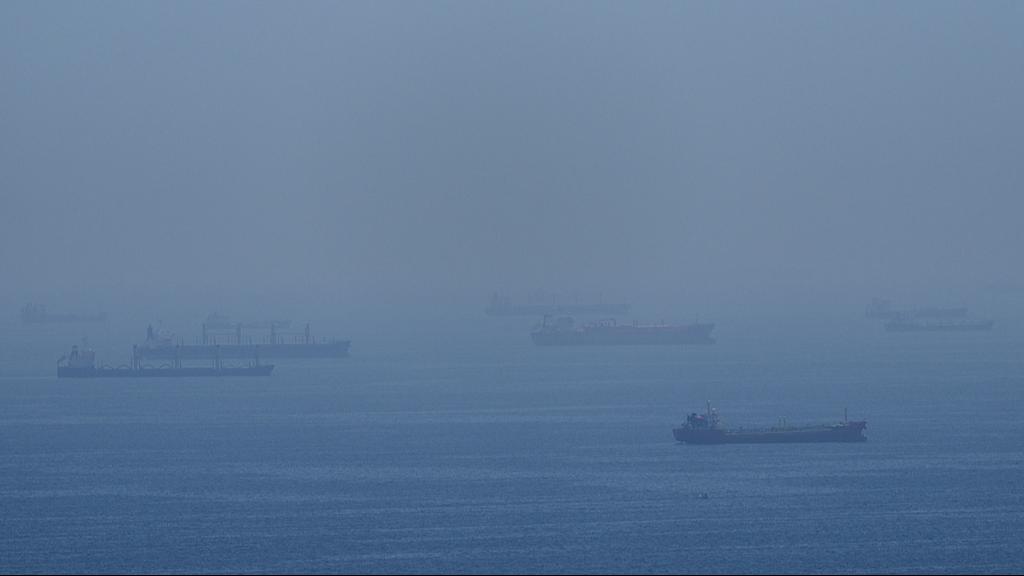
Tankers anchored in the Strait of Hormuz, April 18, 2026. /VCG
The larger danger, then, is clear. A prolonged Hormuz crisis would not simply lift freight rates or push up oil prices for a while. It could redraw parts of the global energy map. That risk becomes greater when Washington adds inconsistency to an already fragile situation. Firms can adapt to danger. What they struggle to absorb is danger combined with policy volatility.
Peace in the Gulf, therefore, is not an abstract diplomatic slogan. It is an economic necessity. The world economy does not require perfect calm, but it does require a minimum level of predictability. Without it, firms hedge more, insure more, stockpile more and invest more cautiously. What emerges is a certainty premium across the trading system: higher costs paid not for greater output, but for greater security, redundancy and confidence.