


BERLIN, May 13 (Xinhua) -- Germany's automotive industry could lose 125,000 jobs by 2035, the German Association of the Automotive Industry (VDA) said on Wednesday, urging the European Union to adopt a more technology-open approach to car regulation.
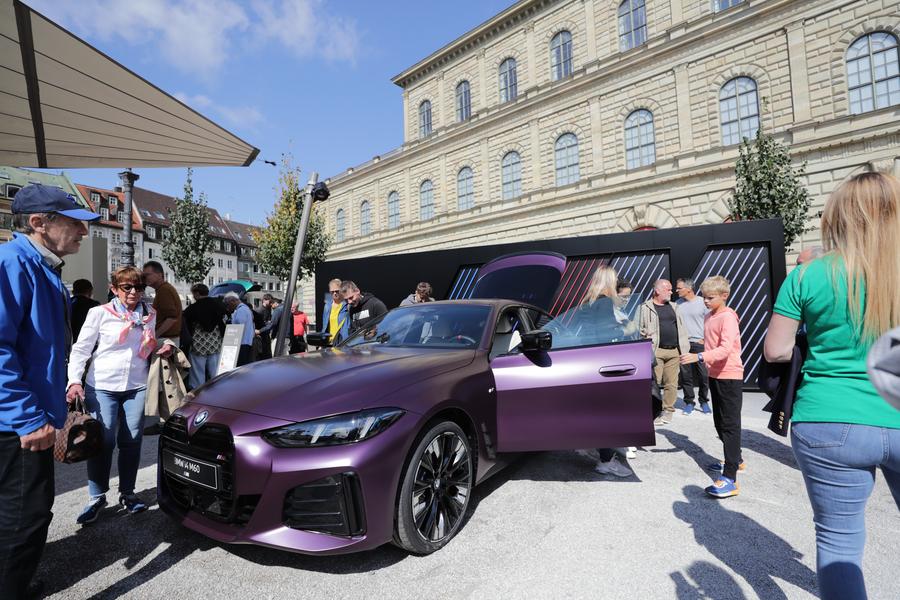
People visit the exhibition zone of BMW at the Open Space of the 2025 IAA Mobility in Munich, Germany, Sept. 11, 2025. (File photo: Xinhua)
The VDA said the employment in the sector could fall by a total of 225,000 jobs between 2019 and 2035. Around 100,000 jobs have already been lost since 2019, and a further decline of about 125,000 jobs is expected by 2035.
The association said the outlook marks a deterioration from its 2024 forecast in cooperation with consultancy Prognos, citing weaker investment conditions in Germany and rising international competition that have limited domestic job creation while new jobs linked to the transition to climate-neutral and digital mobility are increasingly being created abroad.
It also pointed to structural changes which are weighing on supplier employment.
"The development is concerning and shows that Germany is facing a persistent" crisis, said VDA President Hildegard Mueller, citing high taxes, energy costs and labor costs as some key factors weakening the country's industrial competitiveness.
Under current EU rules for passenger cars and vans, only battery electric and fuel cell vehicles would be allowed for new registrations from 2035, a policy that the industry group says risks around 50,000 jobs in Germany.
The VDA said a broader role for plug-in hybrids, range extenders and combustion engines using renewable fuel could significantly reduce job losses, potentially preserving around 50,000 positions.
It added that major automotive markets continue to pursue mixed technology pathways, arguing Europe should avoid a uniquely restrictive regulatory approach.
The group urged the European Parliament and EU members to introduce greater flexibility into the European Commission's Automotive Package proposals during upcoming negotiations.