


Hengzhou in south China's Guangxi Zhuang Autonomous Region is home to the world's largest jasmine production base. Today, the city is developing the jasmine industry through digital technologies.
At the Zhonghua jasmine garden, vast fields are equipped with soil moisture sensors, AI-powered yield estimation cameras, and high-definition systems. What was once traditional farmland dependent on weather conditions has now been transformed into a precisely managed smart farm.
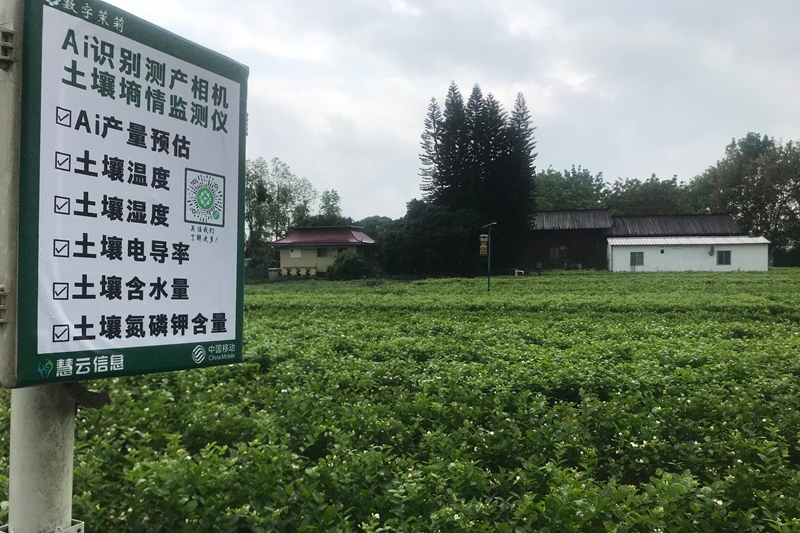
Photo shows a signboard showing information of a digital monitoring system at the Zhonghua jasmine garden in Hengzhou, south China's Guangxi Zhuang Autonomous Region. (Photo/Chen Jiejun)
At the core of the system is an integrated sensing-analysis-control loop. Huang Shen, head of operations at TalentCloud, a Guangxi-based smart agriculture solutions provider, said the platform is equipped with seven sets of sensors that continuously collect real-time data such as soil temperature and humidity, transmitting it via a 5G network to a central platform, where field conditions can be monitored in real time.
The park is supported by eight 5G base stations, ensuring full 4G/5G dual-network coverage.
The digital system now enables intelligent monitoring across 2,000 mu (about 133 hectares) of jasmine fields in the garden, supporting fully digitalized cultivation. With this technological upgrade, pesticide use has dropped by 20 percent, water and fertilizer consumption by over 30 percent, and farmers' income has increased by 3,600 yuan (about $529) per mu.
In Hengzhou, more than 170 jasmine and tea processing enterprises are embracing digital transformation to address long-standing challenges such as freshness preservation and low efficiency.
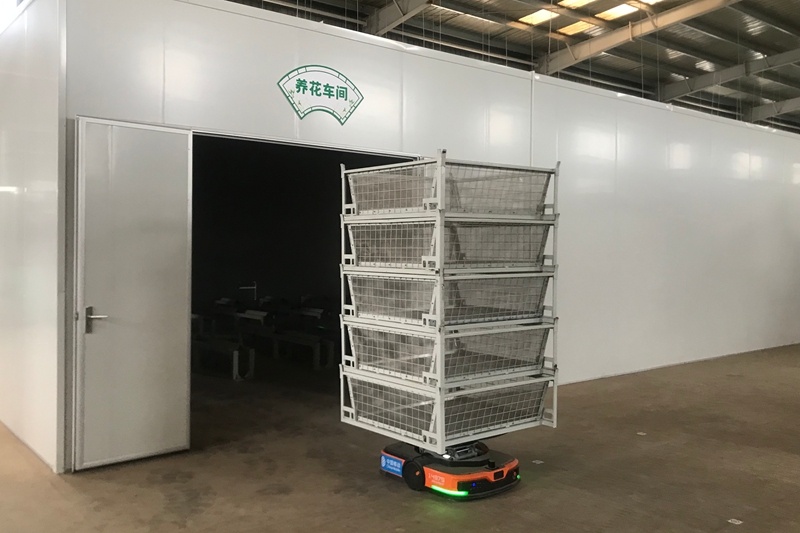
An automated guided vehicle (AGV) robot works at the workshop of Guangxi Qinglei Tea Co., Ltd. in Hengzhou, south China's Guangxi Zhuang Autonomous Region. (Photo/Chen Jiejun)
At Guangxi Qinglei Tea Co., Ltd., automated guided vehicle (AGV) robots move through the workshop while automated production lines run at full speed. From flower preservation and tea scenting to sorting and packaging, the entire process is fully automated with no manual handling.
"During peak season, we process an average of over 500 kilograms of fresh flowers per day. The digital production line and monitoring system are essential to keeping everything running smoothly," said Lei Rongke, factory manager of Guangxi Qinglei Tea Co., Ltd.
The company has integrated the digital system into its supply-production-sales platform, allowing consumers to scan a QR code to view the entire production process and trace the origin of raw materials, achieving full transparency from field to cup.
Through the digital system, the company has increased production efficiency by 30 percent, reduced operating costs by 20 percent, and cut labor costs by 70 percent, while ensuring more stable aroma and product quality.
Since August 2025, Hengzhou has rolled out a digital trading model for jasmine flowers across eight major markets. Annual trading volume of fresh jasmine flowers now exceeds 150,000 tonnes.
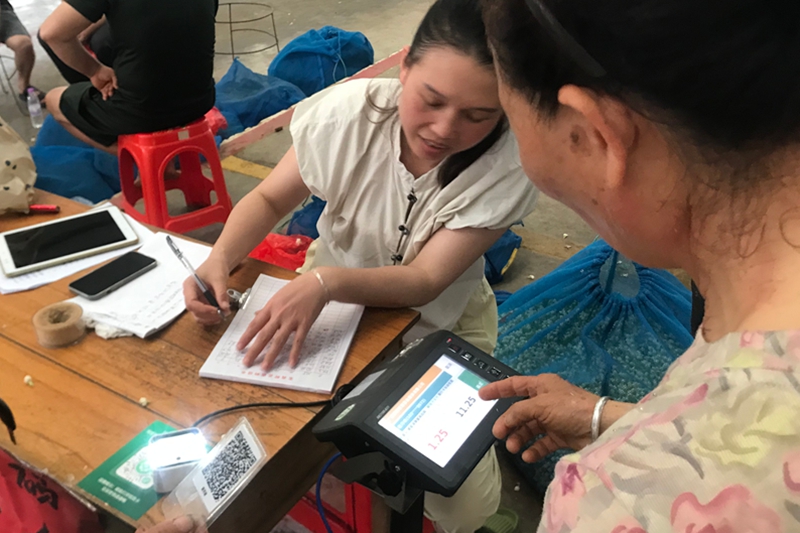
A smart jasmine trading system allows payment and invoicing to be completed with a single click at a jasmine trading center in Hengzhou, south China's Guangxi Zhuang Autonomous Region. (Photo/Chen Jiejun)
With the rollout of smart trading, market operations have become more standardized and transparent. In 2025, Hengzhou's jasmine flower trading volume increased by over 15 percent year on year.