


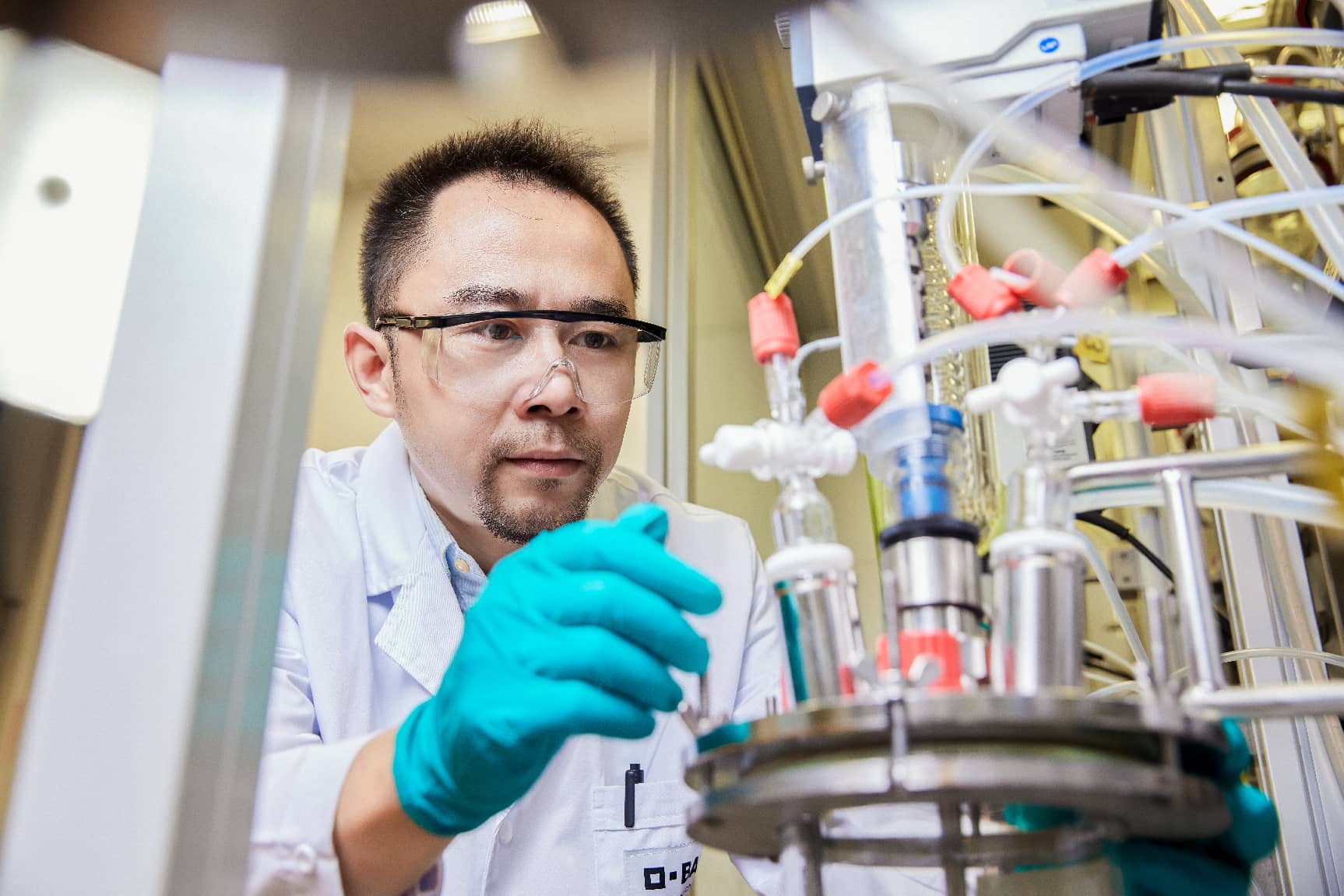
A researcher at the German multinational company BASF, the world's largest chemical producer, conducts a test at the company's innovation center in Shanghai. (Photo provided by BASF)
Recent data from China's Ministry of Commerce highlights a significant shift: foreign companies are significantly increasing their research and development (R&D) activities within China.
Two key figures underscore this trend: First-quarter foreign direct investment (FDI) in China's high-tech industries surged by 30.7 percent year-on-year; In 2025, FDI in China's scientific research and technical services sector accounted for nearly one-fifth of the national total, marking its seventh consecutive year of growth.
Market developments further underscore the trend.
Earlier this year, multinational pharmaceutical company AstraZeneca announced plans to invest more than 100 billion yuan ($14.72 billion) in China before 2030, further expanding its footprint in pharmaceutical production and R&D.
In March, Siemens held its first Real Meets Digital summit in Beijing, launching 26 products developed locally in China.
At the China Development Forum 2026, the chairman of Louis Dreyfus Company revealed plans to build a second R&D center in China.
From official data to corporate actions, the momentum behind "R&D in China" is becoming increasingly evident.
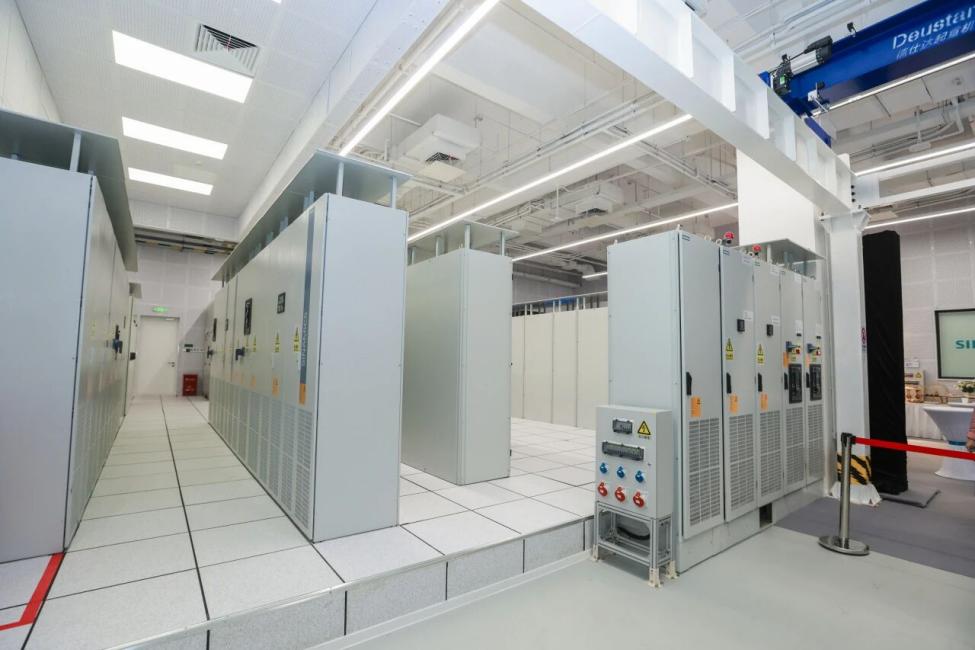
Photo shows a laboratory of Siemens Motion Control R&D and Innovation Center (Shenzhen) in Shenzhen, south China's Guangdong province. (Photo provided by Siemens China)
More importantly, foreign-funded R&D centers in China once mainly served local market needs. Today, however, more and more cutting-edge technologies and core iterations of global product lines are being developed in China and then introduced to international markets.
This reflects a broader shift: multinational companies' manufacturing bases in China are evolving into sources of innovation, while their R&D centers are upgrading from localized support facilities into key nodes in global innovation networks.
So why is this shift from "made in China" to "created in China" taking place?
One important reason is China's comprehensive industrial system, which provides strong support for turning innovation into reality.
Research and development cannot exist in isolation; it requires an entire chain linking laboratories with commercialization. China possesses the world's most complete industrial system and the broadest range of industrial supporting facilities. This means innovators can find partners across every stage of the process, from design and prototyping to testing and mass production.
At the China International Import Expo last year, for example, French multinational corporation Schneider Electric showcased its dual "power + cooling" innovation solution, which was designed and developed by its China-based team and validated and delivered through collaboration with local supply chains.
The highly efficient coordination among R&D, pilot testing and mass production -- the ability to move swiftly from research to manufacturing -- is a unique strength that many other economies struggle to match.
Another major advantage lies in China's vast and diverse application scenarios, which provide fertile ground for innovation.
China's enormous population, combined with steadily rising incomes, has generated strong and diversified demands, fostering vibrant consumption scenarios in digitalization, green development and intelligent technologies. Massive demands in areas such as healthcare, intelligent manufacturing and smart cities have created natural "testing grounds" and "training arenas" for new technologies.
"Many things happen first in China," said Roland Busch, president and CEO of Siemens AG. "When we bring innovations to market, China is often the first place where they are launched and implemented." Robust market demand, in turn, feeds back into the R&D process, making the journey from concept to commercial product faster and more efficient.
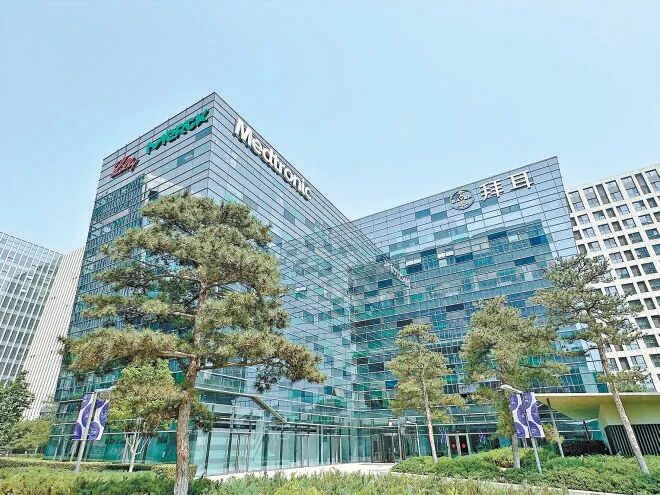
The International BioPark in Beijing's E-Town, a national-level economic and technological development zone, gathers more than 10 multinational pharmaceutical companies and a number of local innovative enterprises. (Photo from the official account of E-Town on WeChat)
A continuously improving policy environment has also strengthened confidence in innovation investment. Policy stability is a critical factor for multinational companies making long-term strategic decisions, particularly because R&D investment requires a high degree of continuity, stability and predictability.
Since the beginning of this year, China has further increased policy support for foreign-funded R&D centers. For example, a new version of the Catalogue of Encouraged Industries for Foreign Investment, which took effect on February 1, added more encouraged categories in areas such as innovative drug development and digital creative technology research.
In February, China's Ministry of Finance, Ministry of Commerce and other departments jointly issued a notice continuing tax exemptions on imported scientific research equipment and supplies for foreign-funded R&D centers, including exemptions from import tariffs, import-related value-added tax and consumption tax.
Strong policy support combined with attentive government services has further reinforced the confidence of foreign investors to keep returning and expanding their investment in China.
The intensifying R&D efforts by foreign companies in China reflect deeper changes in the drivers attracting foreign investment to China and highlights the growing vitality of the country's innovation ecosystem.
Looking ahead, China will continue leveraging its combined strengths in industry, market and policy support to attract more multinational companies to locate their R&D operations in China and share in the opportunities created by the country's innovation-driven development.