


Pouso Alegre (People’s Daily) - Leaving São Paulo and heading north, the landscape gradually unfolds into rolling hills stretching into the distance. After more than two hours on the road, a vast industrial complex emerges on the horizon. This is the manufacturing base of XCMG Brazil Industry on the outskirts of Pouso Alegre, Minas Gerais.
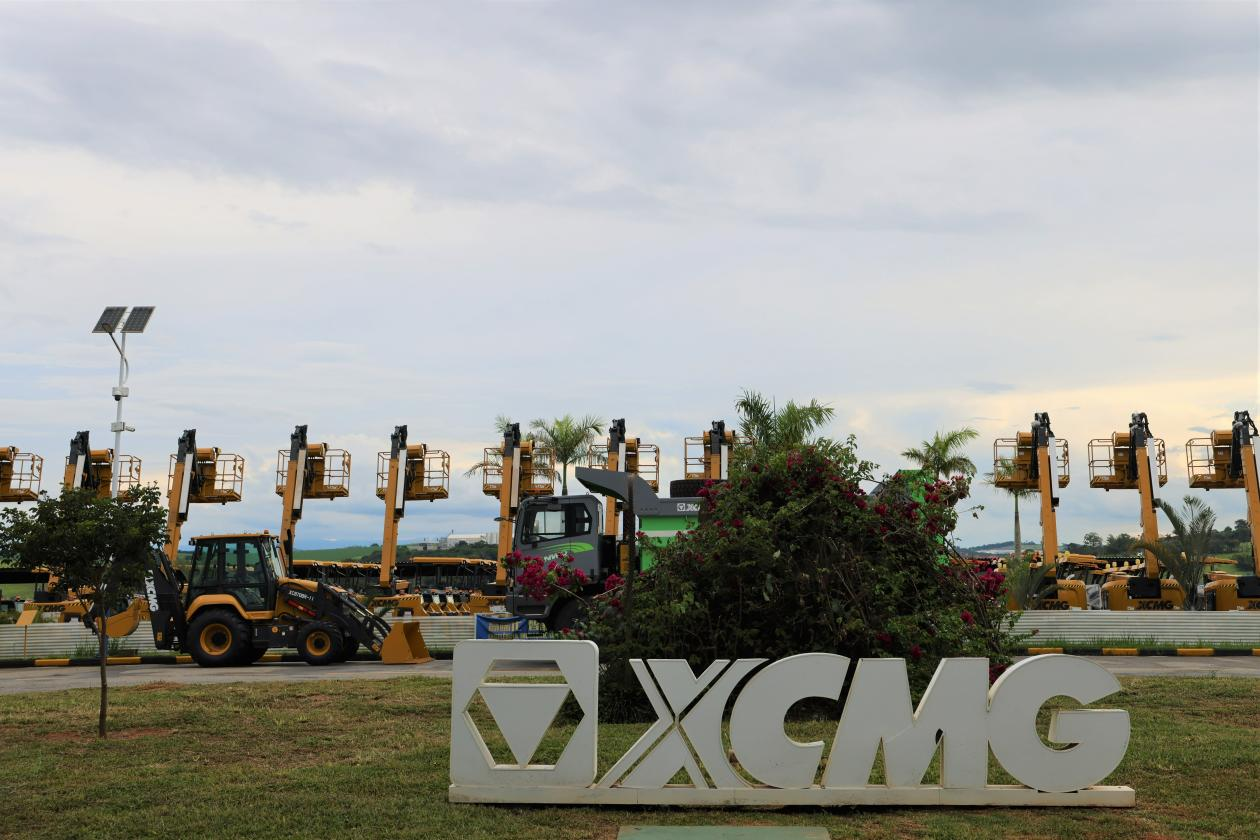
The manufacturing base of XCMG Brazil Industry on the outskirts of Pouso Alegre, Minas Gerais. (Photos: People's Daily/Shi Yuanhao)
Over more than a decade since it began operations, the facility has produced more than 30,000 units of construction machinery, supporting urban development and industrial growth across Brazil. It has also become a vivid example of how Chinese technology and industry are taking root overseas through localization.
One of the plant's flagship production lines stretches more than 170 meters and is dedicated to manufacturing wheel loaders and motor graders specially optimized for the Brazilian market. As he guided the reporter through the facility, Liu Gang, an assembly process engineer at XCMG Brazil, explained that advanced equipment such as power-assisted robotic arms and tire-handling machines is widely used on the line.
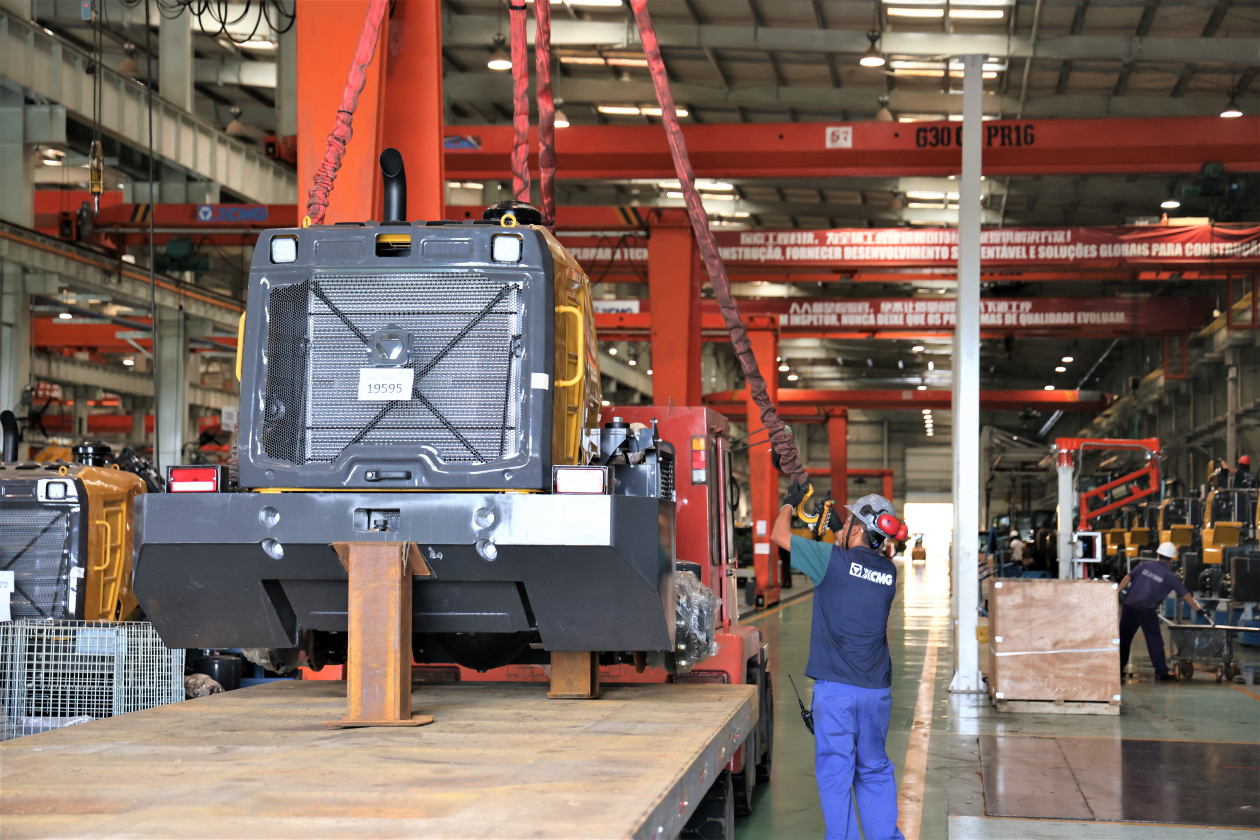
A worker in the assembly workshop of XCMG Brazil carries out operations with the assistance of powered equipment.
The manufacturing base currently produces five major categories of "yellow-line" construction machinery: wheel loaders, motor graders, excavators, road rollers and backhoe loaders, accounting for nearly one-fifth of Brazil's market.
"Through continuous upgrades to production lines, greater investment in smart manufacturing equipment, process improvements and ongoing workforce training, our production capacity has achieved remarkable growth," Liu said. Taking excavators as an example, daily output has more than tripled compared with three years ago.
This achievement did not happen overnight. XCMG products first entered Brazil through exports in the late 1990s. Construction of the manufacturing base in Pouso Alegre began in late 2012, and the facility officially started operations about a year and a half later. As Brazil actively advances its reindustrialization agenda, the company has evolved from a trading enterprise into a localized manufacturer and eventually an integrated industrial platform.
Localization requires adapting to local conditions. "Based on market demand in Brazil, we optimize factors such as cabin comfort, engine emissions and adaptability to local working environments," said Kauê de Andrade, a product engineer at XCMG Brazil, adding that customers frequently request customized solutions.
Today, XCMG Brazil products are widely used in highway construction, port modernization projects, hydropower development, urban infrastructure and agricultural operations throughout the country.
Extra Máquinas, XCMG Brazil's largest distributor, has seen its sales revenue increase tenfold since establishing a partnership with the company in 2020. "Chinese products stand out in the Brazilian market because of their durability, reliability and excellent value for money," said Pérsio Briante, president of Extra Máquinas. According to Briante, the ability to adapt to local needs, develop customized products and provide responsive technical support and after-sales service is also essential to XCMG's success.
Li Hanguang, general manager of XCMG Brazil, noted that the company works closely with local suppliers, helping develop industrial chains while promoting local economic growth. He added that more than 50 percent of production across the company's five major machinery categories is localized, creating over 2,000 jobs. Around the manufacturing base, companies involved in component processing, logistics, equipment maintenance and industrial services have gradually clustered together.
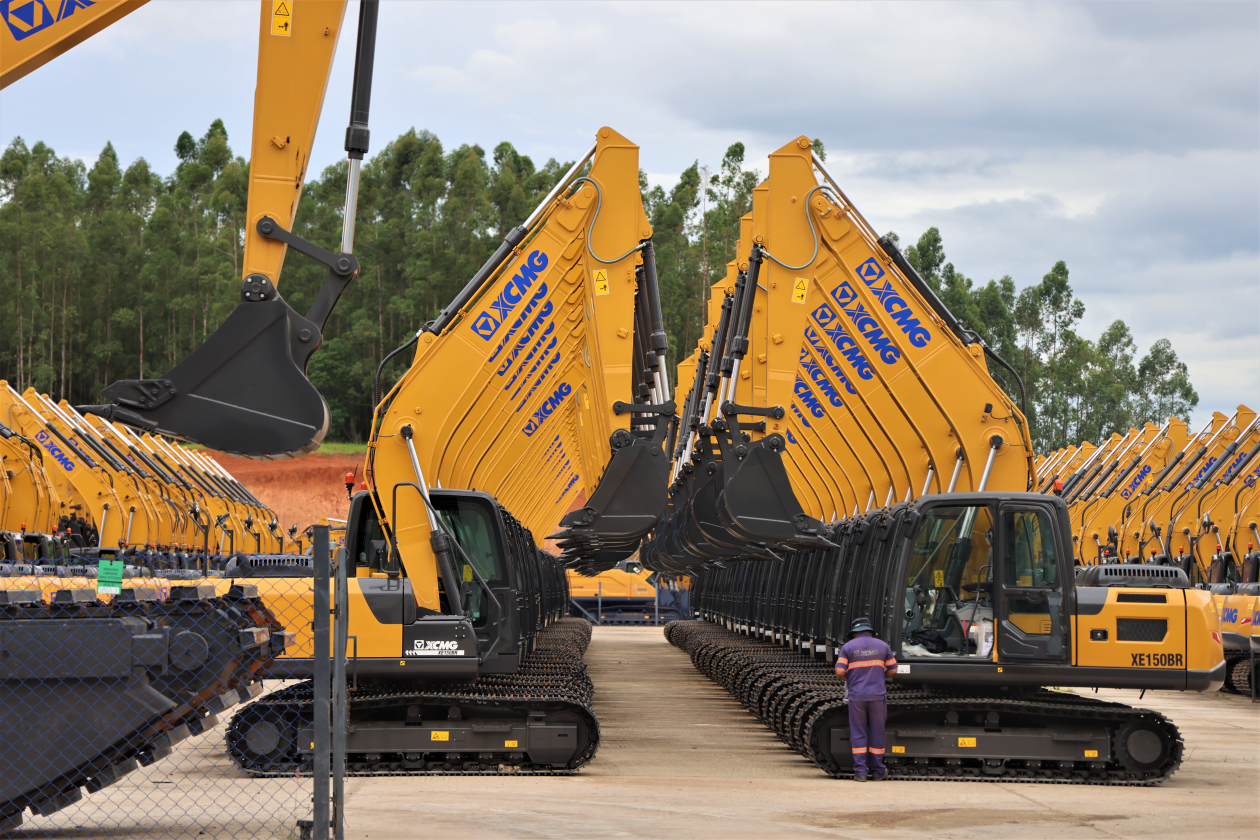
Rows of pre-ordered construction machines await shipment at the manufacturing base of XCMG Brazil.
As Brazil’s reindustrialization efforts have accelerated, demand has continued to grow in sectors such as mining, agriculture, energy and infrastructure. At the same time, strengthened alignment between Chinese and Brazilian development strategies has expanded opportunities for cooperation, enabling XCMG Brazil to steadily increase its market share. Over the past decade, the company’s revenue has grown at an average annual rate of nearly 40 percent. More than 95 percent of its workforce consists of local employees, creating a mutually reinforcing relationship between the company and surrounding communities.
Pouso Alegre, a city of about 150,000 people, and its neighboring areas have become some of the greatest beneficiaries of XCMG Brazil’s growth. Local residents now enjoy more diverse employment opportunities, while the city itself has gained new economic vitality.
Compared with the reporter’s previous visit in 2024, one notable change at the manufacturing base was the growing presence of electric products, including green-colored electric mining trucks prominently marked “100% Electric.”
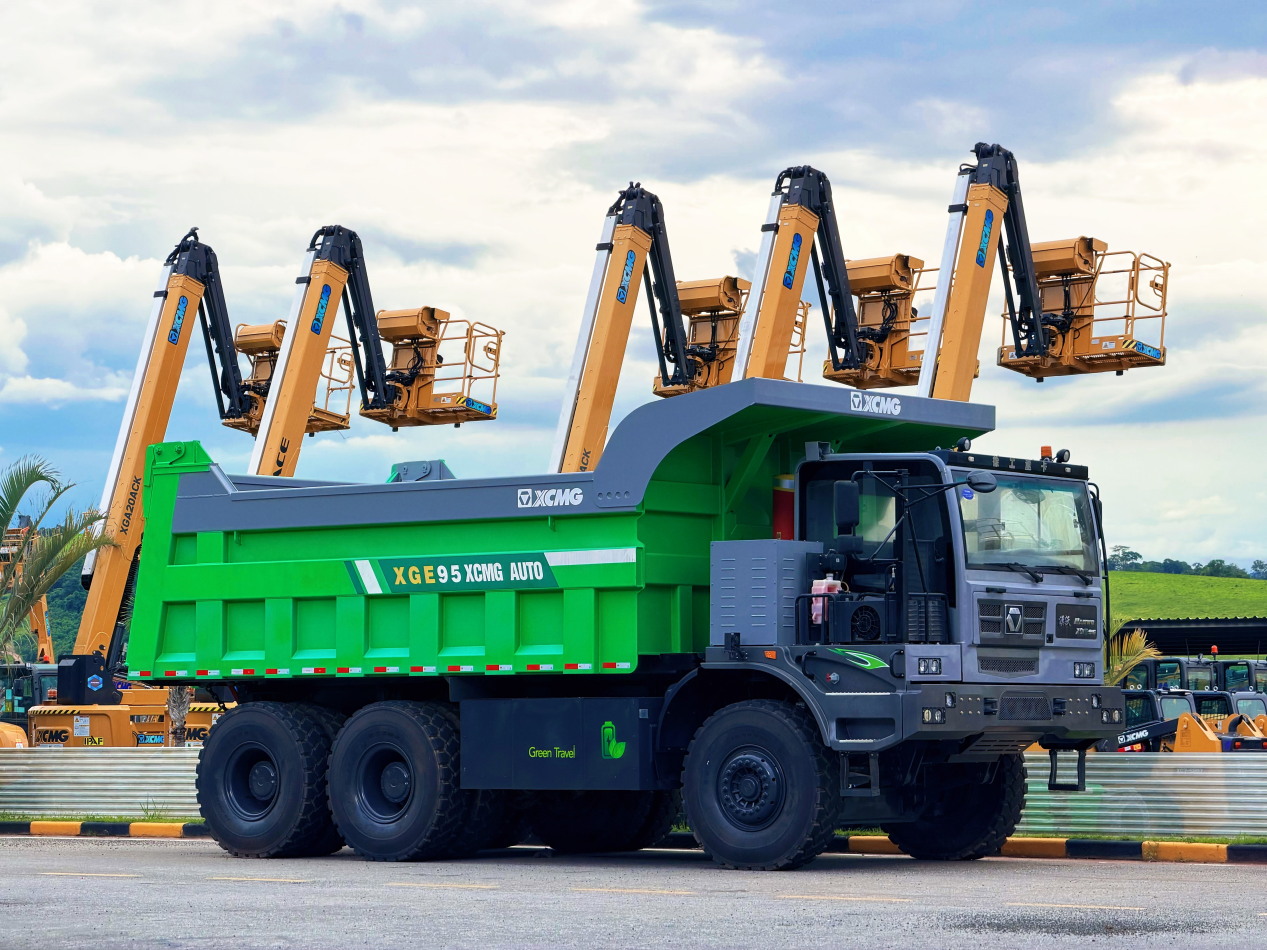
A green-colored mining truck parks in front of rows of machines awaiting shipment at the manufacturing base of XCMG Brazil.
Currently, these electric products are imported from China, but local production is expected soon. "We plan to introduce the production and assembly of new-energy commercial vehicles and high-end agricultural machinery in Brazil during the second half of this year," Li said.
Brazil’s government has recently launched its New Industry Brazil policy, emphasizing digital transformation and green development. In response, XCMG Brazil has developed a forward-looking roadmap focused on accelerating smart factory construction and promoting digitalization and electrification. The company aims to expand applications of new-energy products in areas such as green mining, infrastructure development, urban logistics and industrial transportation, contributing to Brazil’s sustainable development goals.
Andrade, who previously visited China for training and factory tours, remains impressed by the logistics robots and autonomous mining trucks he observed there. "I was deeply impressed by China’s rapid advances in intelligent manufacturing and electrification," he said. "The XCMG Brazil manufacturing base has tremendous room for improvement."
XCMG is not alone. In recent years, more Chinese companies have chosen to invest in Pouso Alegre. A newly built optical cable manufacturing plant by Yangtze Optical Fibre and Cable has begun operations, while Midea Group’s third factory in Brazil has started mass production of refrigerators and washing machines.
"Through capital investment and technology transfer, Chinese companies are helping this region, and Brazil as a whole, integrate more deeply into higher-value-added industrial chains," Fonseca said. "They have become an important force driving Brazil's reindustrialization."
According to a recent report from the Brazil-China Business Council, China's direct investment in Brazil increased by 45 percent in 2025, making Brazil the world's largest destination for Chinese investment. "Productive investment from China is steadily increasing in Brazil, while technology transfer and capacity building have become increasingly significant," said Marta Fernández, director of the BRICS Policy Center of Brazil.