


Fresh fruit from ASEAN countries travels across mountains and seas before passing through ports and distribution hubs in south China's Guangxi Zhuang Autonomous Region, ultimately reaching millions of Chinese households.
As China's only provincial-level region connected to ASEAN by both land and sea, Guangxi has become a vital gateway for ASEAN fruit entering the Chinese market.
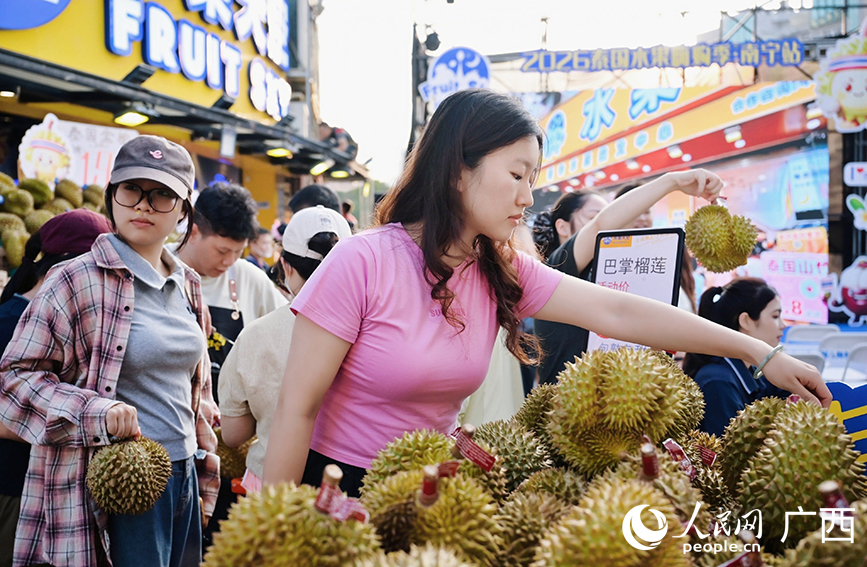
Consumers selects Thai durians at a market. (People's Daily Online/Fu Huazhou)
According to statistics, nearly one-third of ASEAN fruit imported into China enters through Guangxi. From January to April this year, Guangxi's ports imported 894,700 tonnes of ASEAN fruit, up 12.3 percent year on year, while import value rose 58.9 percent to 9.53 billion yuan (about $1.4 billion).
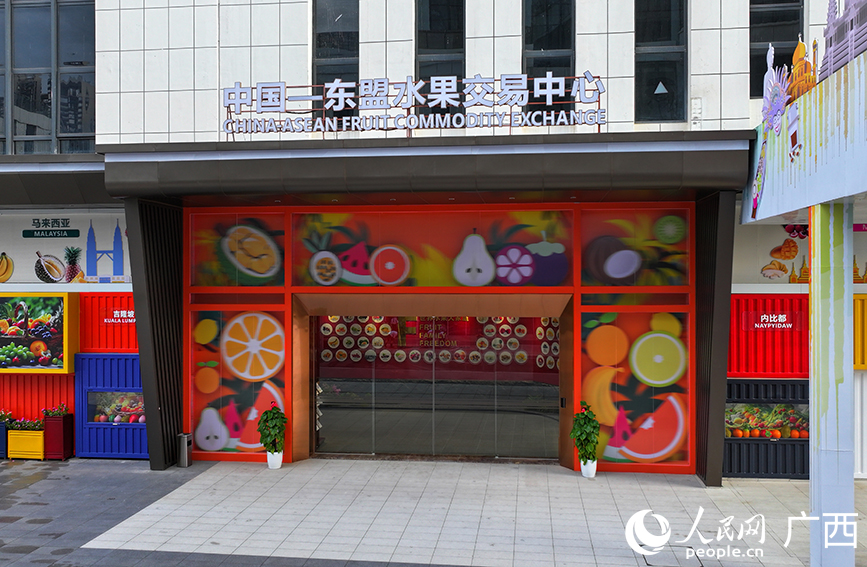
Photo shows a China-ASEAN fruit trading center in south China's Guangxi Zhuang Autonomous Region. (People's Daily Online/Fu Huazhou)
Guangxi has established 12 designated inspection facilities for imported fruit, covering land, sea, air and rail. Major ports, including Youyiguan Port, Dongxing Port, Qinzhou Port and Nanning Airport, now operate around the clock.
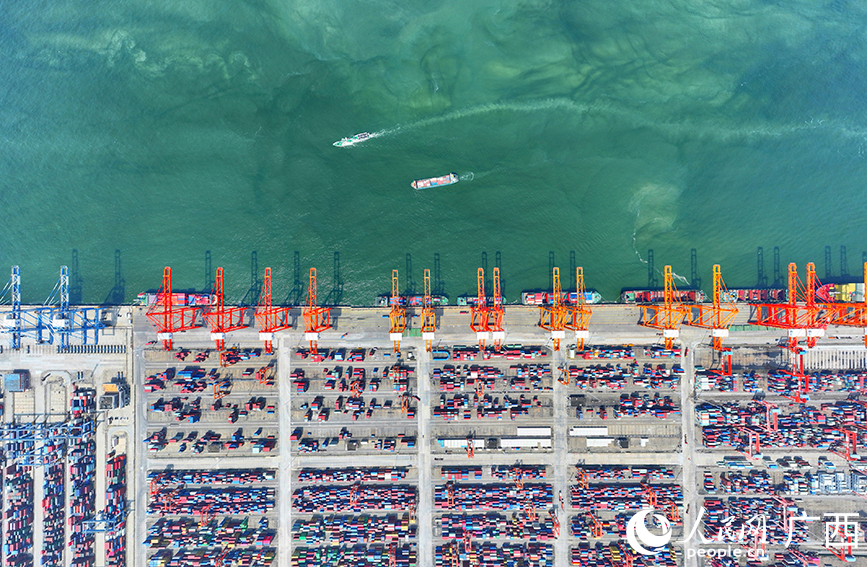
Photo shows a busy scene at Qinzhou Port, south China's Guangxi Zhuang Autonomous Region. (People's Daily Online/Fu Huazhou)
The region is also accelerating the development of a three-tier cold-chain logistics network. Leveraging the New International Land-Sea Trade Corridor, Guangxi has launched regular refrigerated shipping routes and cold-chain freight trains. Fruit from Thailand can reach the Chinese market within 72 hours.
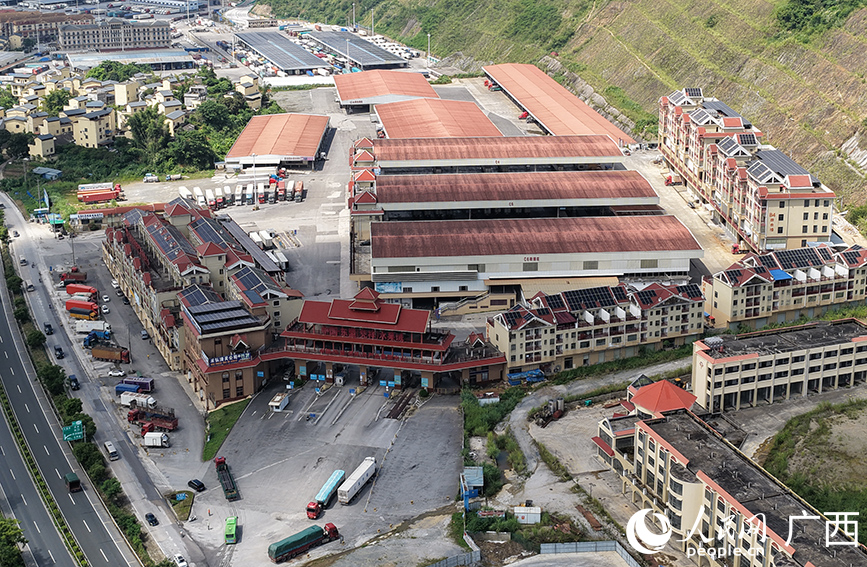
Photo shows a China-ASEAN fruit trading center in Chongzuo, south China's Guangxi Zhuang Autonomous Region. (People's Daily Online/Fu Huazhou)

A consumer buys fruit at a supermarket in Nanning, south China's Guangxi Zhuang Autonomous Region. (People's Daily Online/Fu Huazhou)