


While emerging technologies are rapidly reshaping the global market landscape, China will accelerate its capital market reform to facilitate the development of new quality productive forces and the restructuring of traditional industries, which is integral to the country's high-quality economic growth, said Wu Qing, chairman of China Securities Regulatory Commission.
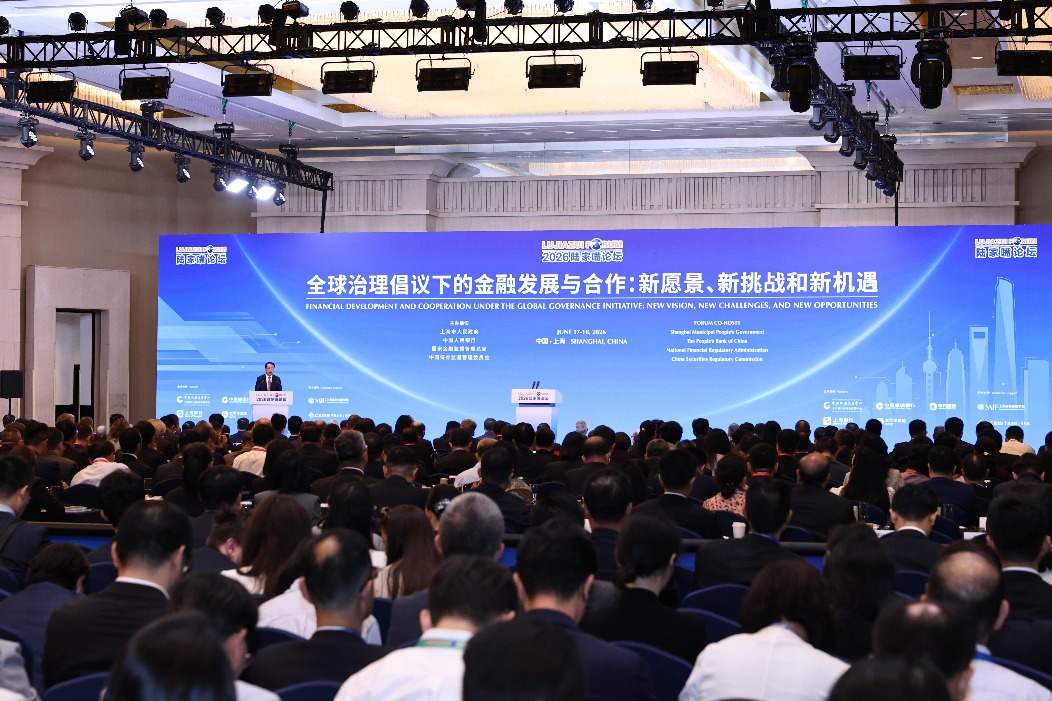
Photo via China Daily
Wu made the comments on Wednesday, when the two-day 2026 Lujiazui Forum got underway in Shanghai.
The fifth set of listing rules at the technology-focused STAR Market in Shanghai, which allow the listing of unprofitable companies possessing core technologies, will be extended to artificial intelligence large model companies. The CSRC, the country's top securities watchdog, will support the STAR Market flotation of more "hard technology" companies from the sectors of bio-manufacturing, embodied intelligence and quantum technology, he said.
ChiNext in Shenzhen, Guangdong province will step up its support for companies specializing in new types of consumption and modern services, said Wu.
Over 2,000 companies have been listed on the STAR Market and ChiNext so far, reporting a combined market value of over 35 trillion yuan ($5.18 trillion) while building industrial clusters of new energy, integrated circuits, biomedicine and high-end manufacturing.
In late December, the Shanghai Stock Exchange expanded the application scope of the fifth set of listing rules to include commercial rocket companies.
Wu said at the Wednesday event that the rules and regulations for the registration and administration of securities issuances by listed companies will be further revised.
New mechanisms that have been widely anticipated by the market, including shelf offering, will be introduced at a quicker pace to make financing more flexible and convenient for companies.
The shelf offering mechanism could enable companies, especially innovation-driven ones, to plan their issuance schedule according to their own funding needs. This could also mitigate disruptions from large lump-sum offerings, said Tian Xuan, dean of the Guanghua School of Management at Peking University.
The CSRC will also support qualified companies currently trading on the Hong Kong bourse to list on Chinese mainland exchanges, which is conducive to the coordinated development of the two markets, said Wu.
Investors can anticipate an enriched product supply, including actively managed exchange-traded funds, which have become increasingly welcomed by investors across the globe. On top of that, the first four commercial property real estate infrastructure trusts will be listed in Shanghai on Thursday, according to Wu.
Shanghai will be encouraged to develop fundamental and strategic derivatives such as electricity futures, while Hong Kong will be supported to launch five-year RMB treasury bond futures, he said.
To further improve the quality of listed companies, regulators have underscored corporate governance, urging companies to step up dividend payouts and share buybacks while tightening constraints on share reductions by major shareholders, said Wu.
According to Patrick Zweifel, chief economist of Pictet Asset Management, the earnings per share growth of Chinese listed companies does not truly reflect China's economy, which is growing at its full potential while undergoing a rebalancing. Companies could consider balancing reinvestment with a greater focus on rewarding shareholders.
Similar value-up programs as those introduced in Japan and South Korea can be good references for China, as higher dividends and more buybacks can reduce market volatility and attract more international investors in the long run, he said.