



Foreign tourists visit Tongli ancient town in Suzhou, east China's Jiangsu province. (Photos provided to People's Daily)
A recent inbound tourism promotion event held along the Lijiang River in Guilin, south China's Guangxi Zhuang autonomous region, highlighted the significant trends reshaping China's inbound travel sector.
The event featured Jacky Chan, designated an inbound tourism ambassador by China's leading online travel platform, Ctrip. He joined nearly 2,000 international travel professionals at a gathering that blended iconic landscapes with cultural storytelling. A mesmerizing drone light show creatively linked motifs from classic Chinese cinema with national landmarks like the Lijiang River, Huangshan Mountain, and Xi'an's Bell Tower. Experiencing traditional Zhuang brocade weaving, a Swiss tourism executive noted: "Travel remains the most effective way for breaking down cultural barriers and fostering mutual understanding."
Immersive travel experiences have become a defining feature in China's inbound tourism market. In Zhangjiajie, central China's Hunan province, overseas families hike through dramatic landscapes guided by customized travel planners.
In the streets of Chongqing municipality in southwest China, foreign content creators are drawn to street food stalls to experience the city's vibrant everyday life.
In Tunxi Old Street in Huangshan, east China's Anhui province, Russian visitors explore distinctive Huizhou-style architecture and try their hand at traditional ink-making.
Visitors now have a wider range of destinations to explore, while travel experiences are growing richer and more varied.
According to statistics, China's travel services exports reached 147.15 billion yuan ($21.74 billion) in the first four months of this year, up 30.4 percent year on year. In the first quarter alone, over 8.31 million foreign visitors entered China under visa-free policies, an increase of 29.3 percent.

Foreign tourists interact with a humanoid robot in the North Bund, Shanghai.
This evolution reflects a shift from fleeting sightseeing tours to deeper experiences of local life and culture, mirroring the full potential of China's growing services trade and acting as a prime example of the nation's deepening commitments to high-standard opening up.
The expanding "China travel" phenomenon illustrates the tangible benefits of China's openness. Significant measures, including the expansion of visa-free policies and optimized tax refund systems for departing travelers, are steadily improving convenience. Simultaneously, services are becoming more internationalized. Over 150,000 domestic travel providers have linked with Ctrip's multilingual global platform, substantially boosting inbound tourism capacity and service quality. Guilin exemplifies this approach, employing multilingual ticketing kiosks, AI tour guides, digital hotel information, and specialized consultants for tailored itineraries. Collectively, multilingual online platforms, robust foreign currency payment options, and standardized service frameworks are strengthening the industry's foundation.
Booming inbound travel unveils the profound cultural heritage of an open China.
Visitors can feel the heartbeat of modernity amid streamlined, well-organized airports, a far-reaching high-speed rail network and cutting-edge digital infrastructure.
They linger over exhibits at the National Museum of Chinese Writing to delve into how oracle bone script was created and trace the full evolution of Chinese characters.
A trip to Zhaohua Ancient City in southwest China's Sichuan province lets travelers witness the enduring cultural lineage along the ancient Shu Roads and fully immerse themselves in the timeless allure of the Three Kingdoms culture.
China, both ancient and dynamic, is attracting growing interest from around the world. As Kevin Rotich, editor at Kenya's Capital FM website, observed, "Ancient civilization and modern innovation are perfectly integrated here. Every firsthand experience fills me with genuine admiration."
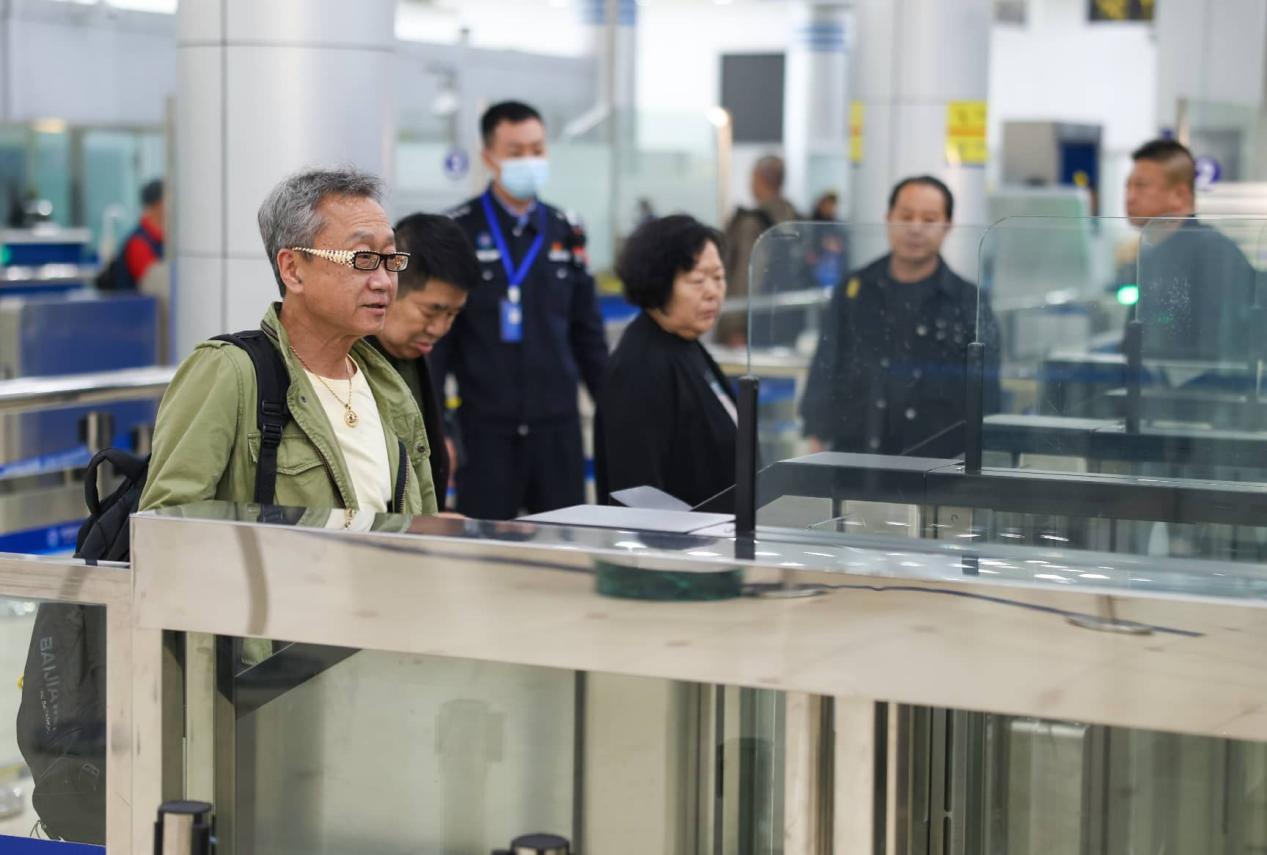
South Korean passengers go through entry and exit formalities in an orderly manner at a travel inspection hall of Shidao Port in Rongcheng, east China's Shandong province.
Inbound tourism mirrors the global opportunities brought by an open China.
An action plan for standardization in trade in services for the 2026-2030 period was released recently. It identifies priorities to speed up the formulation of standards covering tourism services and inbound consumption, and align China's service standards with leading international norms.
By breaking down bottlenecks concerning rules, regulations, management and standards, China steadily advances institutional opening up, which will serve as a vital driving force for fostering an open global economy.
From the establishment of the China (Inner Mongolia) Pilot Free Trade Zone, to the full implementation of zero-tariff treatment for 53 African countries with diplomatic ties to China, and to the rapid growth of China-Europe freight train services -- exceeding 3,000 trips on the eastern corridor and 2,000 on the central corridor this year -- the country's multi-tiered and wide-ranging opening up framework is steadily taking shape. The philosophy and practice of using openness to promote cooperation and mutual benefit continue to take root and deliver tangible results.
An American travel influencer shared his reflections after touring Guilin: cultural and travel experiences constitute barrier-free dialogue. Only when setting foot in China in person can people witness its authentic self.
Culture and tourism act as a bond to advance people-to-people connectivity. As China opens its doors wider and wider, exchanges and mutual learning between civilizations will keep expanding.