


China, EU launch trade and investment consultation mechanism; move to help address disputes: expert
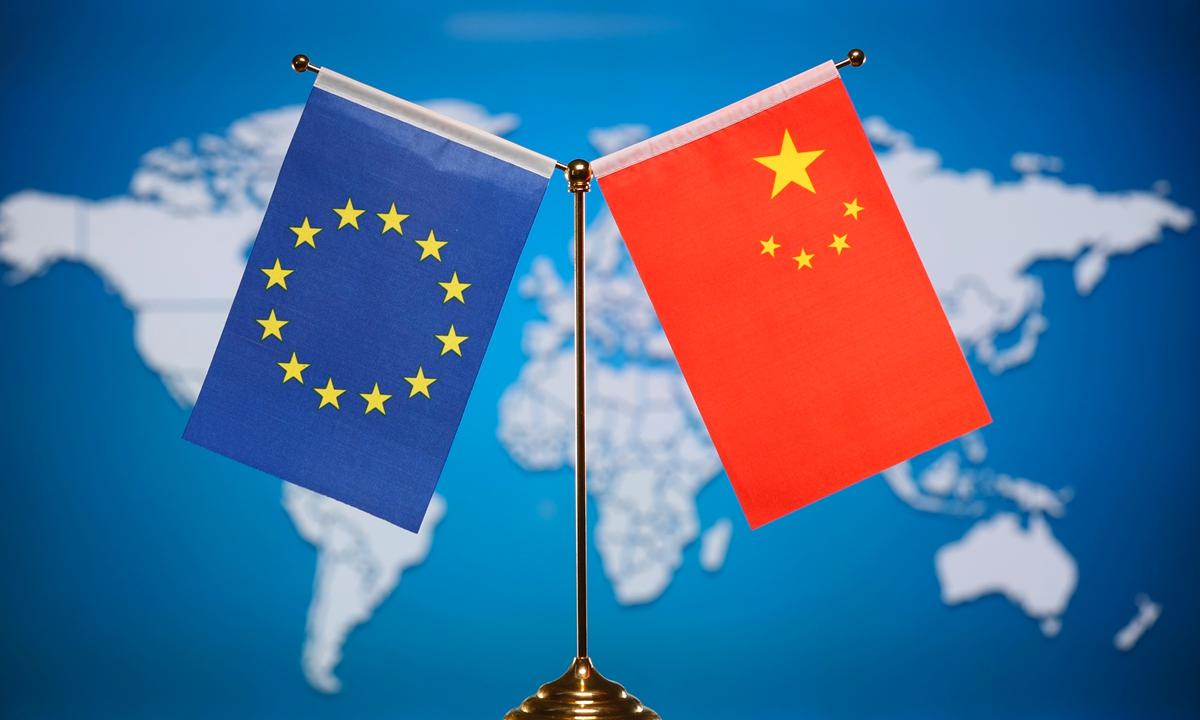
(Photo:VCG)
China and the EU have officially established a new trade and investment consultation mechanism, with the two sides holding its inaugural meeting on Monday in Brussels, where four initial workstreams identified, according to a joint statement released on Tuesday.
During the first meeting, both parties identified four priority workstreams: trade and investment balancing, export controls, intellectual property rights, and WTO reform, read the statement.
China's Minister of Commerce Wang Wentao and European Commissioner for Trade and Economic Security Maros Šefčovič co-chaired the meeting, engaging in comprehensive, in-depth, and constructive discussions on key bilateral economic and trade issues, the Ministry of Commerce (MOFCOM) said in a statement on Tuesday.
The mechanism aims to strengthen dialogue and cooperation on economic and trade matters. The two sides also agreed to set up a joint monitoring mechanism to track progress and ensure effective implementation of cooperation outcomes, said MOFCOM.
The new mechanism helps prevent potential frictions through bilateral communication and ease existing ones through consultation, Jian Junbo, director of the Center for China-Europe Relations at Fudan University's Institute of International Studies, told the Global Times on Tuesday.
"The mechanism provides both sides with a platform to prevent and resolve economic and trade disputes, helping to defuse frictions and make bilateral economic and trade ties more stable and predictable — a fairly positive development," said Jian.
Both sides agreed that expanding market access would help balance trade relations. They discussed possible tariff and non-tariff measures, exchanged lists of market access issues, and agreed to continue consultations under the trade and investment balancing workstream to achieve progress on specific issues.
Wang and Šefčovič authorized bilateral officials to maintain communication on the four workstreams and agreed to hold another ministerial-level meeting in autumn 2026.
The two sides noted positive outcomes from the China-EU export control dialogue on rare earths and other critical raw materials and minerals, and expressed willingness to strengthen dialogue in this field. They recognized the value of continuing to exchange information on their respective regulatory frameworks and licensing policies. Both sides agreed to take further facilitating measures to enhance the export control dialogue and maintain the stability of global industrial and supply chains.
Jian noted that the main frictions between China and the EU currently center on trade balances, export controls, and technology and intellectual property protection — all issues of concern to both sides. The working areas established under the mechanism cover precisely these most pressing and pertinent frictions, and are thus expected to play a more constructive role in addressing the core disputes at hand, he said.
According to Politico, Šefčovič said after meeting Wang that he would visit China in October, when he hoped to present the "first tangible results."
"Economic and trade frictions between China and the EU will persist in the short term, but the key is that, once such a mechanism is in place, there is hope of easing them, keeping frictions in check to a certain degree," Jian said, adding that the mechanism could set a positive tone for future bilateral dialogue.