


"Digital and intelligent transformation" is a frequently quoted term in the outline of China's 15th Five-Year Plan (2026-2030) for National Economic and Social Development.
What exactly does this term mean?
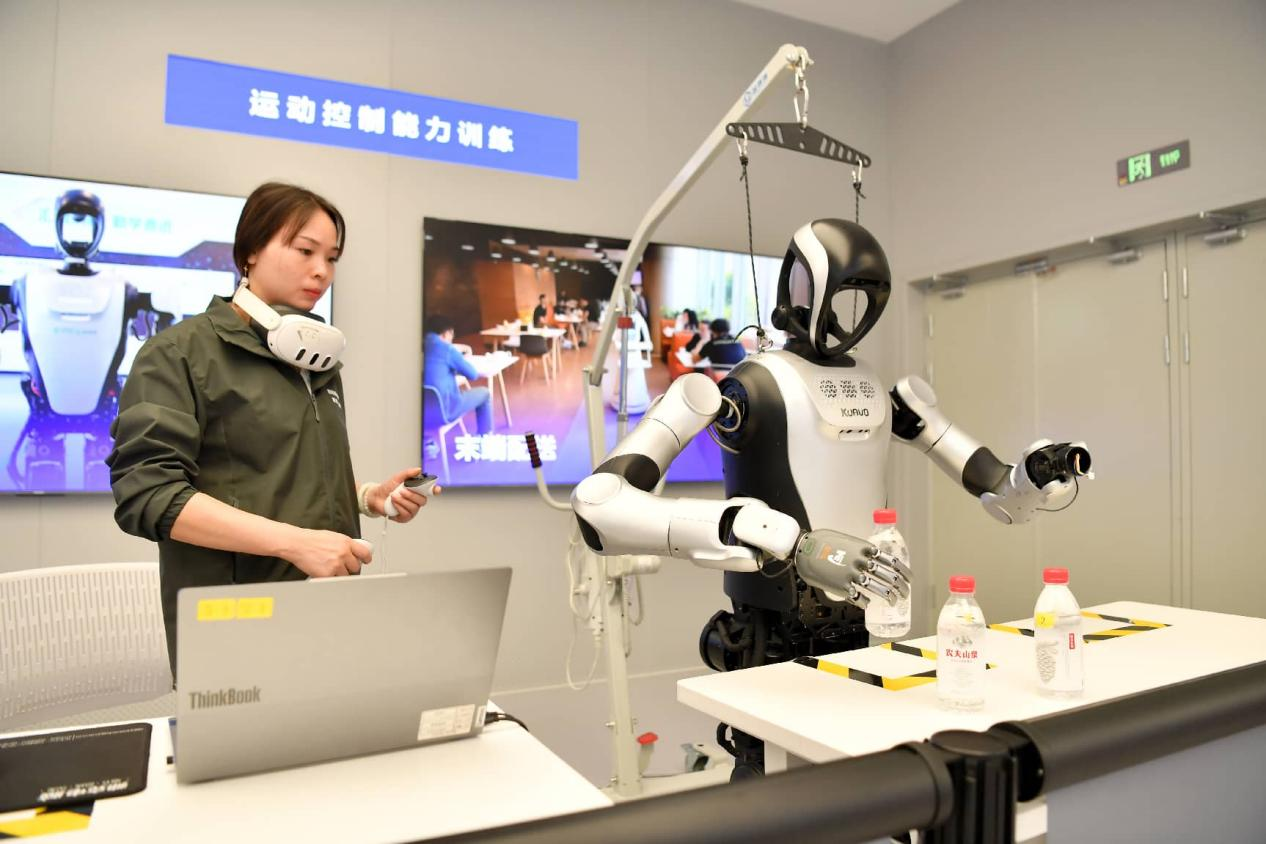
A robot trainer conducts motion control training for a robot at an embodied intelligence robot training center in southwest China's Sichuan province. (Photos provided to the People's Daily)
As the term suggests, it represents the deep integration of digitalization and intelligent technologies. Building on the foundations of digitalization, it incorporates artificial intelligence (AI) technologies, including intelligent decision-making and deep perception, to analyze, predict, and address complex problems and support practical applications.
The shift in wording, from "digitalization" in the 14th Five-Year Plan to "digital and intelligent transformation" in the 15th, reflects China's efforts to embrace the latest technological revolution and industrial transformation. Driven by the rapid development of AI, the country is steadily moving toward a new stage of high-quality development.
In the past, China's digital industry was large in size but not sufficiently developed, and the country's computing-power infrastructure needed significant improvement.
In recent years, however, construction and investment have accelerated. In 2025, China's core AI industry exceeded 1.2 trillion yuan (about $176.52 billion). By the end of March this year, the country had built 4.958 million 5G base stations. The eight national computing hubs under the "East Data, West Computing" initiative have developed into major computing clusters, and China's total computing capacity now ranks second in the world. These advances have laid the foundations for the country's digital and intelligent transformation.
Why, then, is China placing such emphasis on this transformation?
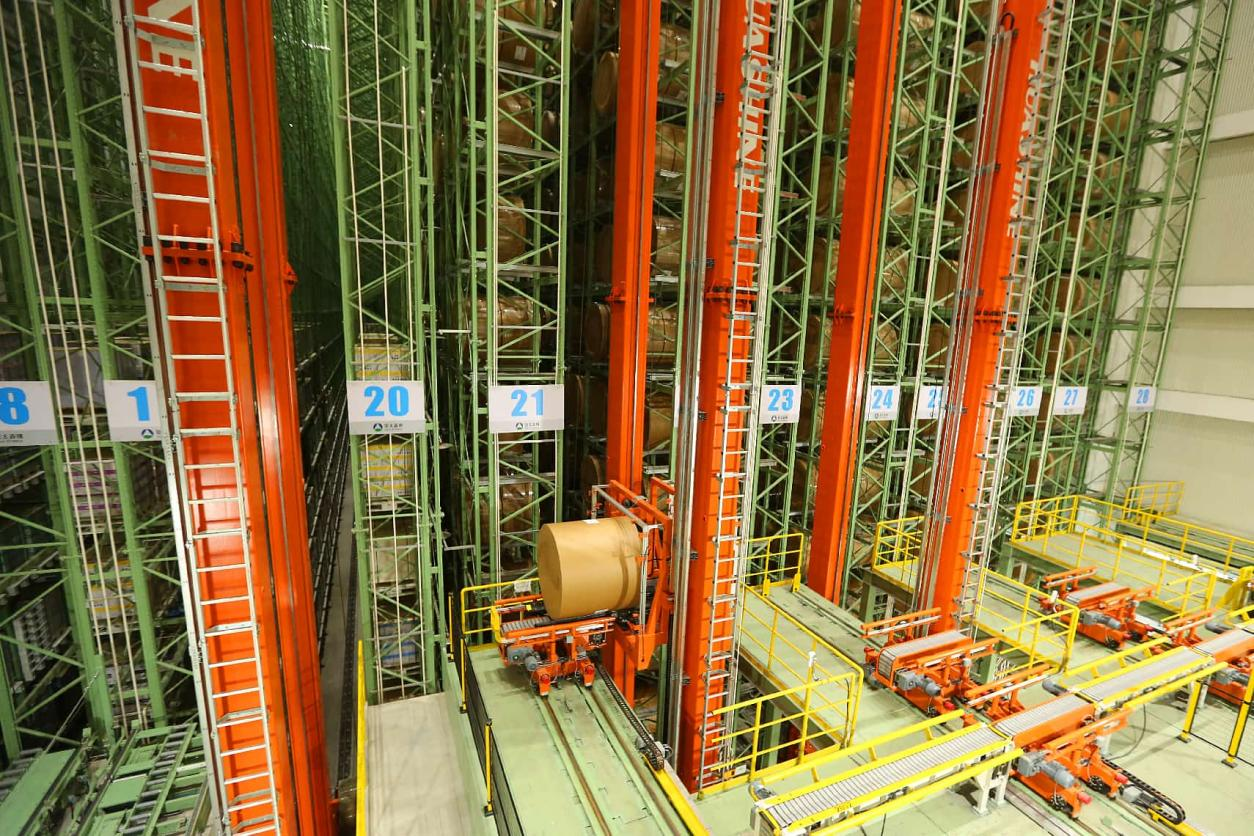
Photo shows a smart warehouse of a papermaking company in Rizhao, east China's Shandong province.
Digital and intelligent transformation represents an evolution in the development philosophy of enterprises.
To address challenges in mining operations, Guangxi Liugong Machinery Co., Ltd. has developed a smart mining solution. Guided by an intelligent dispatch system, unmanned excavators can perform precision operations while autonomous mining trucks automatically plan their routes.
In the past, mining relied heavily on manual labor, involving high risks and significant margins of error. With the smart mining solution, the entire process can be operated without human intervention, reducing safety risks while significantly improving efficiency.
An increasing number of companies are using digital and intelligent innovation to develop new equipment, build smart workshops and intelligent factories, and improve efficiency and productivity. The transformation is injecting fresh vitality into industrial development.
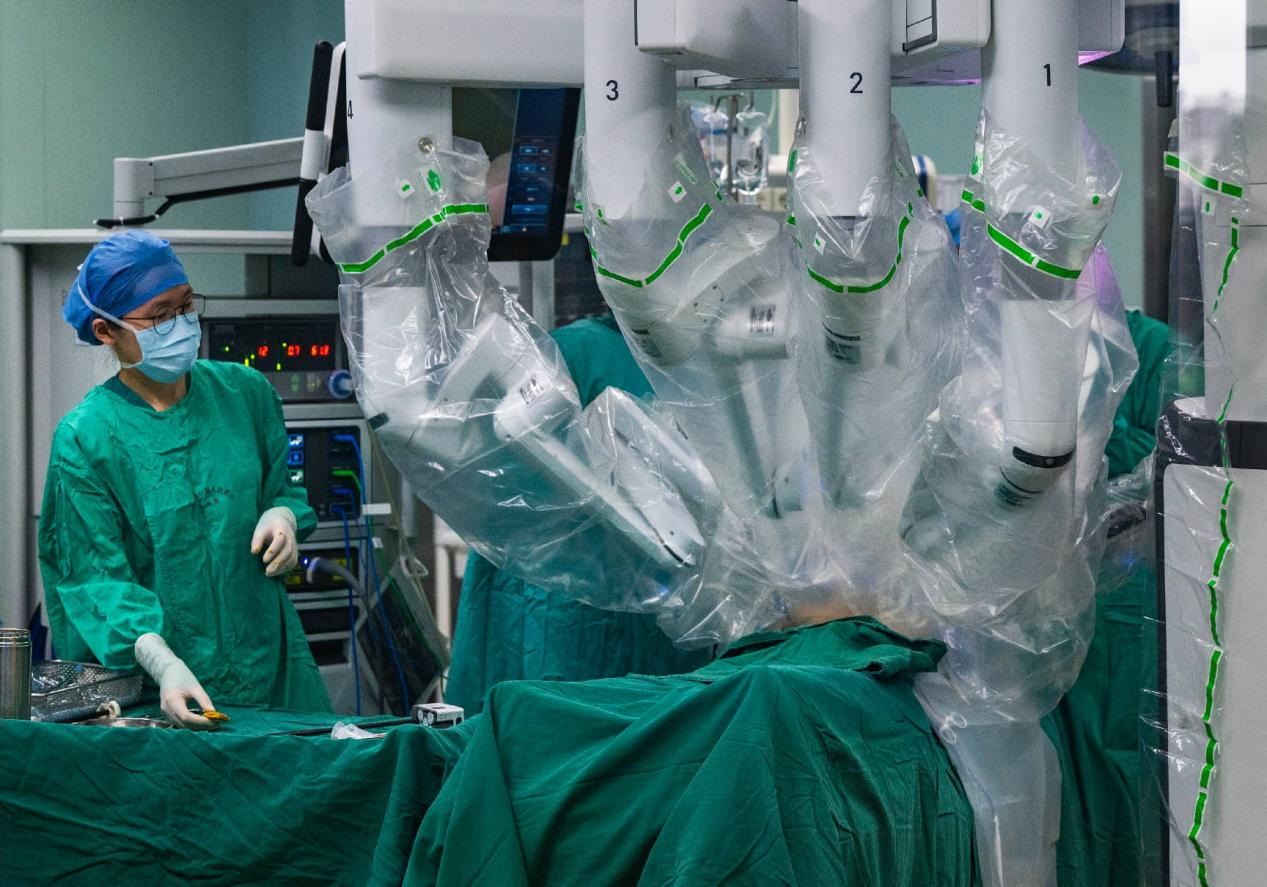
A doctor at Yinzhou People's Hospital in Ningbo, east China's Zhejiang province monitors a surgical robot as it performs an operation on a patient.
Digital and intelligent transformation is empowering a wide range of sectors, creating new business models and opening up fresh sources of economic growth.
The intelligent robotics industry provides a vivid example.
At the School of Artificial Intelligence and Robotics of Hunan University, researchers have developed a bionic dual-arm robot capable of grasping glass bottles and placing them onto pharmaceutical spectrometers for sample testing. The robot is able to think and analyze like humans and perform complex experimental tasks.
"We've created a 'physical feedback learning' mechanism, enabling the robot to become smarter through continuous practice," said Zhang Hui, dean of the school.
Digital and intelligent transformation requires industrial equipment to possess adaptive and self-learning capabilities, driving strong market demand for intelligent robots. In turn, this demand is creating new business opportunities throughout the industrial chain, including sensing systems, decision-making systems, execution systems, and systems integration, generating new engines of economic growth.
Digital and intelligent transformation will also provide powerful momentum for developing new quality productive forces.
At the end of last year, China successfully tested the world's first 35,000-ton heavy-haul train convoy system. Seven 5,000-ton freight trains operated in coordination without being mechanically coupled in the traditional way. Instead, they relied on a domestically developed intelligent system that enabled them to accelerate and brake simultaneously.
This transition in railway freight transport, from "mechanical coupling" to "intelligent connectivity," offers a model for developing new quality productive forces across industries.
What more efforts are needed to complete the shift from "digitalization" to "digital and intelligent transformation?"
China's 15th Five-Year Plan provides a clear roadmap.
The country will coordinate the development of computing infrastructure, model algorithms, and high-quality data resources to strengthen the foundations for digital and intelligent development.
It will fully implement the "AI Plus" initiative, integrating AI with scientific and technological innovation, industrial development, cultural advancement, public services, and social governance, while striving to seize the commanding heights of AI applications and comprehensively empower all sectors of the economy.
At the same time, China will pursue development and regulation in tandem, improve the basic institutions and rules governing data, strengthen AI governance, and foster a development environment that is beneficial, secure, and fair.
By making effective use of cutting-edge technologies, enhancing productivity and social governance capabilities, and helping build a society that is more resilient, dynamic, and efficient, China is embracing digital and intelligent transformation across all industries and sectors.