


The U.S. Federal Reserve on Wednesday kept the target range for the federal funds rate unchanged at 3.5 to 3.75 percent, as widely expected by the market.
The move marks the Fed's fifth monetary policy meeting in a row with a wait-and-see stance, while expectations for an interest rate hike have been building for the coming months.
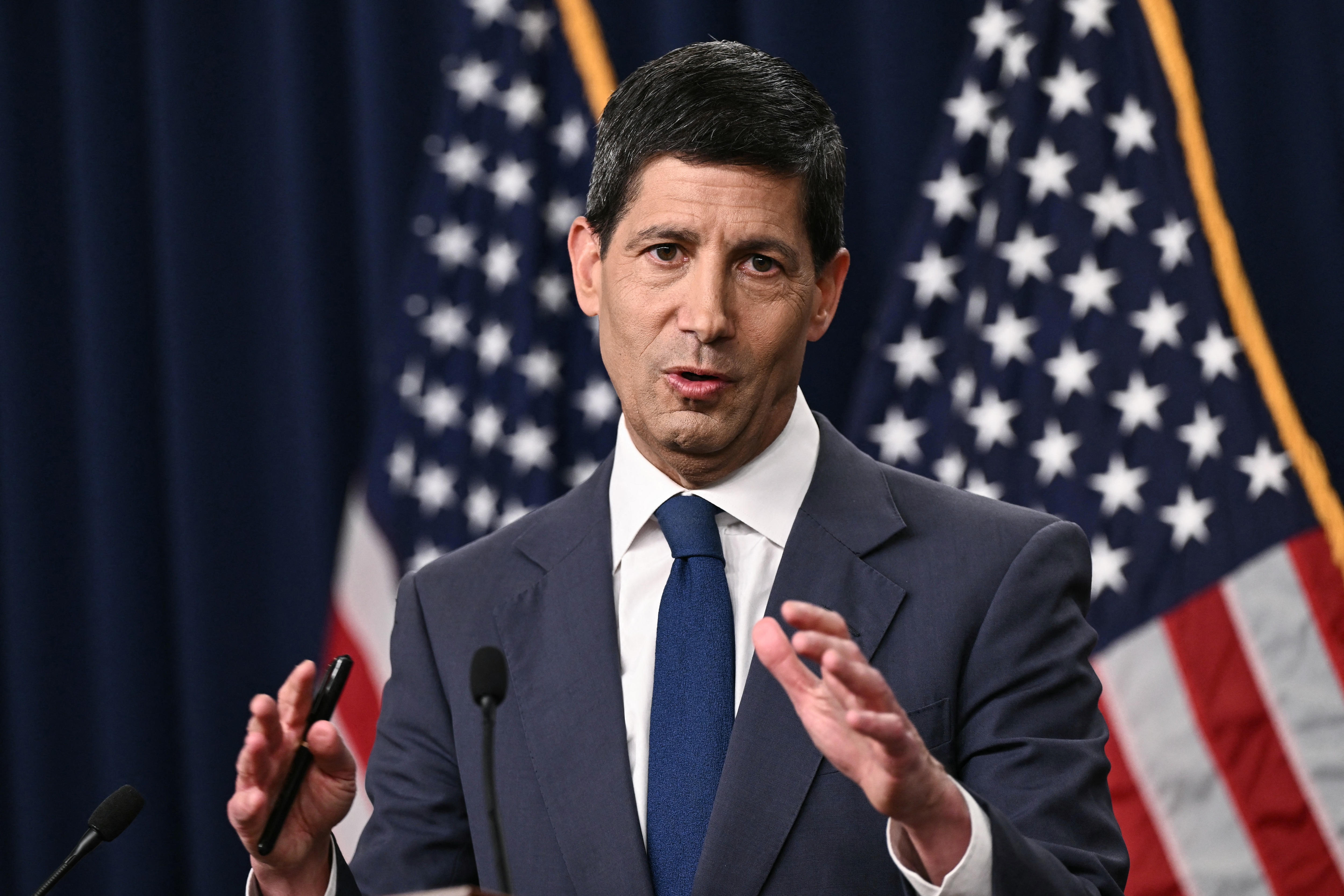
Chair of the Federal Reserve Kevin Warsh speaks during a news conference at the William McChesney Martin Jr. Federal Reserve Board Building in Washington, DC, on July 29, 2026. (Photo: AFP)
The year-on-year growth rate of the U.S. headline consumer price index dropped to 3.5 percent in June from 4.2 percent in May as oil prices plunged in the period.
Still, the United States continues to face elevated inflationary pressures in comparison with the Fed's 2 percent inflation target.
"Inflation remains elevated relative to the Committee's 2 percent goal, in part reflecting supply shocks that have driven price increases in certain sectors, including energy," the Federal Open Market Committee said in a press release. "Economic activity is expanding at a solid pace despite elevated uncertainty that owes, in part, to the conflict in the Middle East."
While nine members of the Federal Open Market Committee voted to keep rates steady, three policymakers from Dallas, Cleveland and Minneapolis dissented, arguing in favor of a 25-basis-point interest rate hike. It marked the first time since 2016 that a Fed policy decision had drawn three dissents in the same direction.
The vote split highlighted a growing internal divide over whether the central bank is moving too slowly to curb inflation. Prior to the meeting, several Fed officials, including Fed Governor Christopher Waller, had made statements supportive of tighter monetary policy should inflation persist.
The July meeting was the second presided over by Federal Reserve Chair Kevin Warsh. Since taking the helm, he has repeatedly emphasized a hardline stance on prices, stating in a recent congressional hearing that the committee has "no tolerance for persistently elevated inflation."
"I understand the desire for rolling forecasts and commentary from this committee, but for our part, we need to observe market reaction to developments direct and unfiltered," Warsh said at the post-decision press conference. "I want to stress, of course, that decisions by this committee matter a great deal, and where necessary and appropriate, we will not hesitate to act."
Warsh also described July's rate decision as "a rigorous review of the economic situation" and not "as anything like a pause."
The Fed chair has repeatedly said he wants to avoid giving markets information about the path of monetary policy, so that markets react to economic fundamentals rather than Fed chatter. He said the Fed can take clearer signals from the market as a source of information about the economy. "We're trying to make sure that source of information is as direct and unfiltered as possible," Warsh said.
Interest rate traders broadly agree that the Fed will raise rates at least once before the end of the year. According to CME FedWatch, Fed funds futures contracts indicate a 90 percent probability that rates will be at least a quarter-point higher by January 2027.
U.S. stocks tumbled on Wednesday following the Fed decision. The Dow Jones Industrial Average fell 2.19 percent to 51,594.14. The S&P 500 sank 1.52 percent to 7,316.15. The Nasdaq Composite Index shed 1.74 percent to 24,442.94.
"The Fed appears to be running out of patience with above-target inflation, despite recent data coming in cold," said Kay Haigh, global head and CIO of fixed income and liquidity solutions at Goldman Sachs Asset Management. "The committee's growing hawkish sentiment, shown by the three dissents against today's hold, has also likely been exacerbated by the recent flare up in hostilities in the Middle East."