


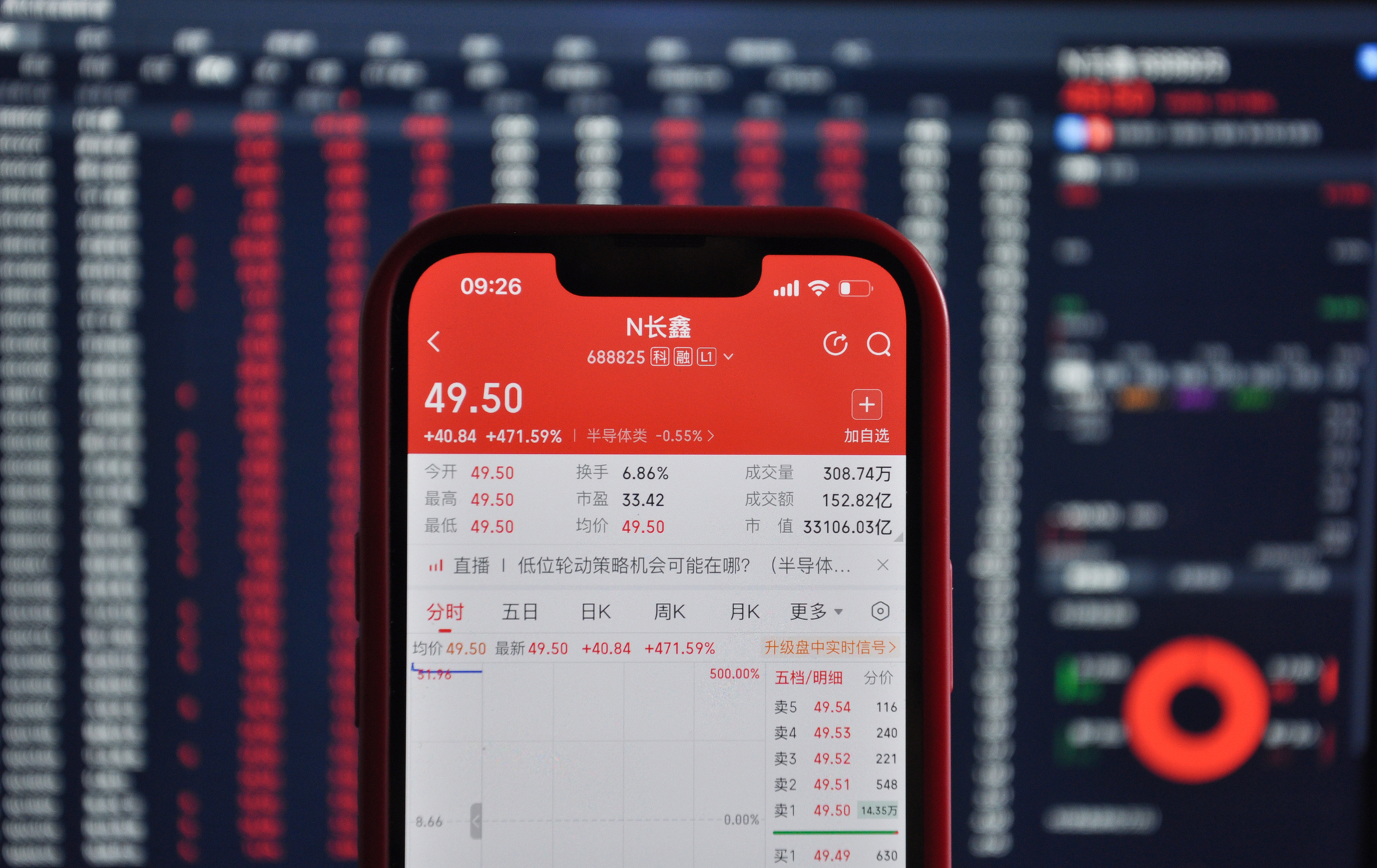
A screen shows the opening share price of ChangXin Memory Technologies ahead of its debut on the STAR Market, Shanghai, China, July 27, 2026. (Photos: VCG)
Chinese memory chip maker CXMT made its debut on the STAR Market of the Shanghai Stock Exchange this week, drawing attention not only for its strong market performance, but also for what the IPO represents: China's progress in a strategically important semiconductor sector long viewed as a technological bottleneck.
Beyond the headlines about new billionaires created by the listing and the rise of a Chinese memory chip champion, another name has attracted widespread attention — the city of Hefei, which holds a significant stake in CXMT. The company's successful listing has once again put the spotlight on the so-called "Hefei Model," a government-led investment strategy that has helped transform the city into a rising hub for advanced manufacturing and high technology.
The Hefei Model refers to an industrial investment approach in which the municipal government uses state-backed funds to take equity stakes in promising early-stage companies, particularly in strategic sectors such as semiconductors, electric vehicles and advanced manufacturing. Rather than simply providing subsidies, the government acts more like a venture capitalist, sharing both risks and potential returns with companies.
The model has attracted attention several times over the past decade, most notably through Hefei's investments in electric vehicle maker NIO and display panel giant BOE Technology. In both cases, the city helped build industrial ecosystems around emerging companies, attracting suppliers, talent and related businesses.
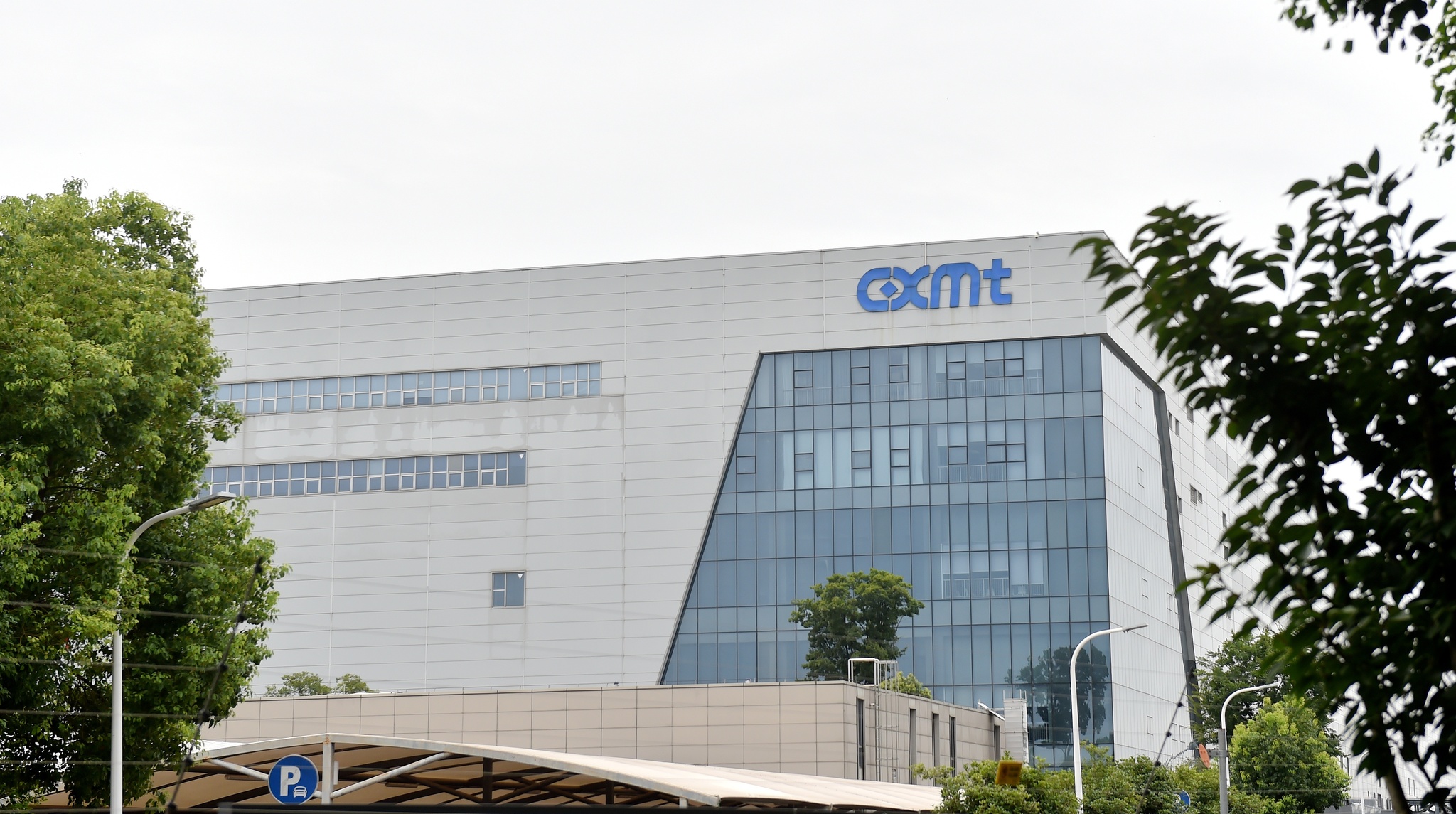
A view of the offices of Changxin Technology Group Co., Ltd, Hefei, Anhui Province, China, July 27, 2026.
What is particularly interesting about the latest CXMT story is not only the discussion about the success of the company, but also what was missing from much of the international debate: The familiar criticism that China's industrial rise is simply the result of state subsidies and unfair competition.
Why has the Hefei Model received less criticism?
One possible explanation is that the model resembles a form of venture capital investment more familiar to Western economies. Hefei's government has not simply provided unconditional financial support. Instead, it invests through equity participation, enters at an early stage of higher risks, and seeks financial returns when the companies are successful. In this sense, the government is not merely subsidizing production; it is making investment bets similar to those made by private venture capital firms.
Of course, government-backed investment and private venture capital are not identical. Governments may have different objectives, including industrial development, employment and strategic security. But the structure of the investment — taking equity stakes and sharing both upsides and downsides — makes the Hefei Model harder to be categorized simply as traditional industrial subsidies.
Another reason may be that the industries involved are increasingly viewed worldwide as strategically important sectors where governments can no longer remain completely passive.
The United States, for example, has moved away from a purely market-driven approach in semiconductors. The CHIPS and Science Act, signed in 2022, provides tens of billions of dollars in subsidies and incentives to encourage domestic chip manufacturing and strengthen supply-chain resilience.
The goal is not for Washington to operate semiconductor factories directly, but to reduce investment risks and encourage private companies to expand production in the US. The results can be seen in major projects by global industry leaders. Intel has committed to expanding manufacturing capacity in the US, including major projects in Arizona and Ohio. Taiwan Semiconductor Manufacturing Co. is building advanced fabrication facilities in Arizona with support from the CHIPS Act, while Samsung has expanded its semiconductor presence in Texas, creating a broader manufacturing ecosystem around its US operations.

An aerial view of Hefei, which is leveraging integrated circuits as a new driving force to complete the transformation from a manufacturing hub to a science and innovation city, Anhui Province, China, August 1, 2026.
Europe has also embraced a more active industrial policy approach. Facing challenges in areas such as batteries, clean energy and semiconductors, European governments have increased support for strategic industries. The European Union has promoted initiatives such as the European Battery Alliance, while countries including Germany and France have introduced incentives to attract battery factories and strengthen domestic supply chains.
For decades, Washington has championed the idea that markets should be the primary force allocating resources and often criticized countries that adopted different approaches. Yet repeated economic and financial crises have demonstrated that markets have their limitations, and governments have had to repeatedly step in as a stabilizing force during times of turmoil. More recently, competition in advanced technologies has further blurred the traditional divide between market economies and state-led models.
The global debate over industrial policy has therefore entered a new phase. The key question is no longer whether governments should intervene, but how they should intervene.
No model is guaranteed to succeed. Government investment can help create world-class industries and accelerate technological breakthroughs, but it can also lead to inefficient allocation of capital and support companies that fail to become competitive. Market-based incentives can mobilize private investment and preserve competition, but they may not always move quickly enough in strategic sectors where long-term investment and coordination are required.
The challenge for every country is to find the right balance between the visible hand of government and the invisible hand of the market — taking into account of its economic development stage, resource advantages and talent base.
For advanced economies facing increasing competition from China in high-end manufacturing and technology, understanding China's rise requires looking beyond the role of government support. Industrial policy matters, but it is only one part of the story. Other factors have also played a crucial role: A large pool of engineers, intense domestic competition, a massive consumer market, and highly integrated supply chains.
The future winners in global technology competition may not be those with the biggest subsidies, but those that can most effectively combine government strategy with market discipline and entrepreneurial innovation.