


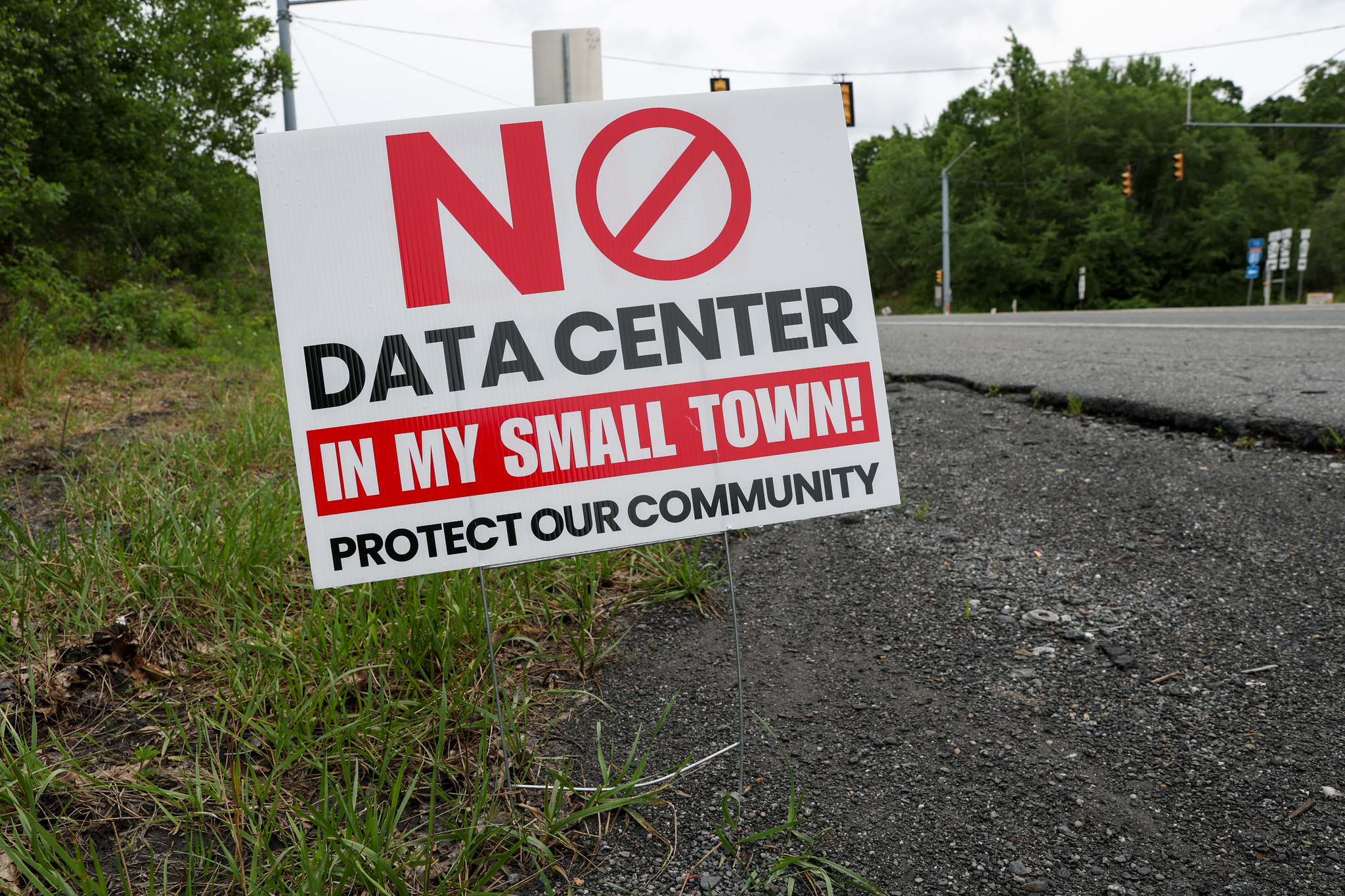
A yard sign opposing a planned data center is displayed along Route 54 in Mount Carmel Township Northumberland County, Pennsylvania, US, June 23, 2026. (Photo: VCG)
The rapid expansion of artificial intelligence is fueling massive investment in data centers across the US, but this AI infrastructure boom is increasingly running into opposition from local communities, as well as challenges involving power, water, permits, and skilled labor.
At least 75 US data center projects worth approximately $130 billion were blocked or delayed in the first quarter of 2026 alone, according to Data Center Watch.
Growing public opposition
A Gallup poll released in May found that 71% of Americans oppose building AI data centers in their local areas, including 48% who strongly oppose such projects.
Concerns include the potential impact on electricity demand, water resources and local communities.
New York became the first US state to impose a statewide moratorium on new large-scale data centers, suspending construction of facilities using 50 megawatts or more for up to one year.
Texas has also temporarily halted approvals for new data centers seeking to connect to the state's power grid while the projects undergo an audit, reflecting growing concerns over their impact on the state's electricity network.
Rising water demand
Water consumption is a major concern, particularly in areas where supplies are already under pressure.
According to the Environmental and Energy Study Institute, a typical data center can use around 300,000 gallons of water a day, while large facilities can consume as much as 5 million gallons daily, depending on their cooling systems and operating conditions.
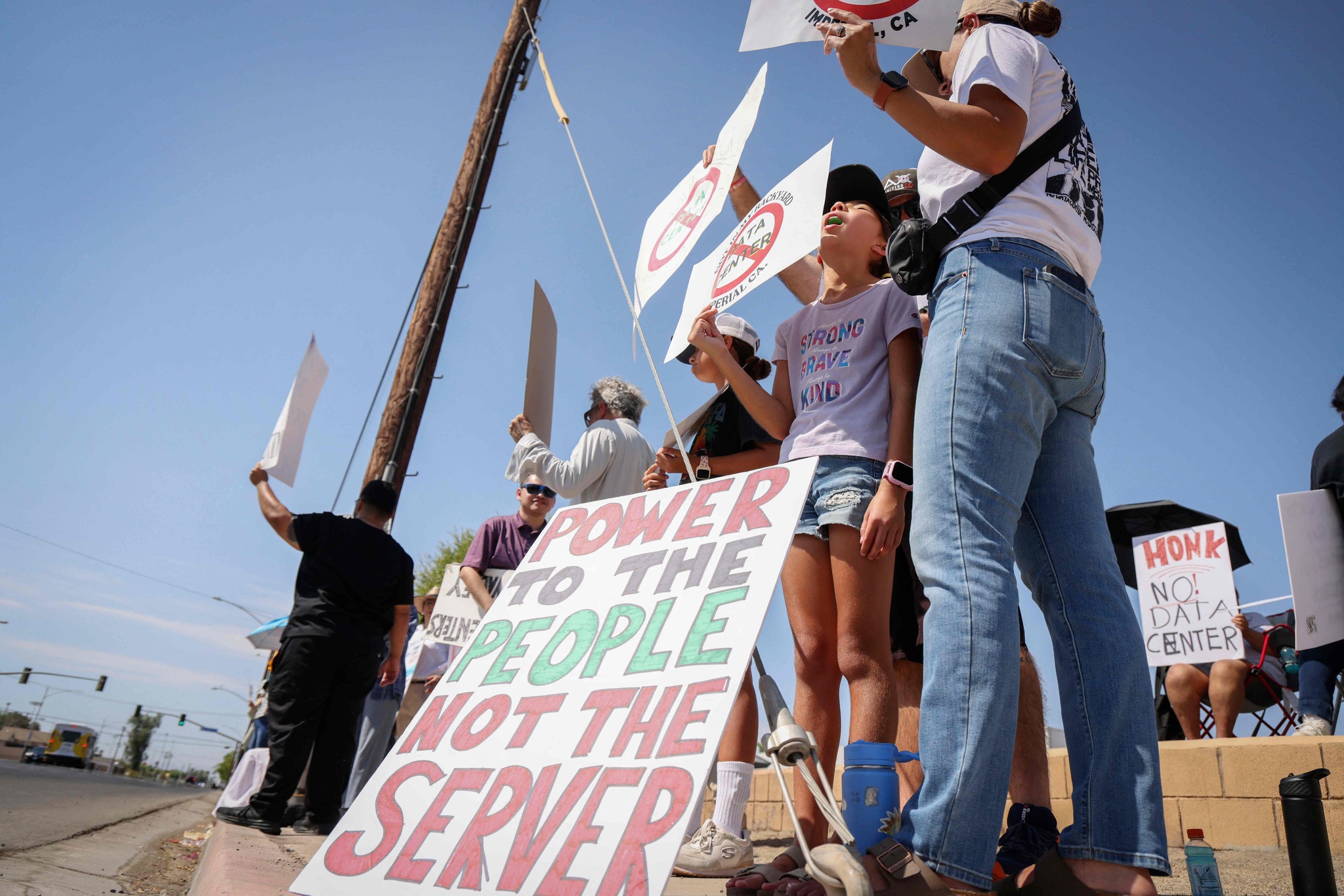
Demonstrators wave signs during a nationwide protest against AI data center expansion in Imperial, California, US, July 18, 2026. (Photo: VCG)
Growing pressure on the power grid
Data centers are becoming a major source of new electricity demand as AI workloads expand.
The US Department of Energy estimated that data centers accounted for about 4.4% of US electricity consumption in 2023. That share could rise to between 6.7% and 12% by 2028, depending on the pace of growth.
The rapid increase in demand is creating challenges for utilities and grid operators, particularly in regions experiencing a surge in data center construction.
Skilled-labor shortages
The construction boom is also putting pressure on the US skilled-labor market.
Industry and labor officials have warned of shortages of electricians, plumbers and other skilled trades needed to build and operate large-scale infrastructure. A June 2026 report cited estimates that the US workforce currently faces shortages of about 500,000 electricians, 300,000 welders and 550,000 plumbers.
As the AI industry races to expand its physical infrastructure, finding enough skilled workers — and securing adequate supplies of electricity, water and construction capacity — could become increasingly important constraints.
The AI boom may be digital at its core, but its expansion ultimately depends on very physical resources: Land, electricity, water, materials and people.