


China has become the world's largest producer and market for construction machinery, with industry exports nearly tripling from 2020 to 2025, according to official data.
In the first half of this year, China's construction machinery exports surged by 21.7% year-on-year.
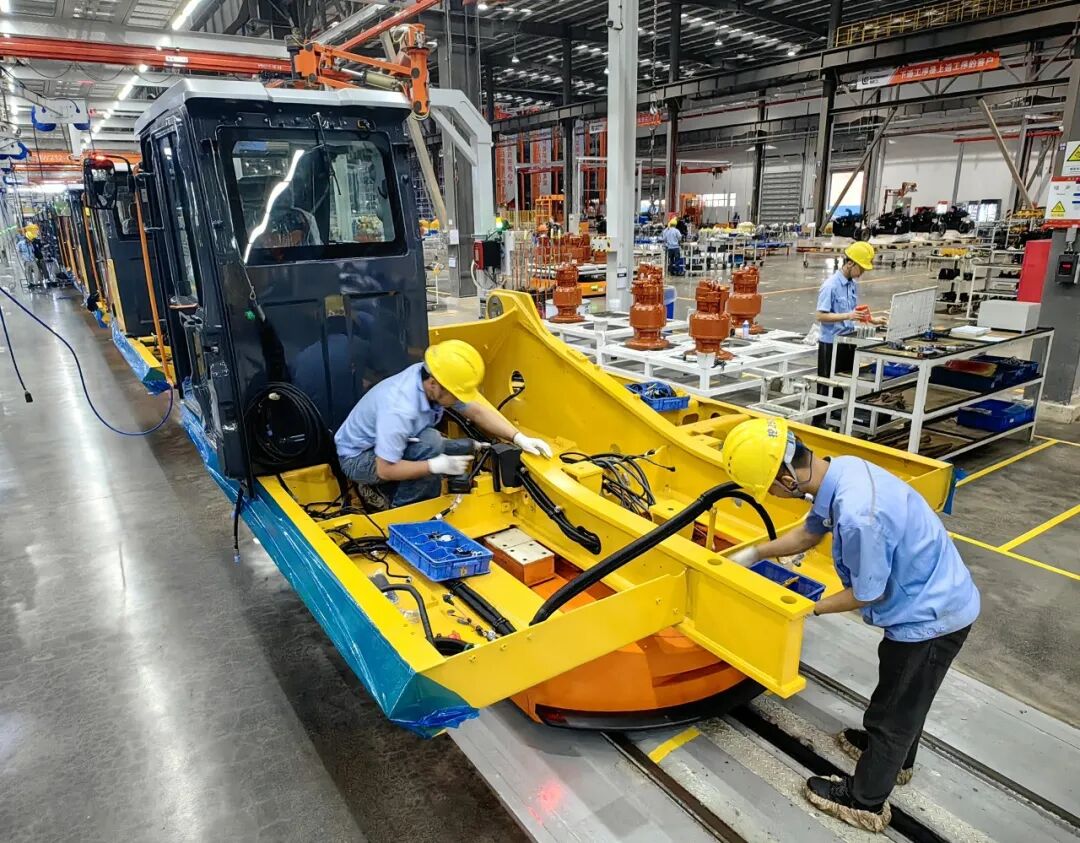
Photo: People's Daily
Why is China a global leader in construction machinery electrification?
First, the equipment is built for demanding conditions. In response to the high temperatures, humidity and power demands of mines in Vietnam, Guangxi Liugong Machinery Company has equipped excavators and wheel loaders with high-capacity, high-reliability battery systems tailored to conditions. Combined with fast-charging technology, the batteries can be fully charged in 45 minutes and provide eight to 10 hours of operating time: enough to cover a full shift.
Second, the supporting infrastructure and systems are well developed. Some overseas markets require every battery to be tracked throughout its life cycle, from deployment to retirement. Batteries must be registered when put into service, while manufacturers are responsible for recycling them when they are retired. "Supported by China's complete new‑energy industrial chain, Chinese enterprises boast well‑honed experience in full‑cycle battery management and can deliver comprehensive services for overseas clients," said Li Kailiang, deputy chief engineer and business director of the international business unit at Guangxi Liugong Machinery Company.
Third, Chinese companies offer complete solutions. Most mines are in remote areas where public power grids are weak. Chinese construction machinery companies are providing integrated systems built around solar power, energy storage, charging and mobile power supplies. By establishing integrated green microgrids around mines, these systems enable electric machinery to operate even in remote mining areas without access to the public grid.
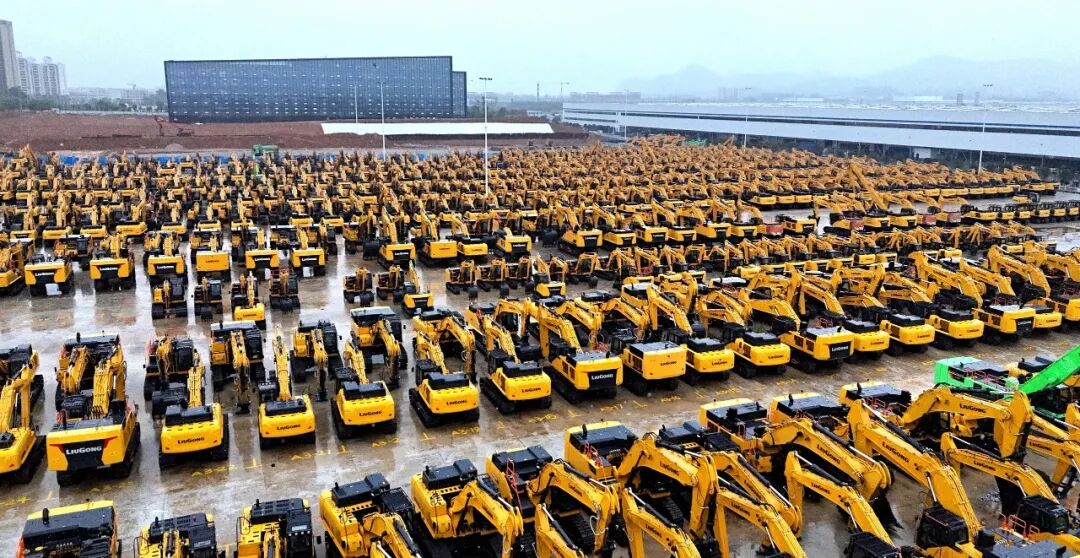
Photo: People's Daily
China's construction machinery industry is also exporting its digital intelligence. Mature mining-management and fleet-dispatch systems developed in China are being deeply integrated with hardware, helping overseas mines shift from labor-intensive operations to digitally managed smart operations.
Tangible cost savings are the strongest incentive for overseas companies to continue placing orders. Energy consumption typically accounts for 40%-50% of a mine's operating costs, while electric construction machinery consumes only about one-third as much energy as fuel-powered equipment. Electrification also greatly simplifies powertrain systems, significantly reducing machinery maintenance and servicing costs.
According to the China Construction Machinery Association, China's construction machinery exports totaled $34.37 billion in the first half of the year, up 21.7% from a year earlier. Exports to the European Union reached $3.63 billion, up 28.9%, while exports to Association of Southeast Asian Nations (ASEAN) countries totaled $5.56 billion, up 23.6%. ASEAN is a regional organization of 11 countries.
Exports to Belt and Road partner countries and regions totaled $14.72 billion, accounting for 42.83% of all construction machinery exports and increasing 9.13% year over year.
The broader machinery industry exported $559.33 billion worth of goods, up 20% from a year earlier and accounting for 26.3% of China’s total goods exports.
(Compiled by Yang Ziyu and Wang Ruofan)