


China's A-share earnings season is offering a clearer picture of where the country's next wave of corporate growth is coming from, with artificial intelligence, semiconductors, advanced manufacturing and a recovery in selected cyclical sectors emerging as key drivers.
As of August 23, 1,716 companies listed in Shanghai, Shenzhen and Beijing had released their 2026 first-half results, according to Wind data cited by China Securities Journal. Together, they reported 11.21 trillion yuan ($1.56 trillion) in revenue, up 11.51% year on year, while combined net profit reached 1.04 trillion yuan, an increase of 26.62%.
The latest figures suggest that the improvement in corporate earnings is becoming increasingly visible in company financial statements, while also pointing to a shift in the sources of that growth.

A conceptual photo of human‑robot interaction, representing collaboration between artificial intelligence and human intelligence.(Photo: VCG)
AI demand moves into the earnings data
Among the strongest performers are companies linked to AI infrastructure and the semiconductor supply chain.
The earnings data are increasingly showing that the AI investment cycle is feeding through to Chinese manufacturers. Industrial and technology companies exposed to computing, optical communications and memory have reported sharp increases in revenue and profit.
Optical module maker Zhongji Innolight reported first-half revenue of 41.78 billion yuan, up 182.49% year on year, while net profit surged 241.70% to 13.65 billion yuan. The company said overseas demand remained strong, with 800G and 1.6T high-speed optical modules continuing to ramp up as major cloud-service providers expanded AI infrastructure investment. Its overseas revenue rose 209.9% to about 39.62 billion yuan.
The semiconductor and memory segments have been even more striking. Memory maker Longsys reported first-half revenue of 24.09 billion yuan, up 136.26%, while net profit jumped more than 715 times year on year to 10.58 billion yuan. The company attributed the growth in part to rising demand for enterprise storage from AI servers and data centers.
Other AI-related companies are also showing strong earnings momentum. Industrial automation and electronics manufacturer Foxconn Industrial Internet reported first-half net profit growth of 95.99%, while Cambricon and Montage Technology-related AI semiconductor peers also posted significant gains, according to China Securities Journal.
The trend is also visible at the broader industrial level. National Bureau of Statistics data show that profits at China's large industrial companies in the electronics sector rose 96.9% in the first half, while profits in the non-ferrous metals and chemical industries increased 99.4% and 67.8%, respectively.
That suggests AI demand is increasingly moving beyond a market narrative and into measurable corporate earnings.

Concept illustration of battery energy storage technology on circuit board, symbolizing new‑energy power industry. (Photo: VCG)
Lithium batteries add a second growth pillar
The other major source of momentum is the lithium-battery supply chain.
The sector has benefited from stronger demand for electric vehicles and energy storage, as well as an improvement in industry conditions following an earlier period of adjustment.
CATL, the world's largest electric-vehicle battery maker, reported first-half revenue of 276.92 billion yuan, up 54.80% year on year, while net profit rose 41.98% to 43.28 billion yuan.
Upstream and battery-material companies have also delivered sharp improvements. Tianci Materials, a major electrolyte producer, reported first-half revenue of 14.71 billion yuan, up 109.28%, while net profit jumped 967.91%. The company said surging demand for energy-storage batteries helped drive electrolyte sales up about 41%, with overseas electrolyte sales increasing more than 126%.
The battery story therefore combines structural demand growth with a cyclical recovery, making it another important indicator of the health of China's advanced-manufacturing sector.
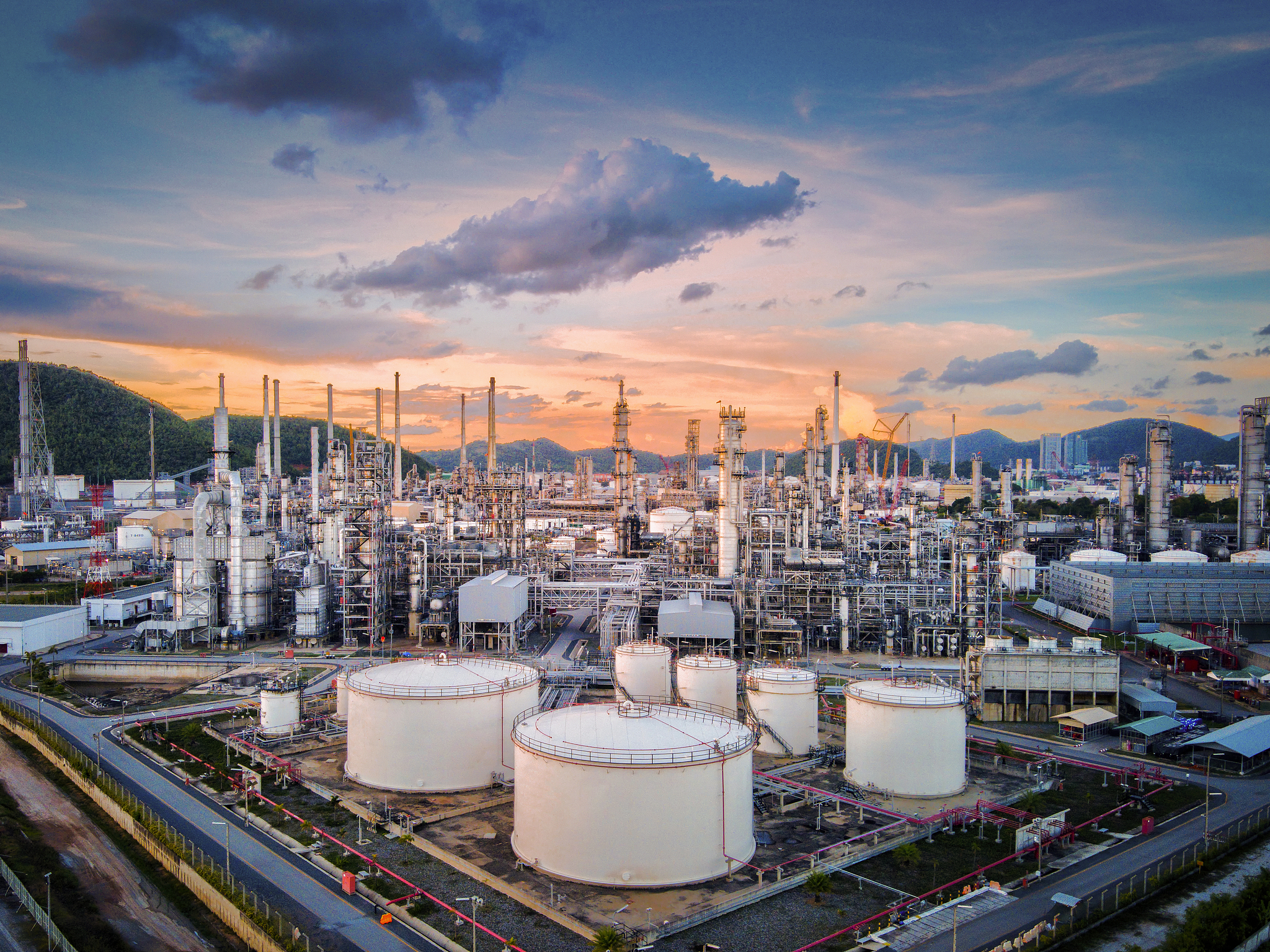
A file photo of a large‑scale petrochemical refinery complex with storage tanks and processing facilities. (Photo: VCG)
Cyclical industries are beginning to recover
The earnings picture is not limited to high-growth technology and new-energy industries.
Parts of China's chemical, energy and non-ferrous metal sectors are also showing signs of recovery as product prices and margins improve from weaker levels.
The latest company-level data reinforce that trend. China Securities Journal reported that 54 chemical companies had recorded more than 100% growth in first-half net profit, with Jiangtian Chemical's profit rising nearly 230 times.
The broader industrial data tell a similar story. Higher prices for copper, aluminum and other non-ferrous metals helped drive profits in the sector up 99.4% in the first half, while chemical-industry profits rose 67.8%, according to the National Bureau of Statistics.
Rather than pointing to a broad rebound across every industry, the earnings season therefore suggests two distinct sources of momentum: structural growth in technology and advanced manufacturing, alongside a cyclical recovery in selected traditional industries.
From expectations to fundamentals
For investors, the most important signal from the first-half results may therefore be less about how many companies are reporting higher profits and more about where that growth is coming from.
AI infrastructure, memory chips and other semiconductor-related businesses are benefiting from structural demand. Lithium batteries are gaining from the expansion of electric vehicles and energy storage, while parts of the traditional industrial economy are emerging from a prolonged downturn.
The shift is also visible beyond domestic demand. Zhongji Innolight's overseas revenue surged more than 200% in the first half, while China Securities Journal said exports of high-tech and high-value-added products were becoming an increasingly important source of growth.
The key question for the rest of the earnings season will be whether these gains can be sustained through stronger volumes, pricing power, overseas demand and continued investment in technology.
For now, the A-share earnings data suggest that some of China's new growth engines are moving from market expectations into corporate financial statements.