


Nestled among the mountains of Zherong county in Ningde, southeast China's Fujian Province, is an ideal location for the growing of false starwort, a traditional Chinese medicinal herb.
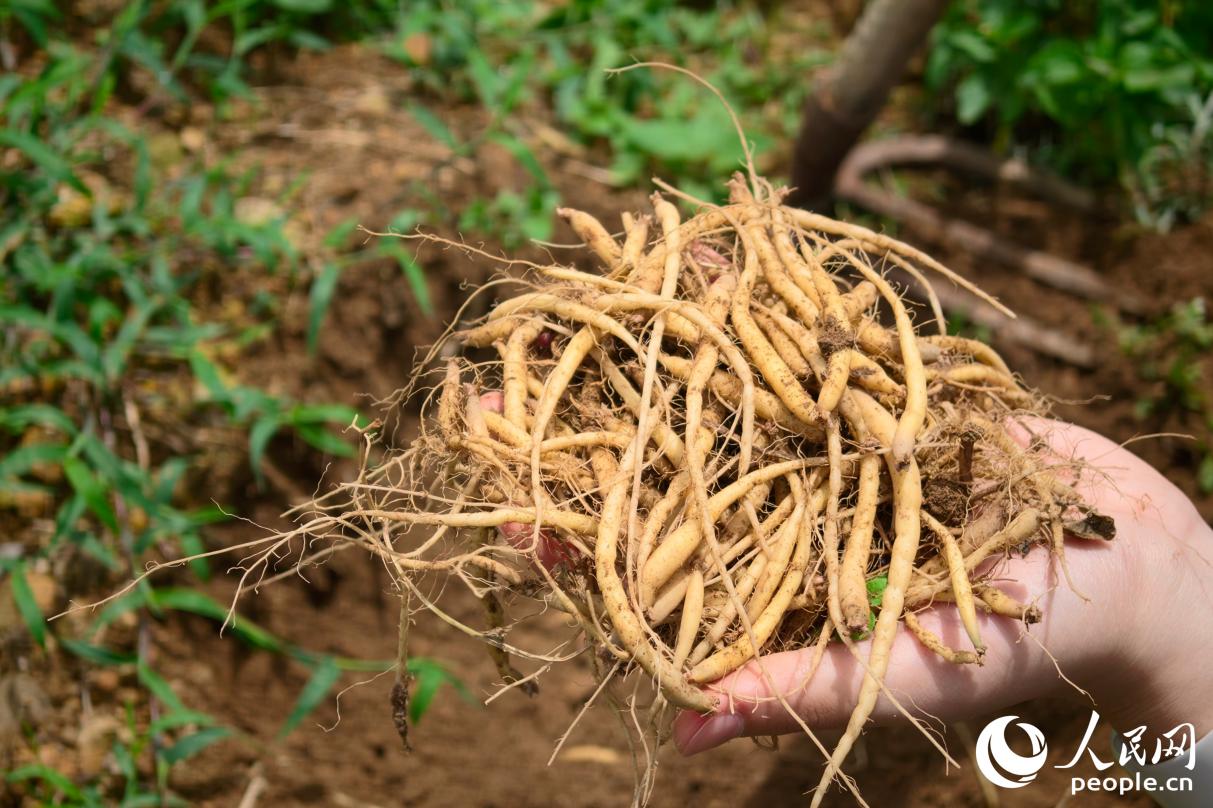
Photo shows a handful of false starwort. (Photo:People's Daily Online)
For Wu Guodong, head of the false starwort demonstration base in Zherong county, his proudest achievement in recent years has been developing a new variety of the herb with his team. By repeatedly crossbreeding local varieties with those from Guizhou and Jiangsu provinces, and conducting trial after trial, the team has created a new variety with larger roots, higher yields and better quality.
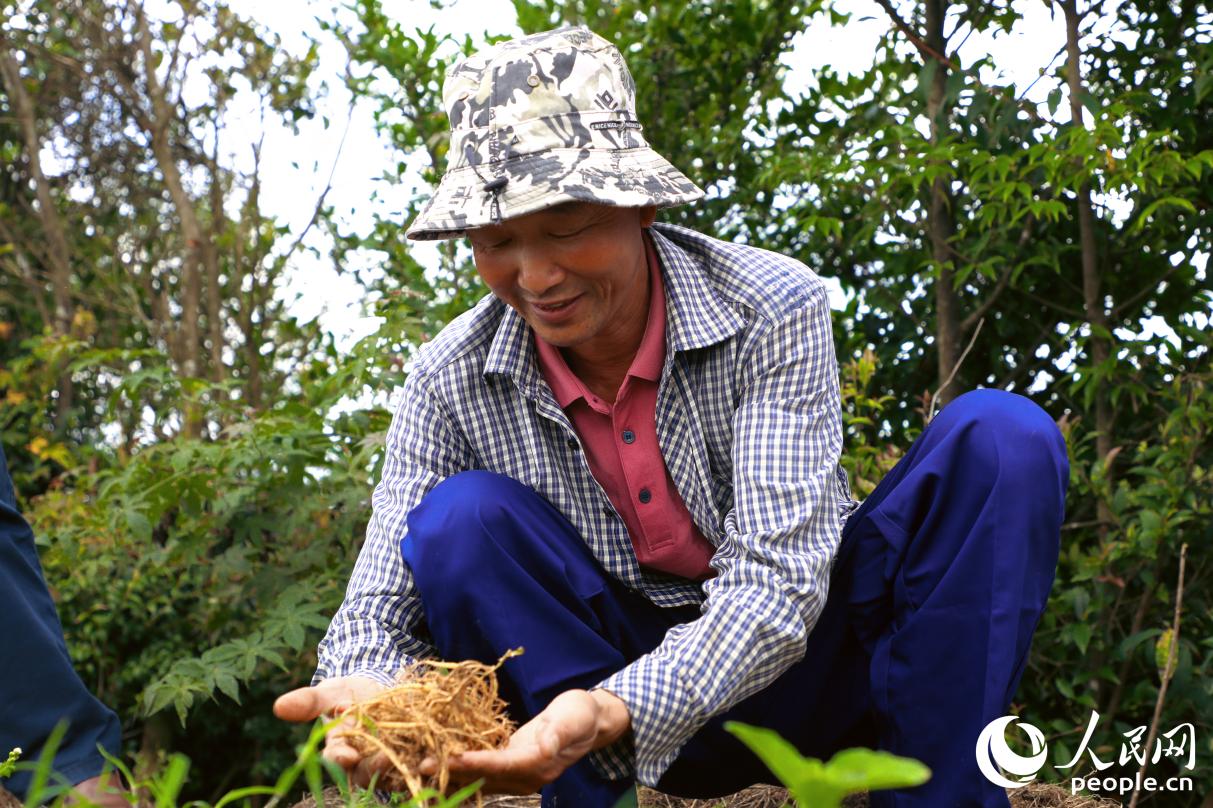
Wu Guodong holds a handful of a new variety of false starwort. (Photo: People's Daily Online)
The mountainous terrain of eastern Fujian is quite fragmented, with farmland scattered across the hills, making it difficult for large machinery to operate across the terrain. As a result, false starwort cultivation still relies heavily on manual labor, greatly increasing costs. In the past, individual farmers grew and sold the herb themselves, often waiting by the roadside for middlemen to buy their harvest, leaving them with little bargaining power.
"Later, we brought farmers from several nearby townships together via cooperatives and helped connect them directly with pharmaceutical companies. Now they are able to earn significantly more per kilogram," Wu said.
Growing false starwort dates back centuries in Zherong. In recent years, as the biopharmaceutical industry has flourished, Zherong has seized the opportunity: the county realized it could not only grow the herb in fields, it also needed to bring it into factories and laboratories.
Among the pharmaceutical companies that purchase Zherong false starwort are several local enterprises, including Fujian Beidi Pharmaceutical Co., Ltd. (Beidi Pharmaceutical).
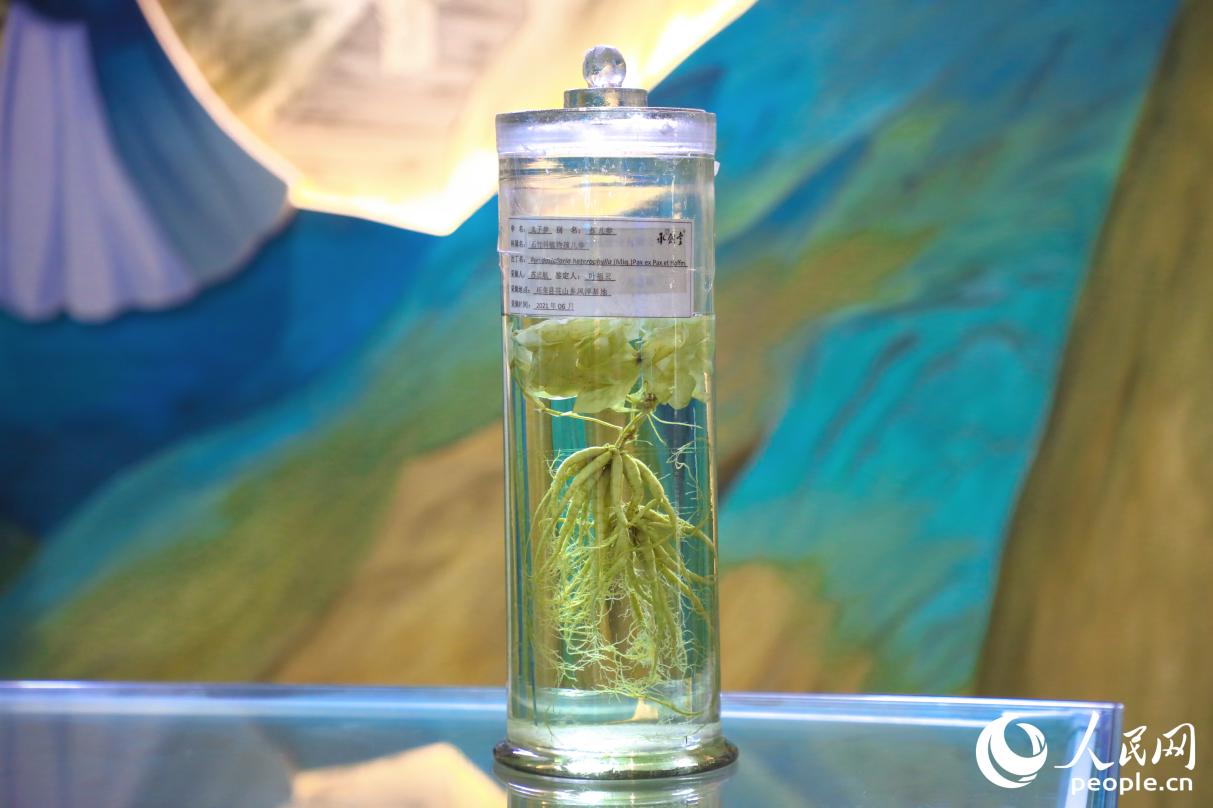
Photo shows false starwort fibrous roots. (Photo: People's Daily Online)
After sending samples to various research institutions for testing, the company found that the saponin content in false starwort fibrous roots was more than twice that in the main roots. "Saponins can help boost immunity and protect cardiovascular and cerebrovascular health. It would be a shame to let them go to waste," said Lin Hegui, chairman of the company.
Beidi Pharmaceutical began extracting compounds from false starwort fibrous roots and developing new medicines in 2014. Once discarded or even burned as firewood, the fibrous roots were transformed into valuable raw materials on pharmaceutical production lines.
In the past, Fujian Mindong Rejuenation Pharmaceutical Co., Ltd. developed compound false starwort granules by extracting active ingredients from false starwort, and the product enjoyed years of market success. After years of development, the company has expanded its R&D focus far beyond false starwort, venturing into other fields such as anti-allergy and antiviral medicines.
"Our product portfolio is broad. We focus our efforts on areas with market potential, and we believe there is always a way forward," said You Naishou, plant manager of Fujian Mindong Rejuenation Pharmaceutical Co., Ltd. The company recently obtained a national patent for microsphere formulations.
Starting with just a single medicinal herb, the people of Zherong have developed a biopharmaceutical industry worth nearly 1 billion yuan (about $14.83 million). Today, Zherong's biopharmaceutical industrial cluster has been selected as one of Fujian's first strategic emerging industry clusters.