



A general view of a Tesla electric vehicle car door handle in Beijing, China, on August 24, 2026. (Photos: VCG)
On August 21, nine automakers, including Tesla, Xiaomi, Leapmotor, XPeng, Geely, Chery, DFAC, BAIC BluePark, and FAW, issued large-scale recalls across China due to safety redundancy issues with their flush door handles. Covering a total of around 4.28 million vehicles, this marks the broadest and largest automotive recall in China so far this year. This unprecedented, coordinated recall is not a blanket condemnation of flush door handles as a design, nor does it imply a systemic quality flaw in China's New Energy Vehicles (NEVs). Instead, it highlights a fundamental shift in China's approach to NEV safety regulation. Two mandatory national safety standards, Electric vehicles safety requirements and Electric vehicles traction battery safety requirements, officially took effect on July 1. Their implementation ushers in an era of rigorous safety constraints for China's NEV industry, signaling a shift away from "cutthroat specification wars" and toward foundational breakthroughs in intrinsic safety.
Safety regulation charts a "safety first" course for automotive innovation
Centered on mandatory national standards and supplemented by tools like defect investigations and recall mechanisms, China's end-to-end NEV safety regulatory framework is cultivating a "safety-first" innovation mindset and an institutional learning loop, thereby driving collaborative innovation across the entire industry chain.
First, safety regulation establishes a firm safety baseline for NEV development, bringing design back to its fundamental purpose of ensuring safety. In the automotive industry, nothing takes precedence over human safety. Today, many intelligent technology innovations in NEVs extend far beyond traditional industry boundaries and are being rapidly deployed at scale. China's new national safety standards will encourage automakers to embrace a "safety-first" R&D philosophy, embedding safety requirements proactively from the very inception of a new technology through its research, development, and validation. This ensures potential hazards are eliminated before mass production, preventing a repeat of how flush door handles evolved from a trendy must-have into a safety vulnerability.
Second, defect investigations and recall mechanisms constitute an effective institutional learning framework for the automotive industry. Identifying risks and promptly correcting them is a responsibility that automakers and the industry as a whole must shoulder, as well as an effective process of organizational learning and technological iteration. The recent large-scale recall, for instance, can be viewed as an invaluable learning curve for the auto industry. If these lessons ultimately translate into accident data, human factors testing methods, and design guidelines shared across the industry, they will establish new benchmarks to guide future innovation.
Third, safety regulation is catalyzing collaborative innovation across the entire industry chain. The two new national standards establish a two-way assessment mechanism linking the battery and vehicle levels. This will break down the R&D model that has long characterized the NEV industry, where battery development relied heavily on test benches while vehicle development revolved around chassis systems, leaving upstream and downstream players largely working in silos. Instead, it will foster collaborative innovation across the industry chain, helping to ensure both the reliability of individual components and the dynamic safety performance of complete vehicles.
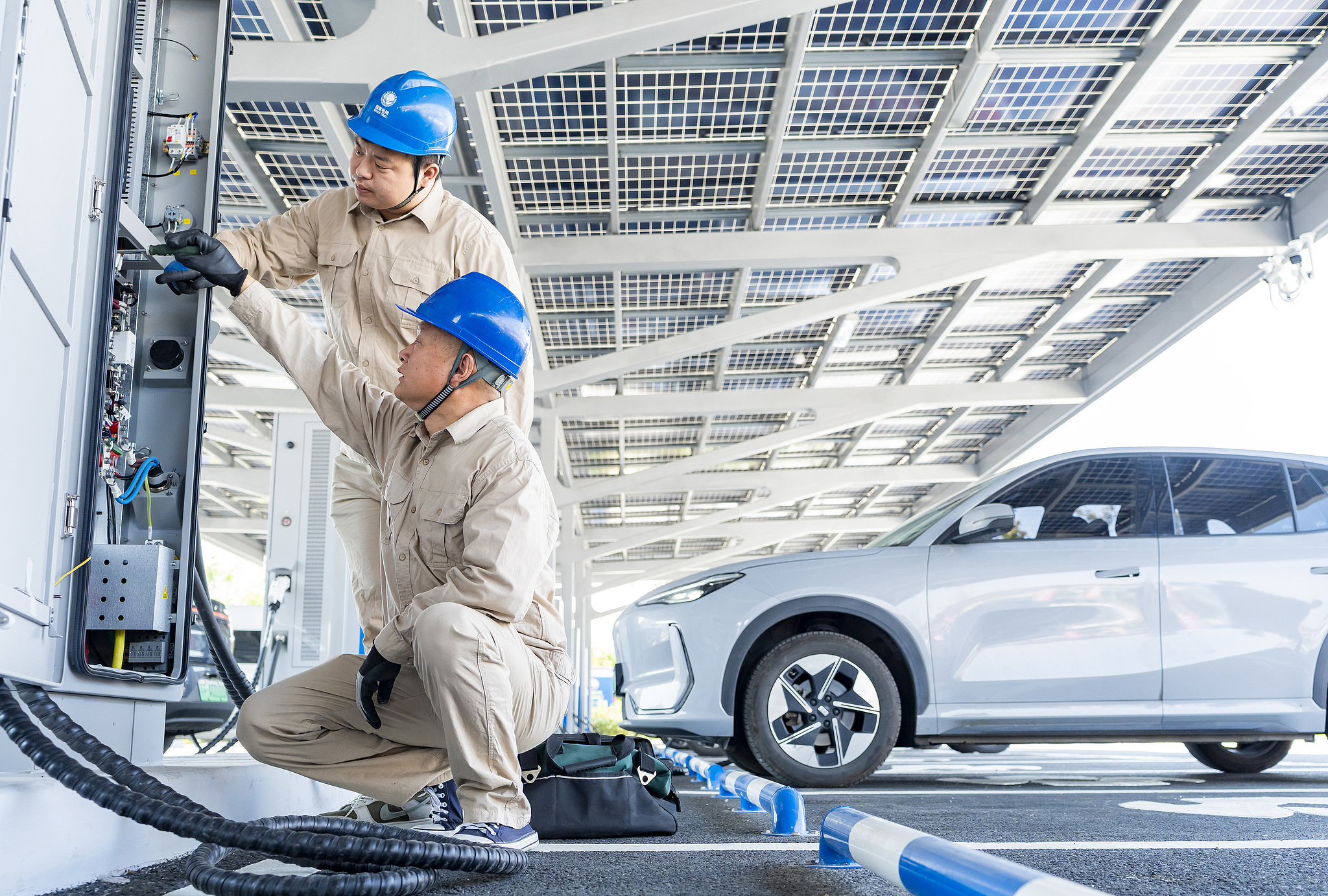
Staff from State Grid Nantong Power Supply Company carry out safety inspections on supporting power facilities in Nantong, Jiangsu Province, China, June 10, 2026.
Safety regulation lays a new foundation for auto industry development and global competitiveness
China's NEV safety regulatory system is fostering the healthy and sustainable growth of its NEV industry while boosting the country's voice on the global stage.
First, China's NEV safety regulatory system is shifting the focus of domestic competition away from in-car feature innovations and toward product-quality innovations, such as in battery thermal safety and robust high-voltage protection. This will expedite the restructuring of China's NEV industry, while the low-end, low-price race-to-the-bottom segment will continue to shrink.
Second, China's NEV safety regulatory system is poised to help shape global safety standards for NEVs. Drawing on measures such as defect investigations and voluntary recalls, together with statistical accident patterns from recent years, including fires caused by underbody impacts, chains of fires triggered by thermal runaway, and electronic control failures that prevented vehicles from powering down after collisions, China has autonomously refined and taken the lead in implementing three mandatory market-access rules featuring groundbreaking global requirements. Together, these rules establish a two-tier, coordinated regulatory framework that combines battery-level safety controls tailored to domestic conditions with comprehensive safety safeguards at the full-vehicle system level. This provides a "China solution" for global NEV safety governance and will influence safety standard-setting in other countries.
Overall, China's NEV safety regulatory framework covers the entire vehicle lifecycle. By continually strengthening national standards, tightening process monitoring and defect investigations, and strictly enforcing recall systems and post-incident accountability, China is building an increasingly robust safety net for NEVs and establishing a firm safety baseline for automakers, vehicle owners, and passengers.