


SAN FRANCISCO, Sept. 4 (Xinhua) -- U.S. electric vehicle maker Tesla on Thursday launched its driverless Cybercab in Austin, Texas, where the vehicle has already begun offering limited ride-hailing services.
File photo: VCG
In a promotional video released on the day of the launch, Tesla CEO Elon Musk described the Cybercab as "the first car that is specifically built for unsupervised full self-driving."
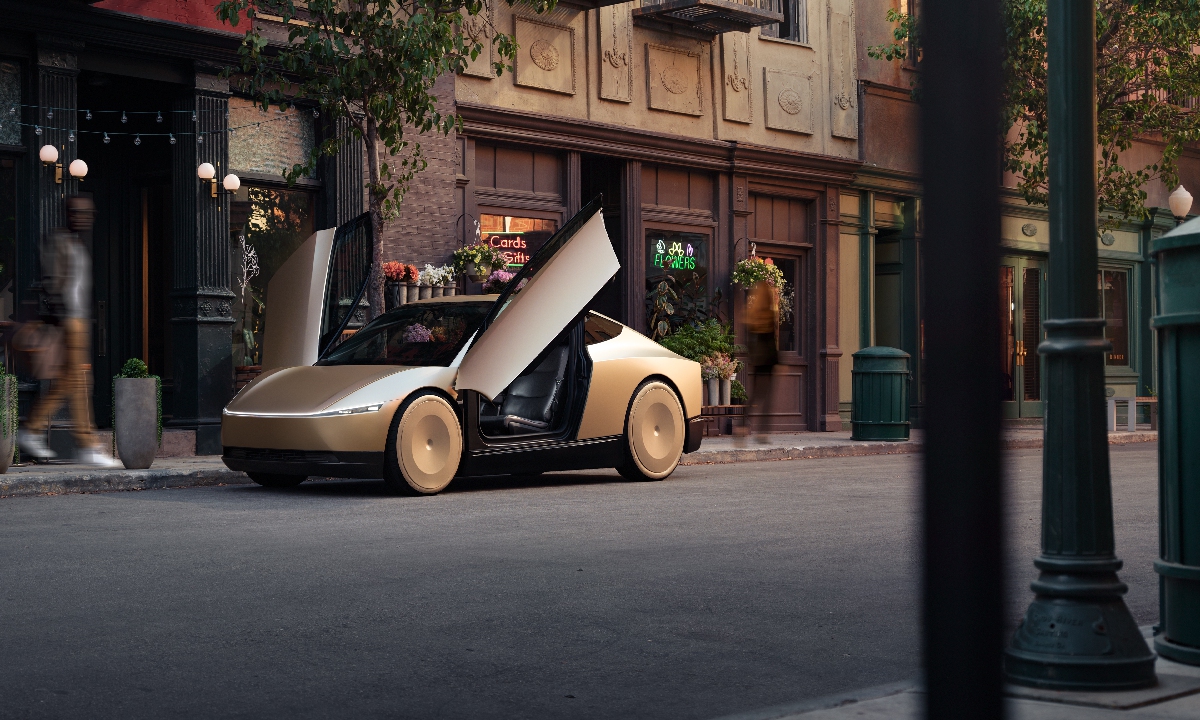
According to Tesla, the Cybercab is a two-seat vehicle featuring butterfly doors and a large interactive touchscreen. A newly released rider guide shows that the vehicle has no steering wheel, accelerator pedal or brake pedal, relying on camera-based vision and sensors for fully autonomous driving.
For passenger safety, the vehicle is equipped with a stop button. Once pressed, the Cybercab initiates an immediate pull-over when it is safe to do so, and connects the passenger with Tesla Robotaxi Support.
The vehicle's rear trunk can accommodate two standard checked suitcases and two carry-on suitcases.
Tesla's updated webpage noted that the Cybercab is the newest addition to its Robotaxi fleet. When passengers request a ride through the Robotaxi app, the system dispatches either a Cybercab or a Model Y based on vehicle availability and the number of passengers.
Musk did not attend the launch event, Reuters reported, citing attendees.
Tesla executives said at the event that Cybercab rides would use dynamic pricing and promised "a first-class experience at coach price."
Tesla said prospective commercial buyers can submit applications for the Cybercab. However, the official price, delivery dates and a service expansion timeline remain unannounced.
Tesla has yet to disclose the exact number of Cybercabs currently in operation. Tesla had 420 autonomous vehicles registered in the state of Texas, including 45 Cybercabs, as of Wednesday evening.
The U.S. National Highway Traffic Safety Administration said Thursday that it is in contact with Tesla and is evaluating the situation.
Tesla first unveiled the Cybercab prototype in October 2024. Production began in 2026, followed by engineering tests of production vehicles on public roads in the second quarter.