


China expands space for mutually beneficial international economic and trade cooperation
The International Monetary Fund recently projected that global trade growth would slow from 5 percent in 2025 to 3.5 percent in 2026, suggesting a challenging outlook for international economic and trade cooperation in the second half of the year.
In response, China is leveraging the certainty of its own development to navigate external uncertainties, reaffirming its commitment to high-level opening up. With more practical policy measures, it is promoting innovative and balanced trade growth, advancing two-way investment cooperation, and making continued contributions to global economic and trade development.
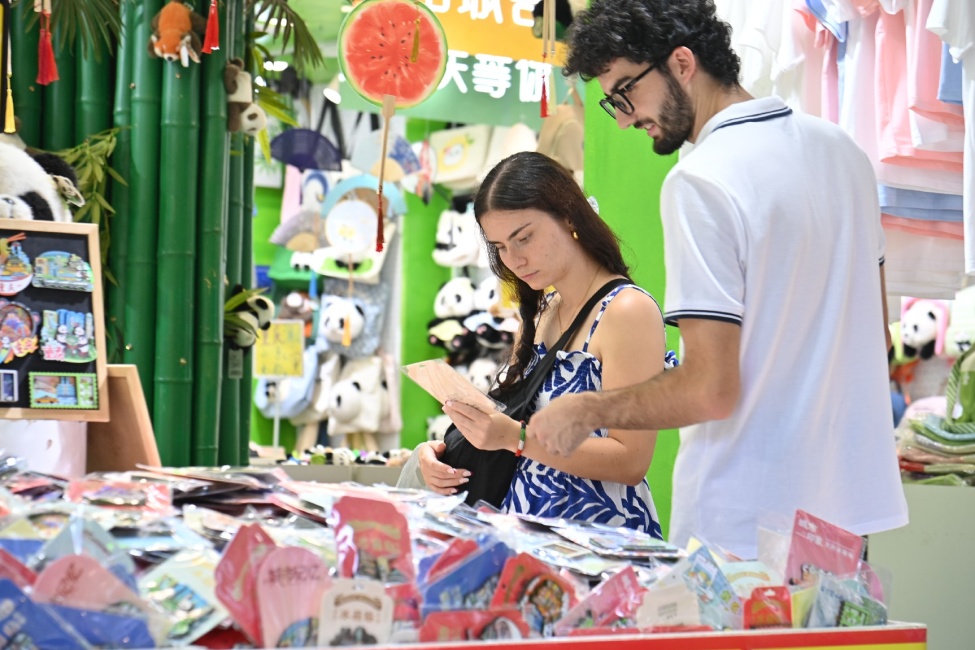
Foreign tourists buy cultural products at Ciqikou, a tourist attraction in southwest China's Chongqing municipality. (Photo/Sun Kaifang)
Expanding trade in services
This year, Apollo Go, an autonomous ride-hailing platform operated by Chinese tech giant Baidu, has accelerated its global expansion. Road tests have begun in the UK and Switzerland, while fully driverless commercial services have been launched in the United Arab Emirates.
"Autonomous mobility services are a typical example of knowledge-intensive trade in services and an emerging area for China's services to go global," said Yang Nan, vice president of Baidu. Apollo Go has now operated in 27 cities worldwide and completed more than 22 million rides.
The global trade landscape is undergoing structural changes, with trade in services increasingly emerging as a new driver of trade growth. In response to new trends in international industrial cooperation, China is working to expand and upgrade its services sector, promote greater openness and cooperation in services, and vigorously develop trade in services.
In the first half of the year, China's total trade in services reached nearly 3.78 trillion yuan ($561.94 billion), up 8.3 percent year on year. Service exports totaled over 1.5 trillion yuan, an impressive increase of 17.6 percent.
"Exports of services in both traditional and emerging sectors are gaining momentum," said Li Jun, director of the International Service Trade Institute of the Chinese Academy of International Trade and Economic Cooperation under the Ministry of Commerce.
In traditional sectors, more convenient entry policies have driven rapid growth in inbound tourism. China's travel service exports rose 31.1 percent year on year in the first half. In emerging sectors, exports of knowledge-intensive services, including artificial intelligence, robotics, and data processing, are also accelerating.
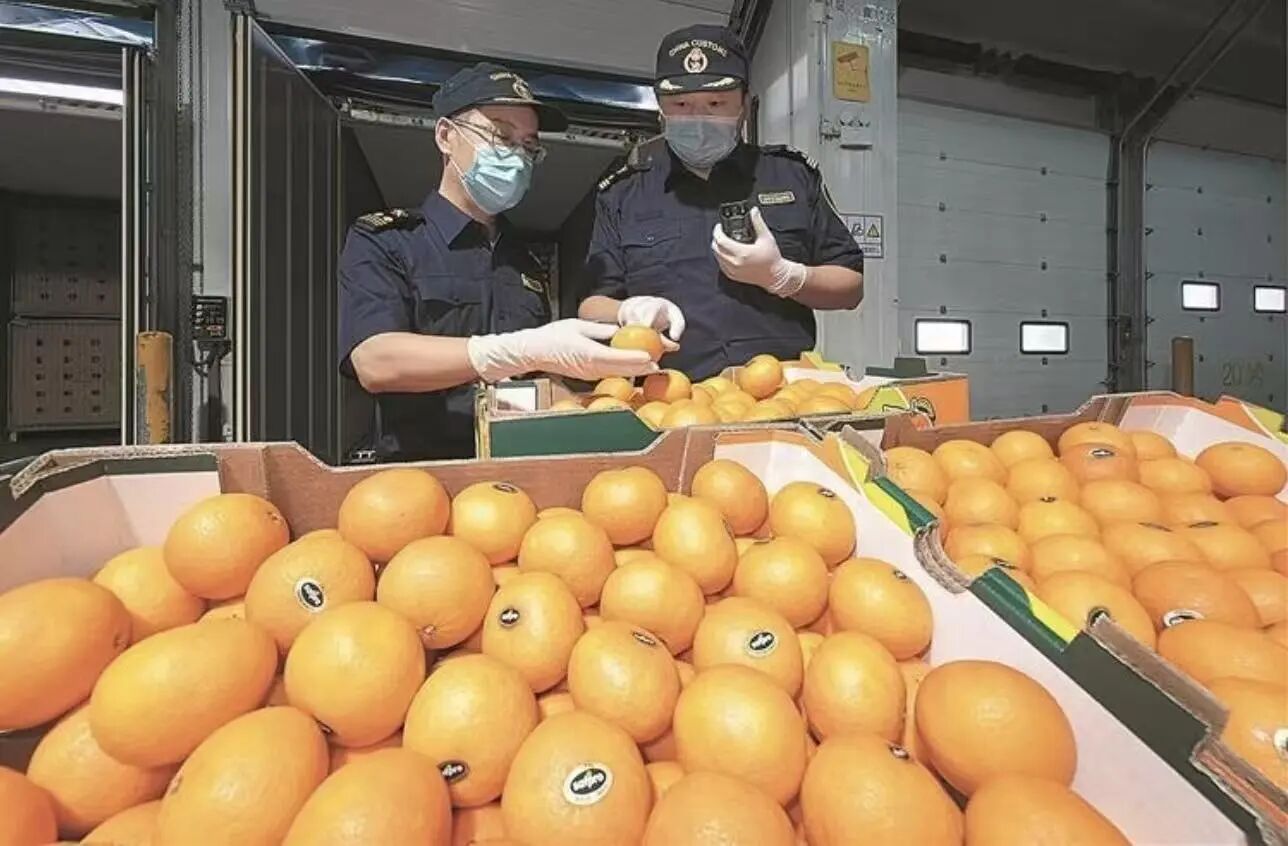
Customs officers conduct inspections on fresh citrus imported from South Africa. (Photo courtesy of Dalian Customs)
Promoting balanced trade growth
A notable feature of China's trade performance in the first half of the year was that goods imports exceeded 10 trillion yuan for the first time in any comparable period, rising 22.1 percent and outpacing export growth by 8.7 percentage points.
The momentum has continued. In the first seven months, China's imports grew 22 percent, eight percentage points faster than exports.
Wang Jun, deputy head of China's General Administration of Customs, said China is steadily expanding voluntary and unilateral opening up. It has implemented zero-tariff policies for imports from 63 countries and is making good use of major international trade fairs, including the China International Import Expo (CIIE), China International Consumer Products Expo and China International Supply Chain Expo, to provide platforms for quality products from around the world to enter the Chinese market.
In the first half of the year, China's imports from more than 150 countries and regions increased.
Recently, a shipment of grapefruit from South Africa arrived at a food processing company in Ningbo, east China's Zhejiang province, where the fruit was processed into tea beverage ingredients, canned products and not-from-concentrate juice.
On May 1, China fully implemented zero-tariff treatment for products from 53 African countries with which it has diplomatic relations, delivering tangible benefits to businesses.
Since the beginning of the year, Chinese customs authorities have also actively expanded market access for imported agricultural and food products. Dried chili peppers and cashews from African countries with diplomatic ties with China, pecans from Uruguay, apples from Belgium, and dried longan from Cambodia have all gained access to the Chinese market.
By proactively expanding imports and promoting balanced trade development, the Ministry of Commerce has organized nearly 40 events worldwide since the beginning of the year under the "Big Market for All: Export to China" initiative, with the UK, Spain, Kazakhstan, Kenya, and Thailand serving as guest countries.
"China's efforts to expand imports are a strategic move that follows the trend of history and is rooted in the new development philosophy. They are aimed at achieving mutually beneficial outcomes with all countries and pursuing shared progress toward a brighter future," said Yang Tao, director general of the Department of Foreign Trade of the Ministry of Commerce.
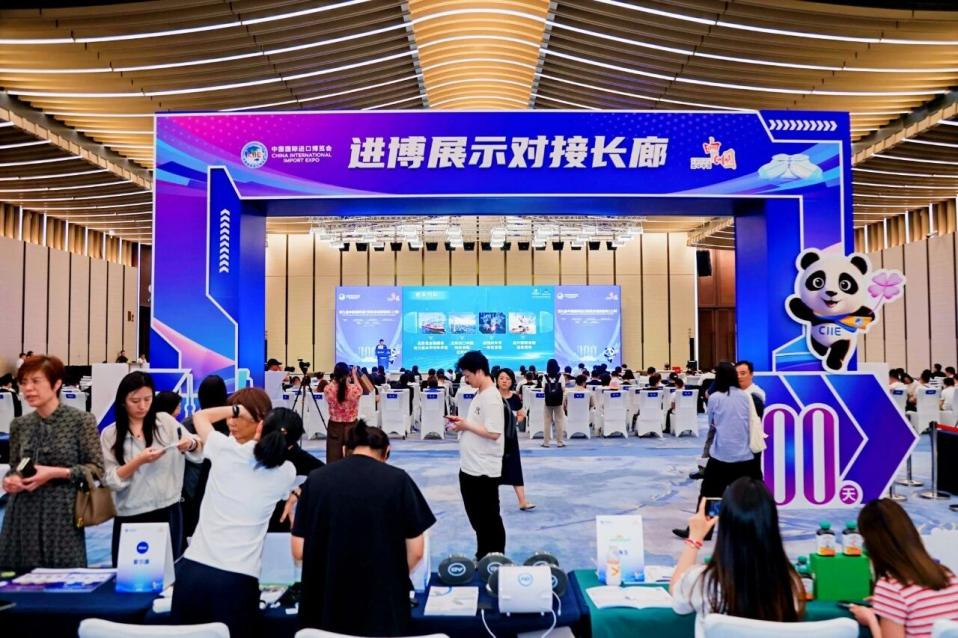
An event marking the 100-day countdown to the ninth China International Import Expo is held. (Photo from People's Daily app)
Expanding two-way investment cooperation
Recently, an event marking the 100-day countdown to the ninth CIIE was held in Shanghai. At the event, the first group of 68 companies signed agreements to participate in the 10th CIIE, covering more than 50,000 square meters of exhibition space.
More than 30 companies have confirmed that they will participate in the expo for the 10th time. Medtronic, one of the largest medical device companies in the world, is one of them.
"From being a regular participant at the CIIE to becoming a long-term partner, Medtronic has demonstrated its firm commitment to deepening its presence in the Chinese market," said Alex Gu, senior vice president and president of Medtronic Greater China.
The company hopes to leverage the CIIE as a platform for openness and cooperation to introduce more cutting-edge medical technologies from around the world, promote deeper integration between global innovation and local needs in China, and accelerate the global expansion of more Chinese innovations.
This year, amid a complex and volatile international environment and a slowdown in global cross-border investment, China has continued to expand two-way investment cooperation. On the one hand, it is working to attract and make better use of foreign investment; on the other, it is improving systems for managing outbound investment and strengthening comprehensive overseas services.
"Going forward, the Ministry of Commerce will continue promoting high-quality Belt and Road cooperation, further improve the management and service system for outbound investment and cooperation, and promote international cooperation across industrial and supply chains through coordinated advances in trade and investment," said Yan Dong, vice minister of commerce.