


How can trade in services become a new source of growth for China?
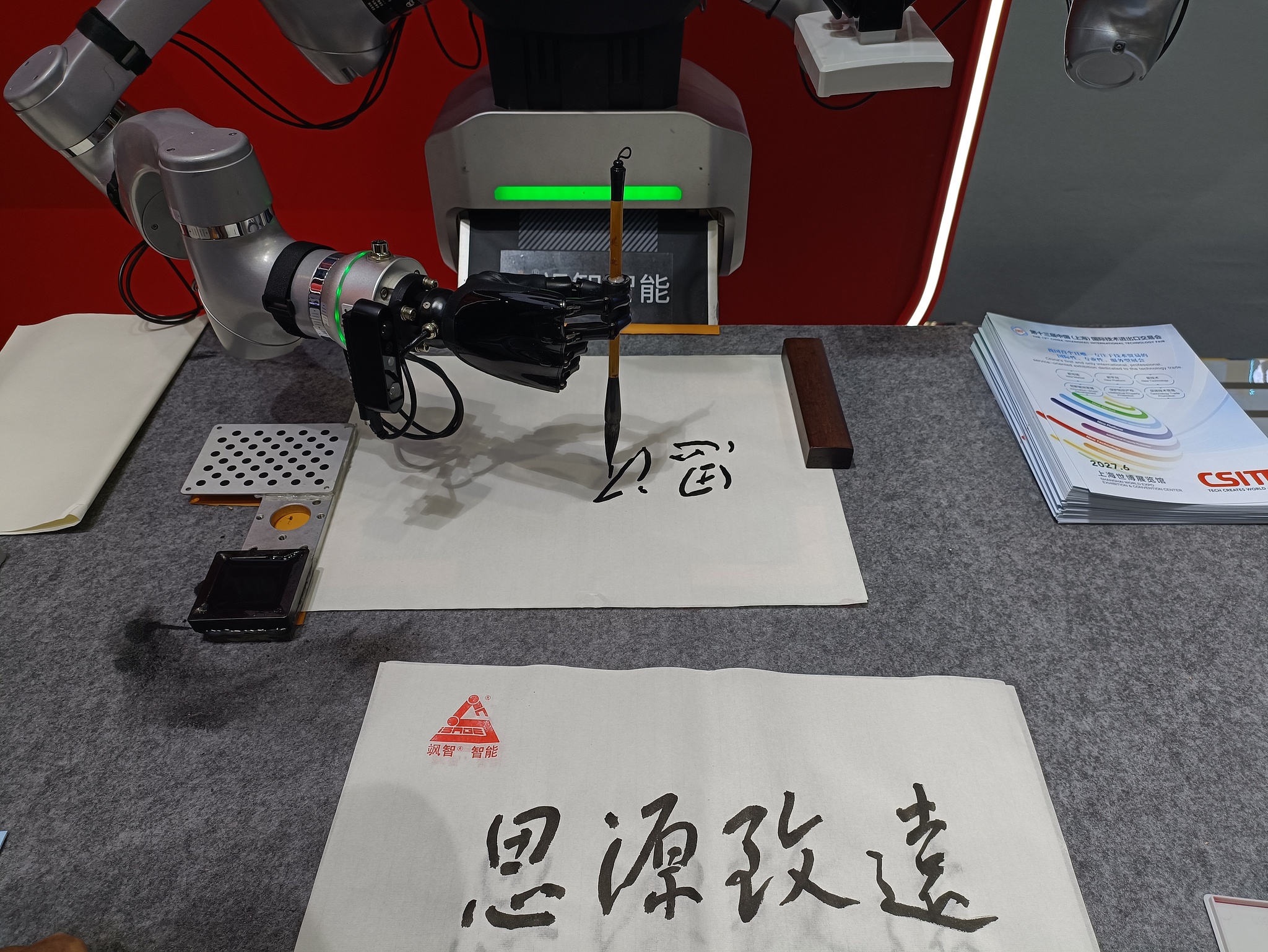
A robot from SaZhi Intelligence demonstrates Chinese calligraphy at the Shanghai exhibition booth of the 2026 China International Fair for Trade in Services in Beijing, September 10, 2026. (Photos: VCG)
From January to July this year, China's total imports and exports of services reached 4,446.71 billion yuan ($662 billion), up 8.3% year on year. Of this total, exports amounted to 1,773.23 billion yuan, an increase of 17.1%. As digitalization, intelligent transformation, and green development accelerate, the scope and forms of trade in services are undergoing profound changes. These changes are becoming an important driver of growth in both the scale and quality of China's trade in services, while also opening up new space for economic growth.
China's trade in services is undergoing structural change. In the past, it was distinctly labor-intensive. Today, as China vigorously pursues innovation-driven development and the optimization and upgrading of its industrial structure, the traditional pattern of its trade in services is being rapidly reshaped. This is not simply a matter of adding new forms of business; rather, it represents a fundamental shift in service supply capacity from factor-driven to innovation-driven. From January to July, exports of knowledge-intensive services grew notably, rising by 12.2% and accounting for 53.5% of the total service exports. This indirectly highlights the ongoing enhancement of technological sophistication and value added in China's trade in services.
The profound change now underway is that trade in services is no longer confined to the traditional boundaries of "directly providing services". Instead, with services as the vehicle, technology, platforms, and industries are being deeply integrated into service chains, giving rise to integrated supply models such as "technology + services," "platforms + services," and "industry + services". As a result, the competitiveness of trade in services increasingly hinges on technological capabilities, data resources, platform ecosystems, and the capacity for cross-industry coordination. The "technology + services" model transforms technological capabilities into service products that can be delivered across borders, significantly increasing the value added of trade in services. The "platforms + services" model integrates fragmented service offerings into large-scale service networks, substantially lowering the barriers for small, medium-sized, and micro market participants to engage in international trade in services. Meanwhile, by embedding services deeply into the industrial chains of the real economy, the "industry + services" model is driving a shift in China's export structure from simply "selling products" toward delivering integrated "products + services" solutions.
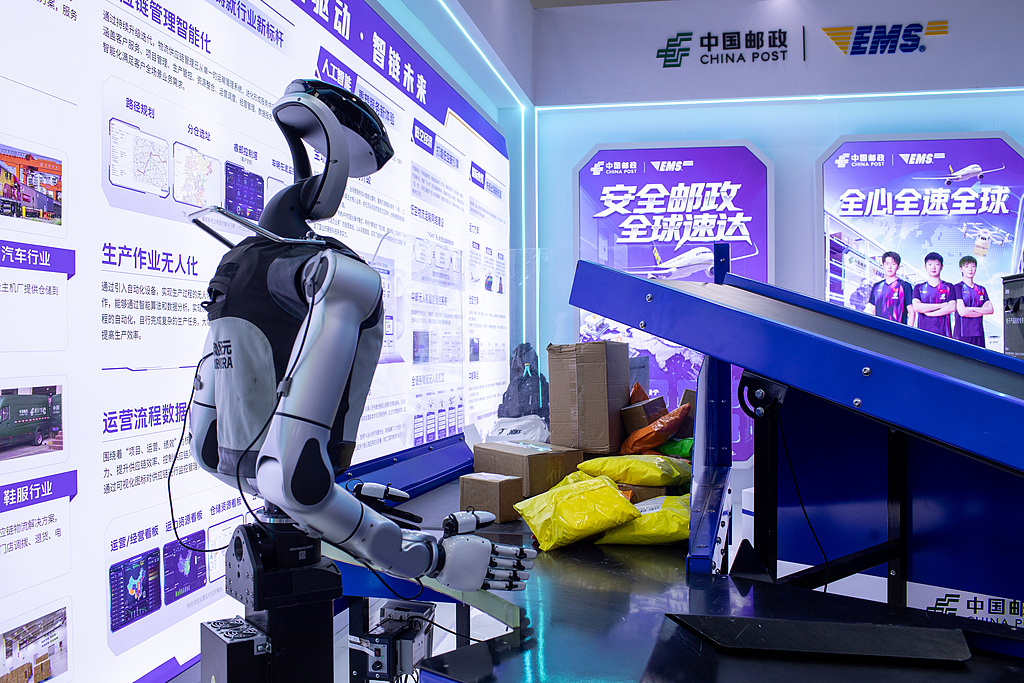
A humanoid robot demonstrates intelligent sorting capabilities at the China Post EMS exhibition area of the China International Fair for Trade in Services in Beijing, September 9, 2026.
This transformation has multiple strategic implications for expanding China's opening-up, upgrading its industries, and fostering new quality productive forces. From the perspective of opening-up, optimizing the structure of trade in services will help China proactively align with high-standard international economic and trade rules and become more deeply integrated into the global division of labor in services.
From an industrial perspective, upgrading the structure of trade in services will promote mutual reinforcement between the industrialization of services and the servitization of industries, effectively helping China's manufacturing sector move up the value chain through full-chain services.
From the perspective of fostering new quality productive forces, the digital, intelligent, and green transformation of trade in services is not only expanding the scope of trade in services but also creating application scenarios and market prospects for the development of new quality productive forces, thereby accelerating the transformation and iterative development of innovation through cross-border services.
In response to these structural changes in China's trade in services, the 2026 China International Fair for Trade in Services (CIFTIS) which is being held from Sept 9 to 13 in Beijing, is centered on three core functions: Expanding opening-up, deepening cooperation, and driving innovation. It remains committed to promoting inclusive development through greater openness in services, common development through cooperation in services, and high-quality development through innovation in services. By transforming itself from a mono-function exhibition platform into a hub for international cooperation in trade in services, CIFTIS is promoting connectivity between Chinese and international services markets, tapping into new potential for the high-quality development of trade in services, and injecting fresh momentum into the development of global trade in services.