


Hong Kong's first five-year plan signals a new path for future growth
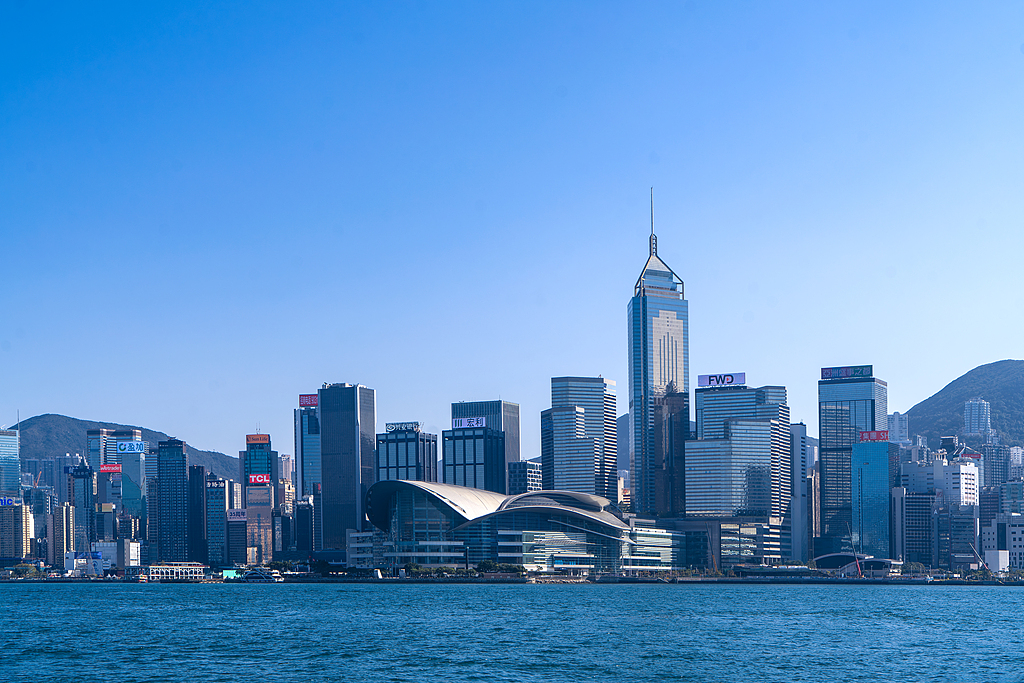
A view of the Hong Kong Convention and Exhibition Centre, Hong Kong Special Administrative Region, China. (Photo: VCG)
The release of the Hong Kong Special Administrative Region's first five-year plan marks an important milestone in the city's development. Its significance goes beyond extending the policy horizon from one year to five years. More importantly, it represents a change in development thinking, moving from responding to circumstances as they arise to taking a more proactive approach in preparing for the future.
The global economic landscape is changing rapidly. Geopolitical tensions, supply chain adjustments, artificial intelligence and the green transition are reshaping competition among cities. Many economies around the world are using medium- and long-term strategies to strengthen innovation and develop new industries. These examples show that strategic planning can work alongside a market-oriented economy.
For Hong Kong Special Administrative Region (HKSAR), the five-year plan is not about replacing the market. Instead, it aims to provide clearer direction, create more stable expectations and improve coordination so that market forces can operate more effectively.
A major part of the plan is the Northern Metropolis. Proposed in the HKSAR Government's 2021 Policy Address, the project is expected to provide more than 70,000 housing units and around one million square meters of economic floor area over the coming years.
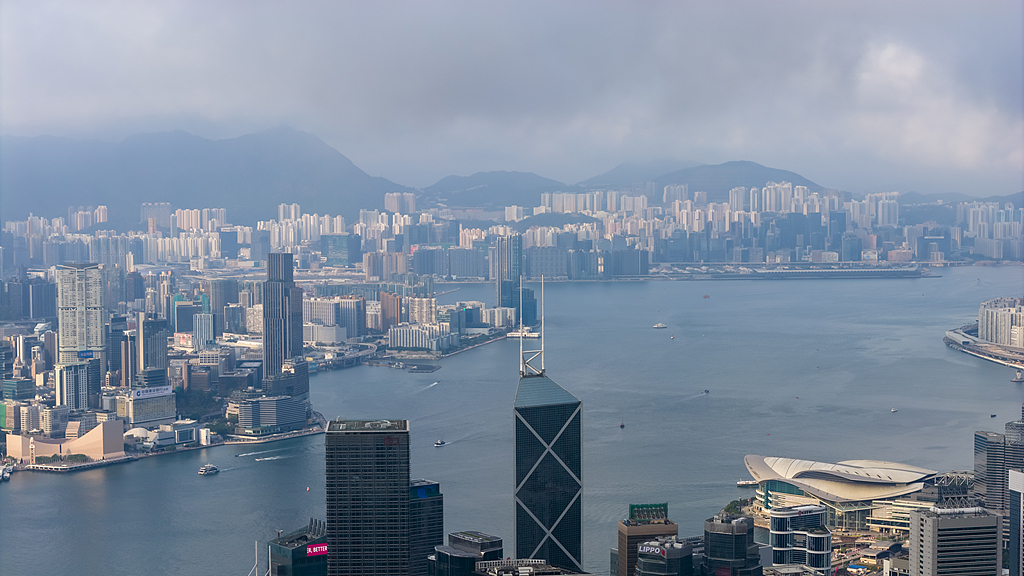
City skyline seen from Victoria Peak, Hong Kong Special Administrative Region, China. (Photo: VCG)
The importance of the Northern Metropolis goes beyond land development and housing. It can help ease the concentration of industries around Victoria Harbor and create new opportunities by bringing together universities, innovation and technology companies, and industries.
Located within the Guangdong-Hong Kong-Macao Greater Bay Area, the Northern Metropolis can support closer cooperation between Hong Kong and Shenzhen. Hong Kong can contribute its strengths in research, finance and professional services, while Shenzhen can contribute its capabilities in technology commercialization and industrial development.
Developing innovation and technology does not mean moving away from Hong Kong's traditional strengths in finance, shipping and trade. Instead, these sectors can support new areas of growth.
Finance can provide long-term capital for artificial intelligence, biotechnology and green industries. Shipping can expand into green fuels, maritime insurance and arbitration services. Trade can support digital trade, supply chain management and high-value professional services.
Hong Kong's connectivity is also evolving. It is no longer only about the movement of capital, goods, talent, technology and data. It also involves closer cooperation in areas such as regulations, standards, professional services and dispute resolution.
By supporting the internationalization of the renminbi and the global expansion of Chinese mainland enterprises, Hong Kong can continue to connect global capital, technology and expertise with broader development needs.
The success of the five-year plan will depend on implementation. The plan should guide annual policy addresses and government budgets, with clear responsibilities, measurable targets and regular progress reviews.
Progress should be measured not only through GDP and investment, but also through innovation commercialization, high-value-added service exports, quality employment, housing improvements, cross-border efficiency and carbon reduction.
Hong Kong's first five-year plan marks a shift toward a more forward-looking approach to development. By building on its existing strengths and creating new opportunities through planning and innovation, the city can strengthen its competitiveness in a changing global environment.