


A decade of growth: China-Europe freight rail trips surge 10.8-fold
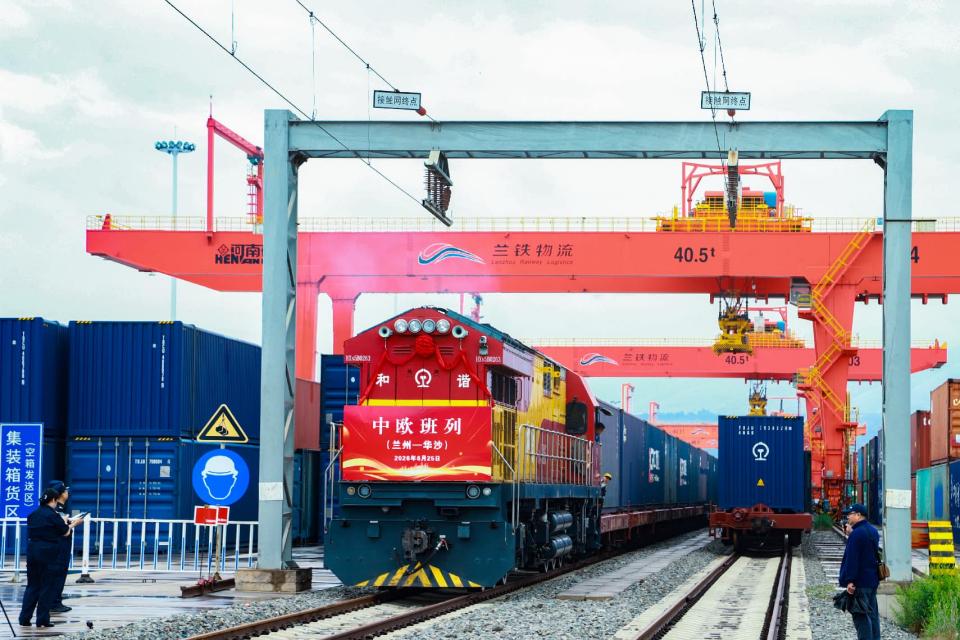
A China-Europe freight train loaded with high-end chemical products is ready to depart from Lanzhou, northwest China's Gansu Province for Warsaw, Poland, June 25. (Photo/Wang Guanghui)
This year marks the 10th anniversary of the China-Europe Railway Express operating under a unified brand. Over the past decade, the service has completed more than 130,000 journeys, transporting cargo valued at over $520 billion. What began as a regional freight initiative has evolved into a globally recognized logistics network.
Why has the China-Europe Railway Express developed so rapidly? Its unified brand has been crucial.
When the inaugural China-Europe freight train departed Chongqing in 2011, followed by subsequent services from Wuhan, Hunan, and Zhengzhou, growth was steady but fragmented. Annual departures rose from 80 in 2013 to 815 in 2015.
However, independently operated local services led to duplicated efforts, elevated costs, inconsistent standards, and weak market recognition -- bottlenecks that threatened further scaling.
On June 8, 2016, the China-Europe Railway Express officially launched its unified brand. Featuring a streamlined emblem that combines railway and silk motifs in red and black, the new identity standardized train naming, visual design, and marketing across all participating regions.
By consolidating resources and aligning operational protocols, the network significantly strengthened its overall competitiveness. Annual train journeys jumped from 1,702 in 2016 to 20,022 in 2025 -- a 10.8-fold increase, reflecting an average annual growth rate of 31.5 percent.
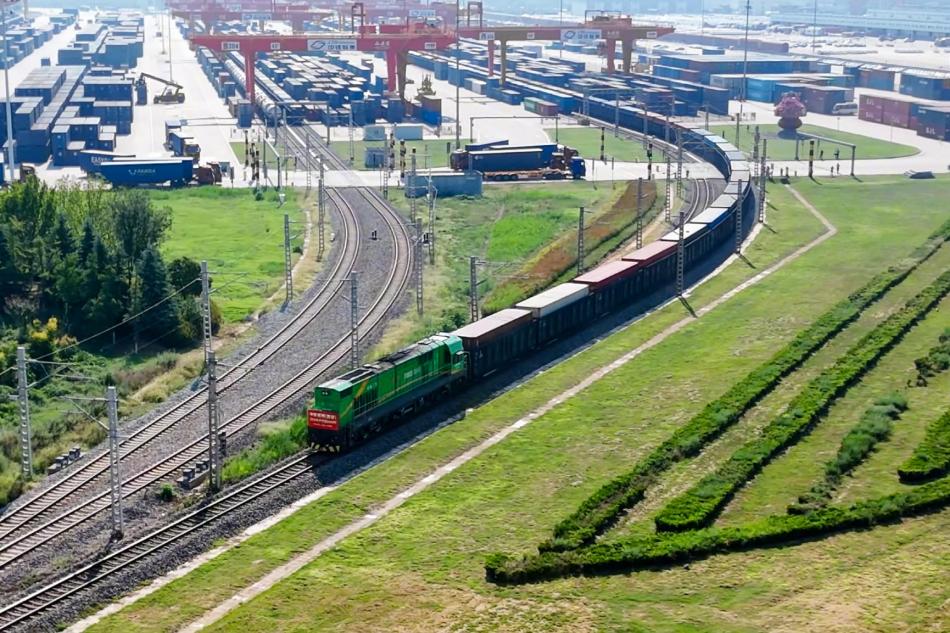
A China-Europe freight train loaded with cargo departs from Xi'an, northwest China's Shaanxi Province for Duisburg, Germany, Sept. 3. (Photo/Yang Jinglong)
Today, the China-Europe Railway Express is increasingly recognized by countries along its routes for its advantages of speed, punctuality, safety, reliability, and environmental sustainability.
Connectivity remains the foundation of modern logistics. With unified branding and planning, service now operates three primary corridors -- western, central, and eastern -- spanning 96 scheduled routes at an average speed of 120 km/h.
At present, 129 Chinese cities connect to 236 cities in 26 European countries. Compared to 2016, the network has expanded by 113 cities domestically and 216 internationally, effectively covering much of the Eurasian landmass and providing a reliable backbone for cross-border trade.
Efficiency drives competitiveness. Transit speeds have been consistently optimized: trains cover approximately 1,600 km daily on Chinese territory and 1,000-1,300 km overseas, making them roughly one-third faster than conventional rail-sea intermodal alternatives.
Capacity has also scaled up; upgraded rolling stock now supports trains of up to 55 cars and a maximum trailing weight of 3,000 tons, enabling heavier loads without compromising speed.
Customs clearance has also become more efficient. In recent years, with the adoption of a "railway express" customs clearance model and the development of digital ports, customs clearance at China-Europe freight train ports has been reduced to as little as 30 minutes.
To simplify the supply chains, the service offers a centralized digital portal for end-to-end logistics management. For example, a Hangzhou-based equipment manufacturer executive recently used the platform to coordinate door-to-door transport, customs declaration, and integrated logistics. His shipment, dispatched from Zhengzhou, reached central Europe in just 17 days. Upon arrival, customer service teams remotely guided overseas partners through unloading to ensure a secure and efficient handover.
The model's flexibility proved critical during a recent urgent shipment handled by a Xi'an-based logistics operator. A European chemical manufacturer needed 310 containers (18,600 tons) of raw materials delivered within 35 days. Ocean freight would take 45 to 60 days, while trucking would require over 600 vehicles and expose costs to volatile fuel prices.
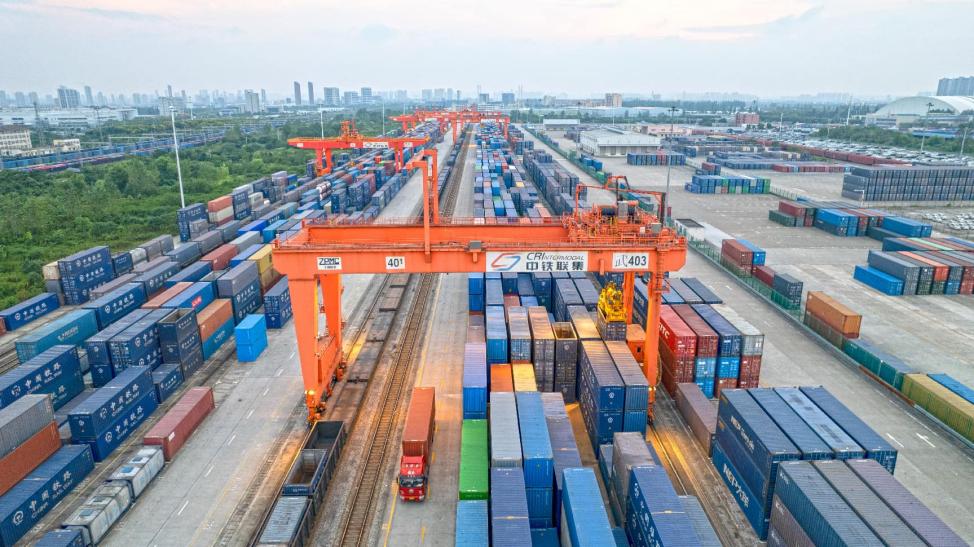
Photo taken on Aug. 30 shows a container yard of the China Europe Railway Express in Wuhan, central China's Hubei Province. (Photo/Ma Erhu)
Today, the China-Europe Railway Express continues to evolve.
"The China-Europe Railway Express took just 10 to 20 days for the full journey and had a large carrying capacity. It reduced total logistics costs by 29 percent, ensuring that the overseas chemical enterprise could start production on schedule," said Su Lu, general manager of the Xi'an company.
As operations matured, transportation costs along both domestic and international segments have dropped by more than 40 percent since launch. Cargo diversity has expanded dramatically: trains now carry goods across 53 categories, covering more than 50,000 types of products. High-value-added goods, including automobiles and auto parts, machinery equipment, and electronics dominate outbound shipments, while inbound cargo includes timber, pulp, specialty agricultural products, and consumer goods.
On June 24, the first "zero-carbon" China-Europe freight train from the Yangtze River Delta successfully arrived at Yiwu West Railway Station in Zhejiang Province. Operating under the Duisburg-Yiwu full-route timetable, the train used 100 percent green electricity on electrified sections. On non-electrified sections, it offset its remaining emissions through Gold Standard certified carbon offset projects, achieving net-zero carbon dioxide emissions during train operations.
As electrification upgrades continue along railway routes and clean transport vehicles, including new-energy heavy trucks, are increasingly deployed for cargo collection and distribution, the "steel camel caravan" spanning Eurasia is taking on an increasingly distinct green character.
After a decade of development, the "steel camel caravan" has grown far beyond a single transport route. With reliable capacity, efficient coordination and a commitment to green development, it has become a widely welcomed international public good.