


A market-driven RMB and the path toward global rebalancing
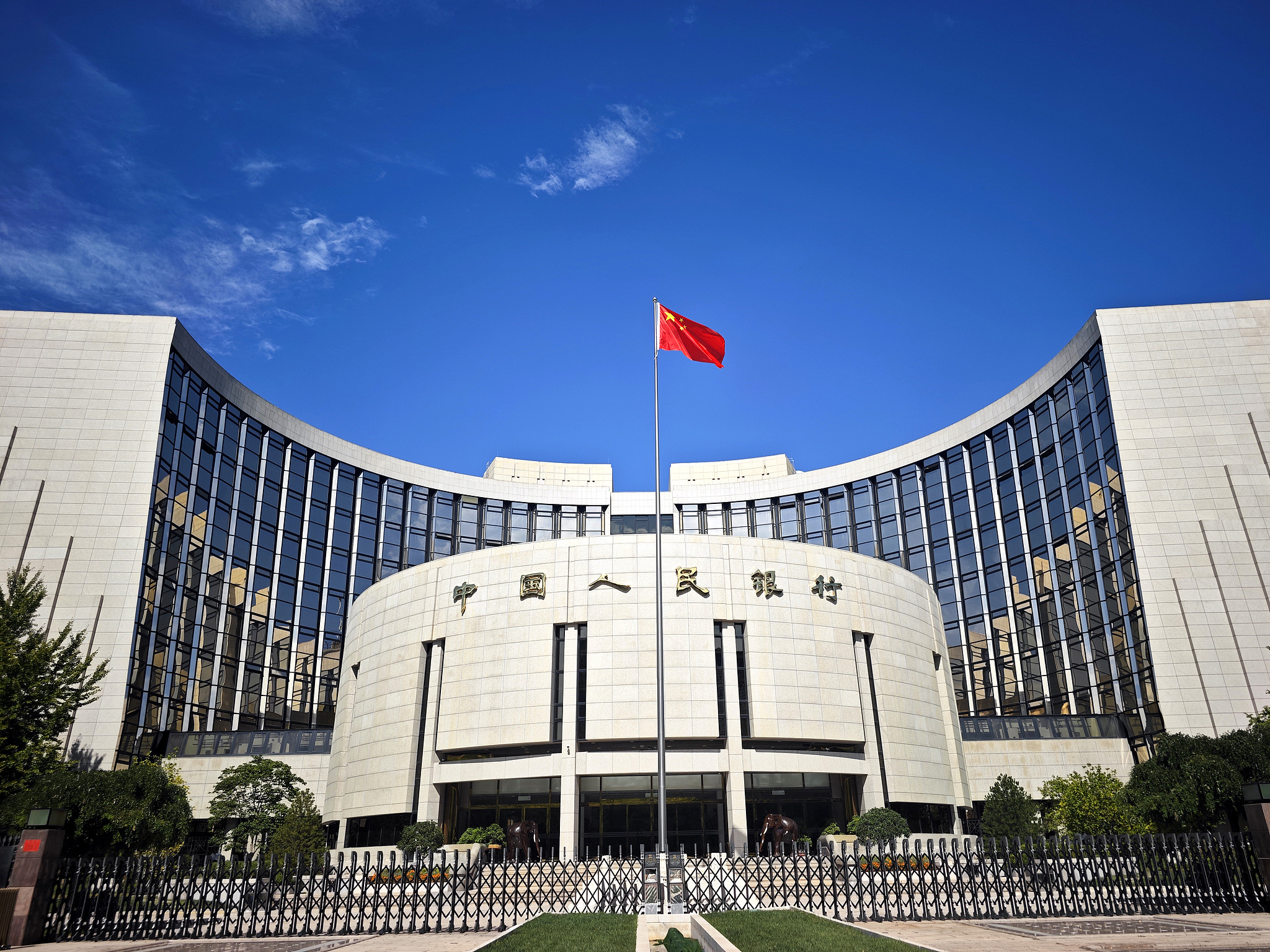
The headquarters building of the People's Bank of China, Beijing, China, October 5, 2026. /VCG
The People's Bank of China (PBOC), the country's central bank, has recently clarified its stance on the renminbi exchange rate, pushing back against simplistic narratives that attribute China's trade surplus and global trade imbalances entirely to currency factors.
China's exchange rate regime has steadily advanced toward greater market flexibility over more than three decades. It operates under a managed floating exchange rate system: the RMB's value is primarily determined by market supply and demand, with reference to a basket of currencies. The central bank does not target a fixed exchange rate, nor does it aim to dictate the currency's long-term path. Market forces shape its pricing. The renminbi's historical moves reflect this framework, responding to economic fundamentals rather than administrative targeting of the currency level.
Investor herding can push currencies far from their fundamental values. Against this backdrop, policy stability and responsible management become crucial. As Guan Tao, chief economist at Huafu Securities, notes, as a major responsible economy, China maintained RMB stability during the 1998 Asian financial crisis and the 2008 global financial crisis.
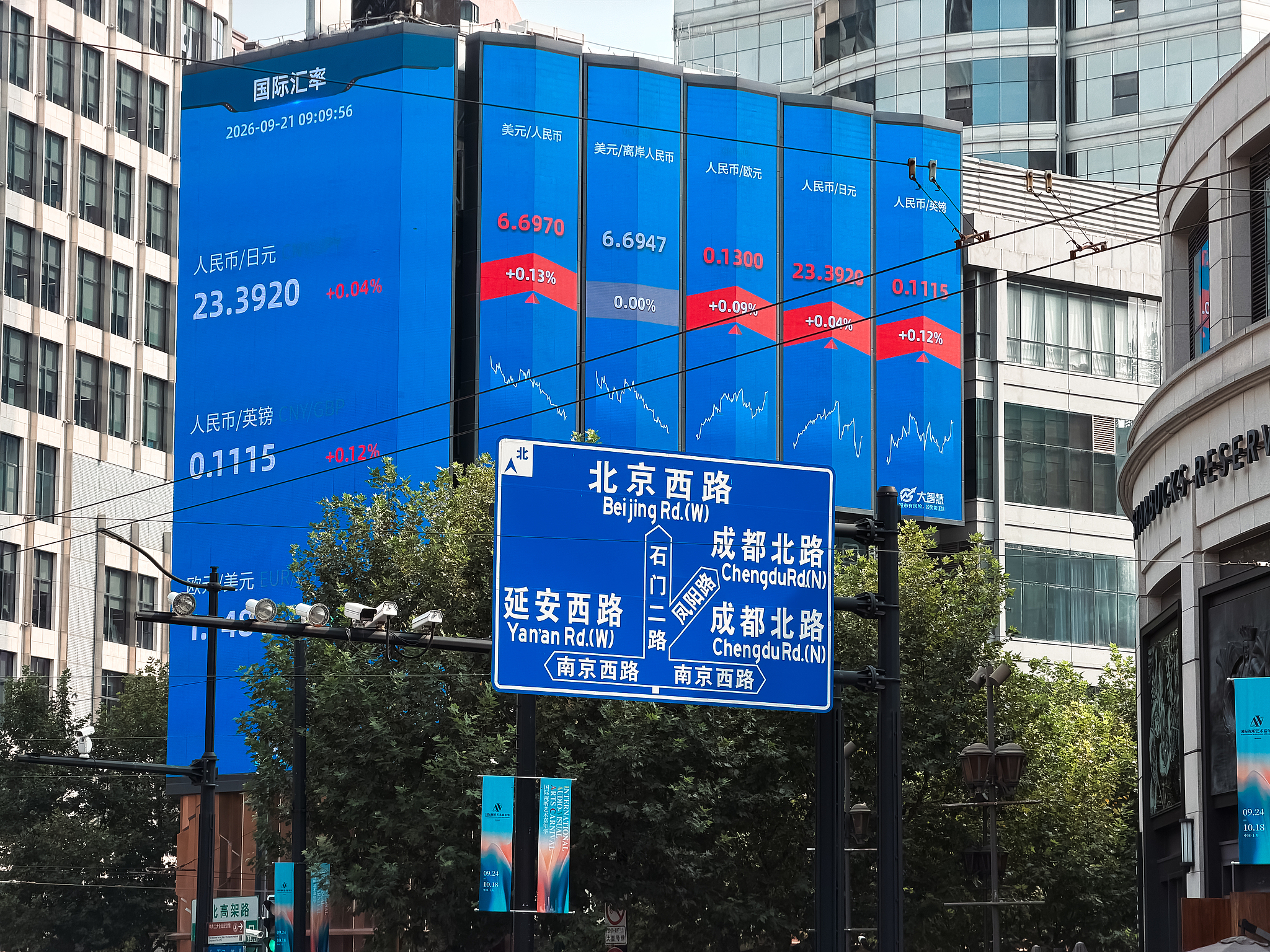
A large outdoor screen displays the exchange rate of the Chinese yuan in Shanghai, China, September 21, 2026. /VCG
In recent years, Chinese authorities have used macroprudential policy tools mainly to curb extreme volatility amid the US Federal Reserve rate hikes and mounting headwinds for global trade. Such interventions are consistent with standard international practice. They are designed to mitigate short-term market shocks, rather than alter the RMB's long-term equilibrium trend.
Critics often argue China's trade surplus comes from an undervalued currency. This claim is not supported by empirical evidence. As Guan explains, a country's trade balance bears no simple one-to-one correlation with its exchange rate. IMF estimates that the renminbi's fair value cover a broad range, and the fund has found no material undervaluation in its recent reviews. The IMF's key recommendation for China is to expand domestic demand, not enforce currency appreciation.
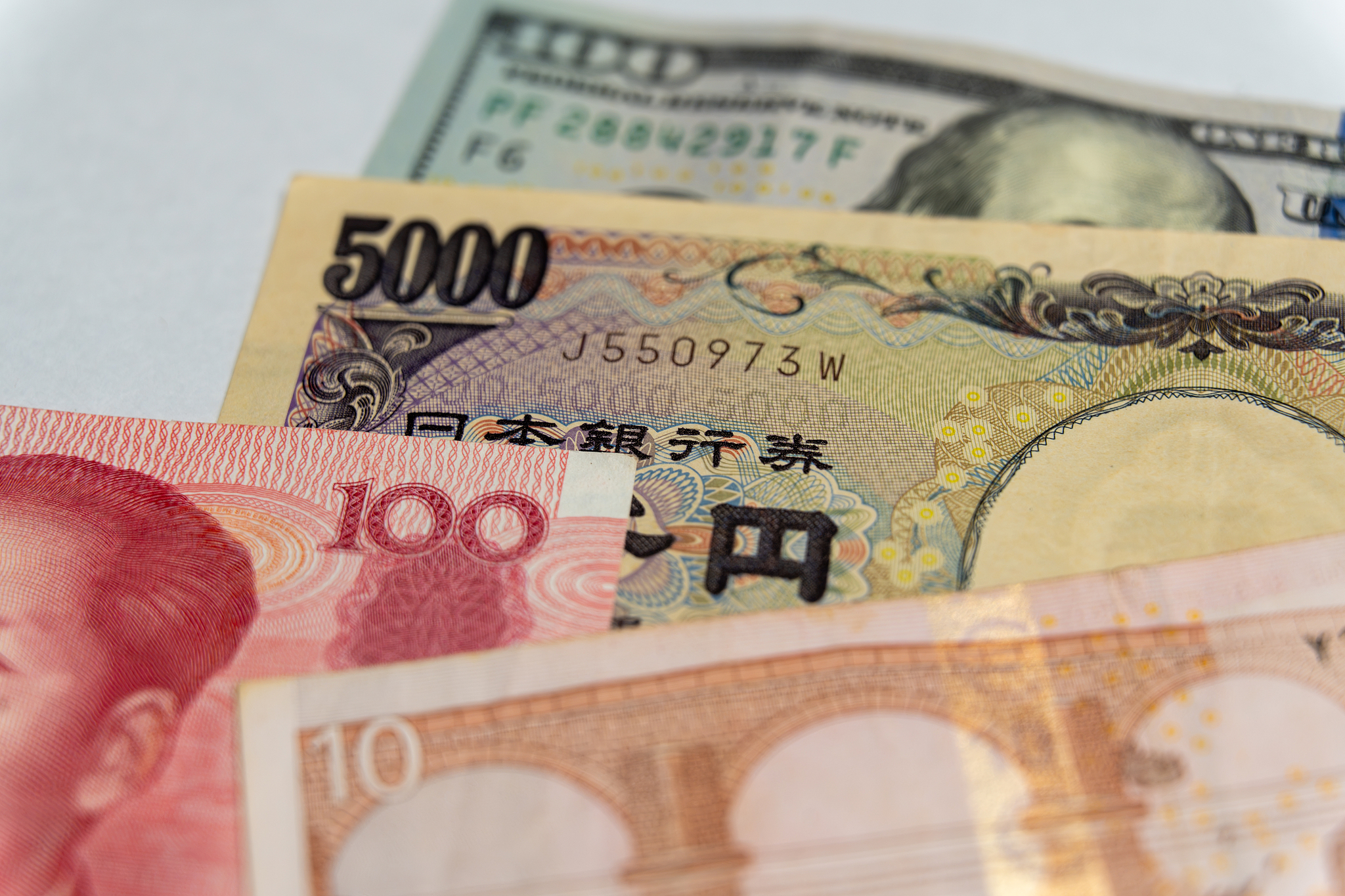
The US dollar, Japanese yen, Chinese renminbi, and euro banknotes. /VCG
Currency revaluation cannot resolve global trade imbalance. As the PBOC points out, the group of surplus economies has changed repeatedly over recent decades, while the world's largest deficit economy has stayed largely the same.
Going forward, China will continue to develop a deep and liquid foreign exchange market, with macroprudential tools ready to address extreme volatility. The RMB will keep fluctuating in both directions and remain broadly stable at a reasonable and equilibrium level. A flexible, market-based renminbi underpins stable cross-border trade and investment and helps build a more resilient global monetary system, consumption and investment.