


Why the world is looking east: The growing global appeal of China's innovation ecosystem

A man rides a quadruped robot at the venue of the 2026 Yuelu Conference, in Changsha, central China's Hunan province, Sept. 24. (Photo/Li Jian)
One way to gauge a region's appeal to investors and entrepreneurs is to listen to those already embedded in its ecosystem. Take a European founder based in Shenzhen, south China's Guangdong province, who has called the city home for over a decade. He reports receiving daily inquiries from overseas startup leaders eager to visit, explore partnerships, or establish operations in China.
The steady stream of visitors eager to explore Shenzhen and its tech companies offers a glimpse into the growing global interest in China's innovation ecosystem.
This is no fleeting trend. It underscores investors' confidence in China and their optimism about the country's prospects. The steady flow of overseas technology delegations, increasingly regular cross-border business discussions, and growing interest in "looking east" go beyond conventional economic and trade ties. They offer a vivid illustration of how the world is gaining a new understanding of China and seeking opportunities for cooperation and shared development.
Increasingly, entrepreneurs, researchers, and investment institutions from around the world are traveling to China to learn firsthand about its innovation mechanisms, industrial dynamics, and development pathways. Looking back at China's evolving economic and trade ties with the world, this surging eastward focus marks a profound shift and more comprehensive, objective recognition of China's development.
This transition from trade-centric partnerships to co-innovation rests on tangible structural advantages. Foremost among them is industrial resilience. While several major economies face deindustrialization pressures and cyclical volatility, China has maintained steady growth alongside continuous upgrading. Its comprehensive manufacturing base, extensive infrastructure networks, and large domestic consumer market provide a natural shock absorber, enabling predictable expansion even amid global headwinds.
Clustering amplifies this advantage. At a robot industrial park in Foshan, Guangdong province, for example, more than 90 percent of the components and other products needed across the supply chain can be sourced within the park. A design revised in the morning can undergo testing on the very same day. Industrial clustering, closely connected supply chains, consistent policies, and an open, inclusive market give investors at home and abroad the confidence to make long-term commitments and develop their businesses in China.
If industrial resilience provides the foundation, China's vibrant innovation ecosystem and the rapid development of new quality productive forces are what give the country its enduring appeal.
Confidence in China's development rests on its innovation capabilities. From basic research to practical applications, breakthroughs are emerging across a wide range of technological fields.
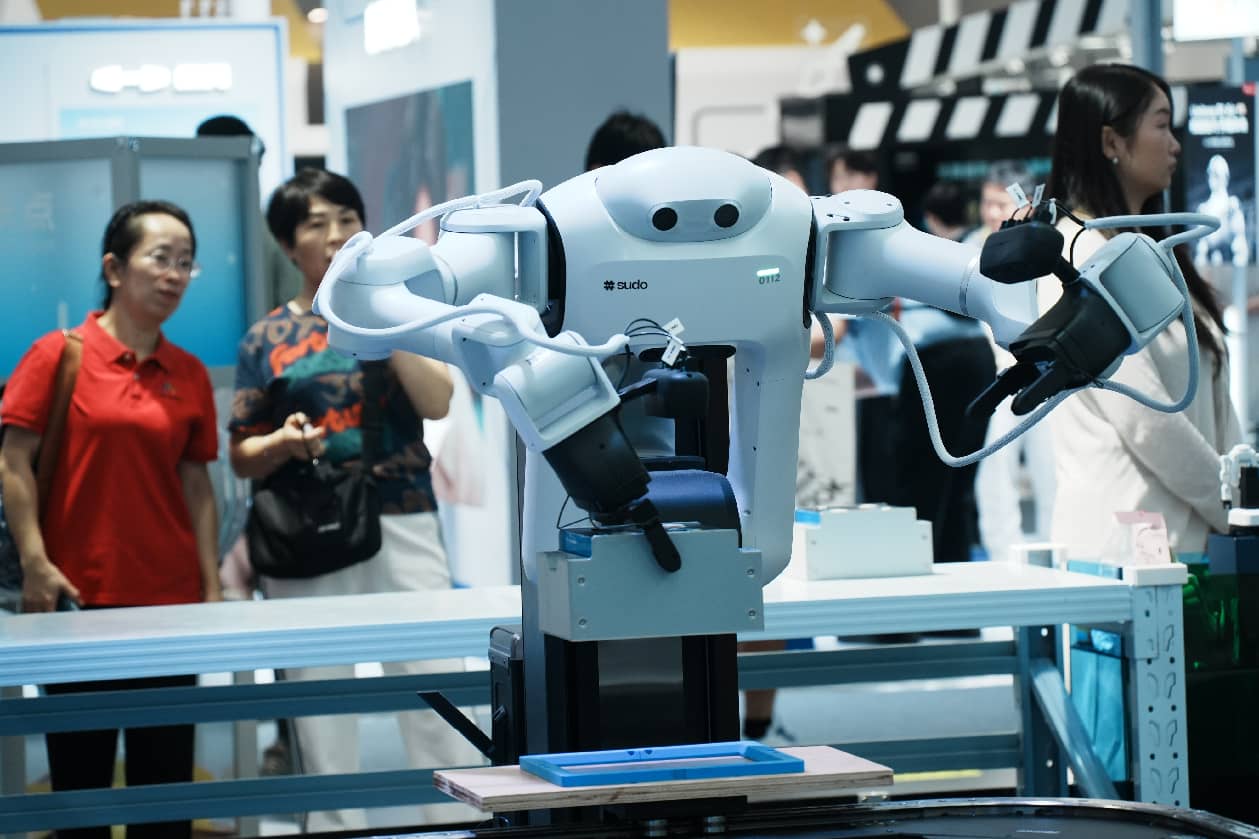
A humanoid robot developed by Chinese tech firm Sudo assembles lithium batteries in a smart workshop, Sept. 24. (Photo/Long Wei)
These efforts are yielding visible results. Renewable energy projects in the Gobi Desert are powering data centers, transforming cities such as Ulanqab in Inner Mongolia and Qingyang in Gansu province into key nodes in the national computing network.
Meanwhile, in Hefei, east China's Anhui province, the experimental nuclear fusion device known as an "artificial sun" and the Zuchongzhi 3.0 quantum computing prototype continue to set world records, strengthening China's position in frontier technologies.
A recent report released by the World Intellectual Property Organization shows that China has 25 of the world's top 100 innovation clusters, ranking first globally for the fourth consecutive year.
The more China innovates, the more the world stands to benefit. Some international observers have noted China's increasingly important role in the global innovation ecosystem, while others have praised Chinese developers for pushing the boundaries of innovation every day. From quantitative growth to qualitative breakthroughs, and from individual advances to progress across entire systems, the vitality and rapid development of China's innovation sector demonstrate that innovation can be made anywhere, and that practical action is what turns pioneers into leaders.
A strong industrial foundation and vibrant innovation are not enough on their own. They also need a favorable environment where they can flourish. By further opening up and continuously building a first-rate business environment that is market-oriented, law-based, and internationalized, China is strengthening the institutional foundations for attracting global resources and building momentum for shared development.
The advantages of this environment are reflected in more targeted services and the effective implementation of practical policies. Across China, for example, policies on entry visas, length of stay, residence, and support for integration are being improved to help foreign professionals put down roots, develop their careers, and grow their businesses.
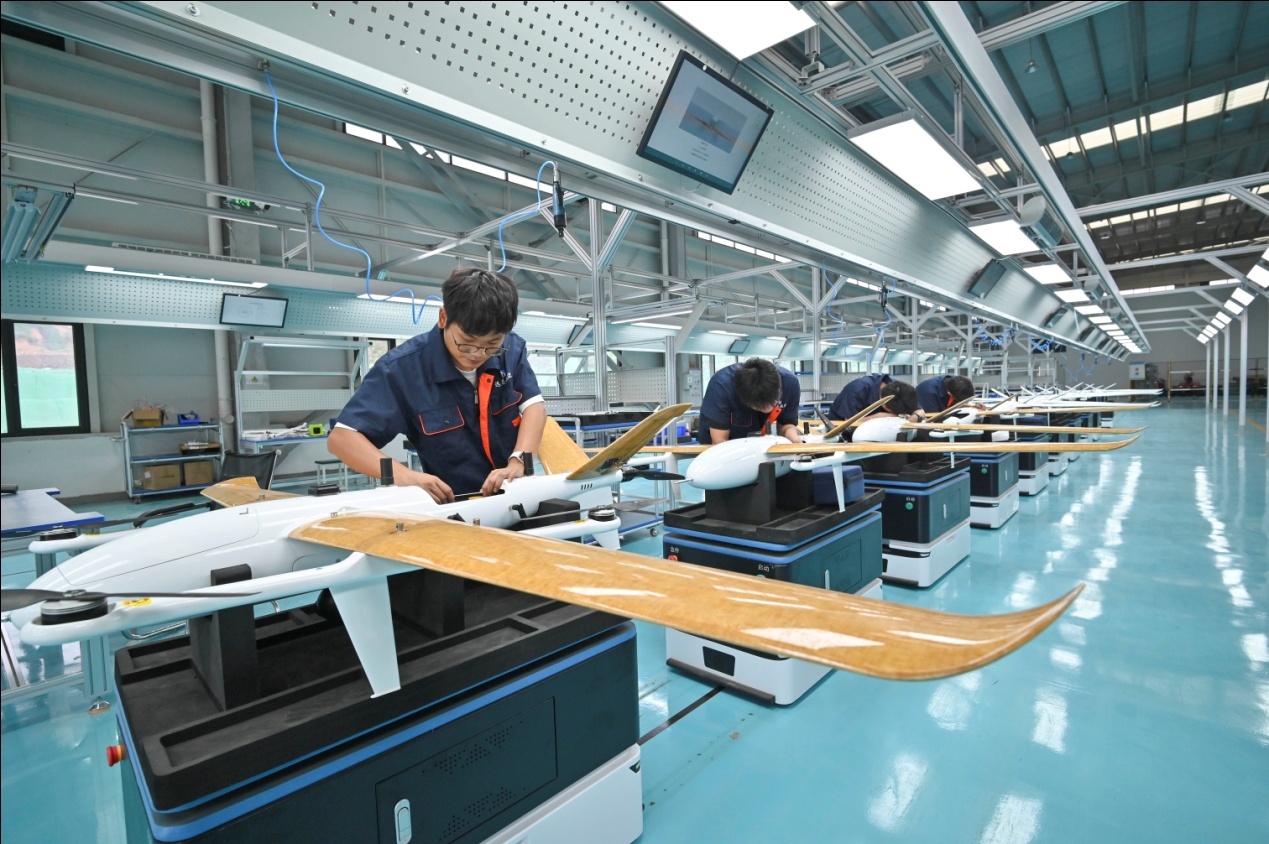
Workers assemble XV3 "bamboo-wing" electric vertical take-off and landing drones on the production line of an aviation technology company in Fuzhou, east China's Jiangxi province, Sept. 2. (Photo/Li Jie)
From more targeted industrial policies and efficient government services to robust intellectual property protection and an open, diverse innovation culture, China is introducing concrete reforms that make its environment more inclusive and its institutions more supportive, further enhancing its appeal as a place to develop and invest.
Looking beyond the surface reveals the deeper reasons behind the growing interest in China's innovation ecosystem. The visible sign is the steady stream of visiting delegations; beyond that lie expanding opportunities for cooperation; at the deepest level is global confidence in China's industrial strength, innovation capabilities, and institutional environment. Against the backdrop of global industrial transformation and rapid technological change, this interest reflects a rational assessment by market participants.
Looking ahead, China will continue to consolidate its foundations for development with the same persistence as a craftsman driving a nail, pursue new heights in innovation with the determination of a climber, and expand international cooperation with an open and inclusive mindset. By doing so, China can turn the growing global interest in "looking east" into mutually beneficial outcomes, demonstrating that China's success can contribute to a better future for the world.