


Gold bar, coin demand lifts China's gold consumption in first 9 months
BEIJING, Nov. 4 (Xinhua) -- China's gold consumption rose 0.28 percent year on year to 684.623 tonnes in the first three quarters of 2026, supported mainly by gold bar and coin demand, according to data from the China Gold Association.
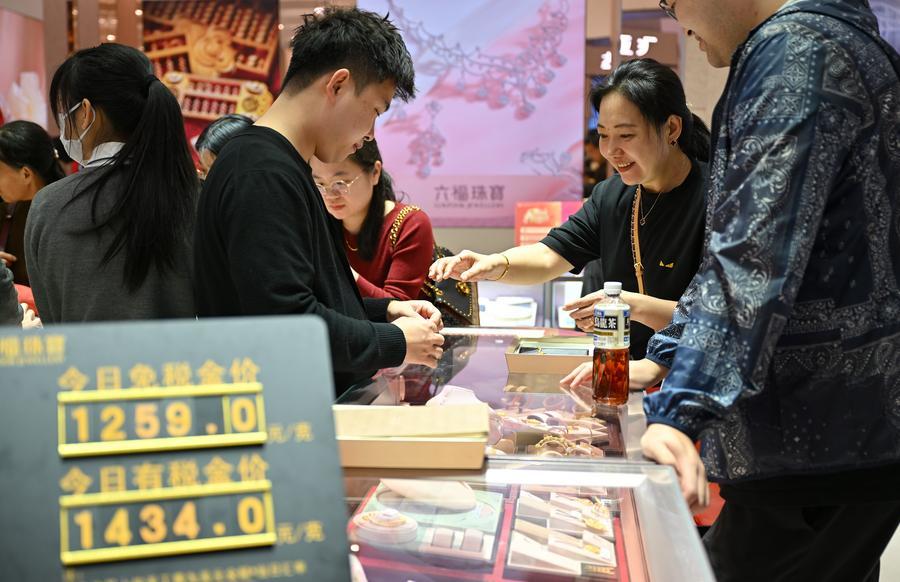
Customers select gold jewelry at a duty-free store in Haikou, south China's Hainan Province, on Jan. 17, 2026. (Photo: Xinhua)
Consumption of gold bars and coins jumped 26.26 percent to 444.576 tonnes during this period, while gold jewelry consumption fell 33.86 percent to 178.612 tonnes. Industrial and other uses of gold rose 1.41 percent to 61.434 tonnes.
The association said Wednesday that the investment-product market is undergoing a structural reshaping, with direct sales gradually replacing dealership models, while jewelry products are moving toward higher added value, with fixed-price products gaining share.
"High gold prices have dampened some demand in China, but if prices stabilize at current levels, the negative impact on gold jewelry will fade quarter by quarter," said Ray Jia, an analyst with the World Gold Council.
With the fourth quarter marking the peak wedding season in China and consumers leaning toward higher-gram pieces, gold jewelry consumption is expected to see a seasonal improvement, he added.
On the supply side, gold produced from domestic raw materials fell 18.71 percent during the first three quarters. The association attributed this decline to safety management upgrades at mines and the suspension of production for maintenance at some key projects.
Meanwhile, overseas capacity of major Chinese gold groups continued to expand, with their overseas mines producing 71.126 tonnes in the period, up 15.77 percent year on year.
In the first three quarters of 2026, China added a cumulative 103.26 tonnes of gold to its reserves. At the end of September, China's gold reserves stood at 2,409.59 tonnes, ranking fifth globally.
China increased its gold holdings for 23 consecutive months from November 2024 to September 2026.
"Falling domestic interest rates have lowered the opportunity cost of holding gold, and the central bank's sustained purchases of gold have sent a positive signal to individual investors," said Jia.
Looking forward, the World Gold Council said in its latest report of gold demand trends that central banks are likely to remain significant buyers, while investment demand will remain the principal source of annual demand growth.
Demand for ETFs, bars and coins will remain resilient, albeit caught in competing crosswinds. Mine production could reach another record high for the year, according to the report.