


Advanced manufacturing expands opportunities for Asia-Pacific cooperation
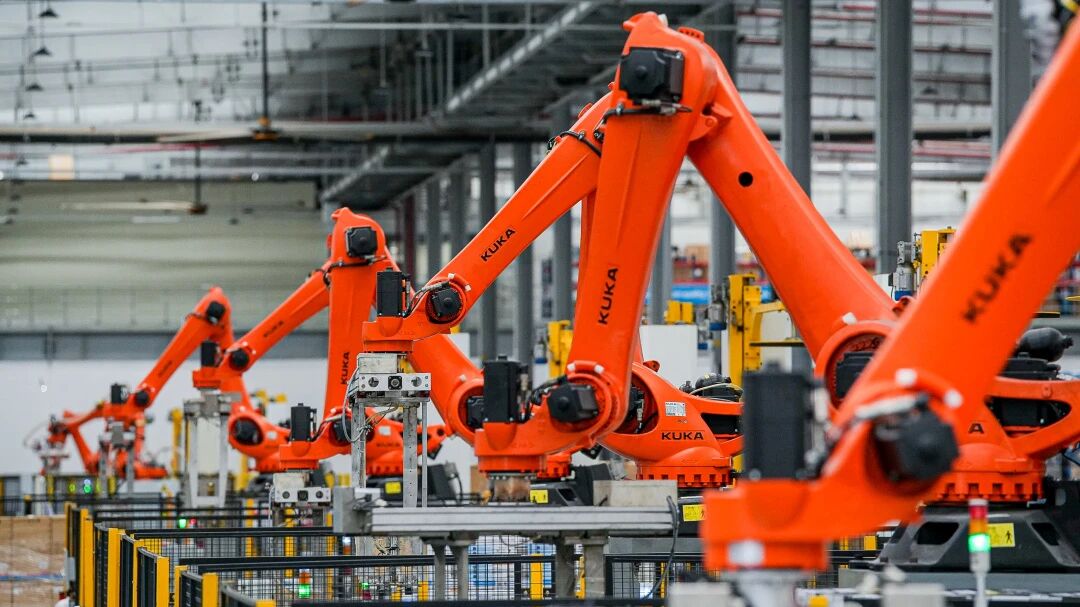
Photo shows a production line at Chinese home appliance giant Midea's air conditioner factory in Thailand. (Photo: Official website of Midea)
From exporting individual machines and production lines to setting up entire factories and industrial clusters, Chinese manufacturers are steadily expanding their presence across the Asia-Pacific.
At the construction site of the third phase of Chinese home appliance manufacturer Vanward's factory in Chonburi, Thailand, pile drivers rumble as work progresses, while the first and second phases have already reached their designed production capacity.
"From the outset, the Thai factory was envisioned as a benchmark for intelligent manufacturing, with digitalization and intelligent technologies transforming its production models and systems," said Yang Songwen, vice president of the company.
The factory has an annual production capacity of more than 3 million gas grills and has created nearly 1,000 local jobs, Yang said.
Selling cars in overseas markets is only part of the picture. Chinese automakers are also building up local manufacturing capabilities.
In an industrial park in Rayong province, Thailand, Chinese automaker BYD's vehicle manufacturing base has a designed annual production capacity of 150,000 vehicles. Its products have received "Made in Thailand" certification, and the facility serves as a regional export hub for right-hand-drive vehicles.
BYD's new factory in Indonesia, with an annual production capacity of 150,000 vehicles, went into operation in 2026. A network of supporting industries covering batteries, electric drive systems, charging piles, and vehicle interiors has also taken shape, helping foster a local new energy vehicle industrial cluster.
In Penang, Malaysia, the research and development center established by TONLY Technology Co., Ltd., a member company of Chinese tech giant TCL, in 2020 has expanded from 29 people to 56 and works closely with the company's domestic R&D teams.
In Tijuana, Mexico, TCL member company Moka Technology (Guangdong) Co., Ltd. has developed a management system combining expatriate managers with local core personnel and built integrated manufacturing capabilities covering injection molding, core components, display modules, and finished products.
TCL's founder and chairman Li Dongsheng said the company would step up local investment, deepen its roots in overseas markets, expand its presence across local industrial chains, and increase the added value of its operations within those chains.
Changes in industrial development, development philosophy, and cooperation models are providing vivid examples of how advanced manufacturers in China's Guangdong-Hong Kong-Macao Greater Bay Area (GBA) are contributing to the development of manufacturing industries across the Asia-Pacific. The question now is how this development will unfold.
Smarter equipment
Chinese robots are finding their way into an expanding range of real-world applications across the Asia-Pacific.
In the first three quarters of this year, Shenzhen, south China's Guangdong province, exported 4.86 billion yuan ($729 million) worth of robots listed as a separate customs category to other Asia-Pacific Economic Cooperation (APEC) member economies, a year-on-year increase of 7.5 times.
In Australia, wild blackberry plants are an invasive weed on local farms. Helicopter spraying is costly, while herbicides can harm ecosystems.
A local service provider has turned to multispectral drones from Chinese drone maker DJI to survey the land. The drones can scan about 57 hectares in just half an hour and pinpoint blackberry infestations with centimeter-level accuracy. Agricultural drones are then deployed to spray the targeted areas.
The approach has reduced herbicide use and cut costs by about 51 percent. It has also spared drone operators from having to carry heavy spraying equipment across hilly terrain.
Automated production lines at Chinese service robot maker Pudu Robotics are running at full capacity, with its commercial service robots sold to APEC member economies, including Australia and Canada.
Guangdong Lingdu Intelligent Technology Development Co., Ltd., a Chinese manufacturer of cleaning robots, has also helped a partner in Malaysia transform its business. After receiving technical training, the partner was authorized to provide local after-sales services and evolved from a trading company into a service provider capable of independently undertaking building facade-cleaning projects.
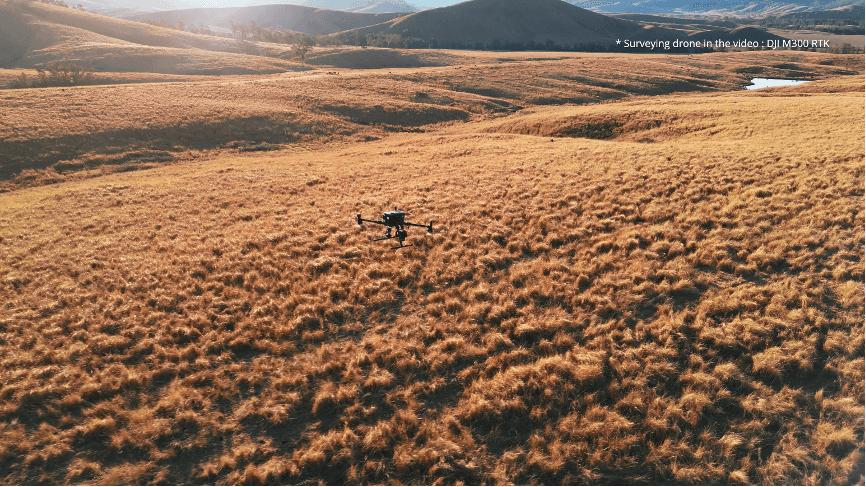
A drone developed by Chinese drone maker DJI is used for precision weed control on a farm in Australia. (Photo: Official website of DJI)
Greener production
Nestled among the mountains along the Mekong River, the phase I project of China General Nuclear Power Corporation's (CGN) Northern Laos Interconnected Clean Energy Base features an expansive field of deep-blue photovoltaic (PV) panels. The project has an installed capacity of 1 million kilowatts (kW).
The project is expected to generate an average of 1.65 billion kilowatt-hours (kWh) of clean electricity annually, equivalent to reducing carbon dioxide emissions by about 1.3 million tonnes.
Given the area's mountainous terrain and limited arable land, as well as the scattered distribution of rice paddies, the project was designed to avoid demolishing any homes, occupying any basic farmland, or encroaching on any virgin forest during land acquisition.
Chinese home appliance giant Midea's air conditioner factory in Thailand achieved an annual production capacity of more than 5 million units in 2025.
Supported by PV microgrid solutions from Hiconics Technology Co., Ltd. (Hiconics), a subsidiary of Midea Group, commercial and industrial energy storage systems from Shenzhen Clou Electronics Co., Ltd. (CLOU), a member company of Midea Group, and intelligent scheduling algorithms for chilled-water storage from the Midea Building Technologies (MBT) business division of Midea Group, the factory has generated 10.96 million kWh of solar power since the beginning of this year. Its self-sufficiency rate for clean electricity has reached 29.5 percent.
As more Chinese companies expand overseas, they are also bringing their entire industrial ecosystems with them.
In June this year, Midea launched its "Go-Global Partner Program," bringing together its member companies including Hiconics, CLOU, and subsidiaries under the MBT division to provide Chinese businesses expanding overseas with full-cycle support, from factory planning and production line installation to localized operations.
"The core value of this program is to turn the lessons we have learned into a guide to help other Chinese companies avoid pitfalls, supporting them throughout their overseas expansion," said Simon Zhang, vice president and chief digital officer of Midea Group.
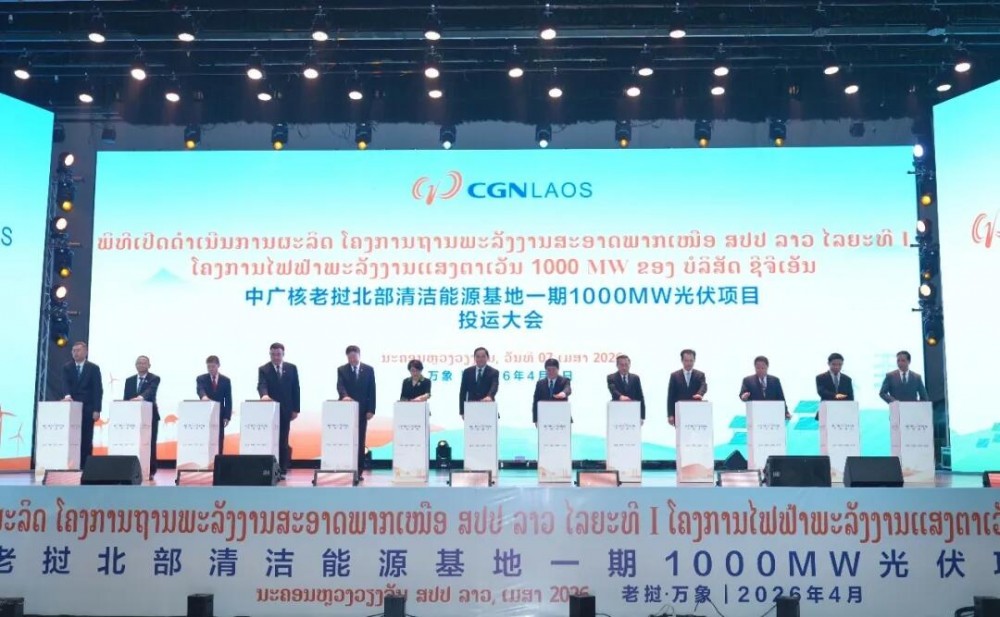
Photo shows the commissioning ceremony for the 1-million-kilowatt first phase of China General Nuclear Power Corporation's (CGN) Northern Laos Interconnected Clean Energy Base. (Photo/CGN Energy International Holdings Co., Limited, a subsidiary of CGN)
Deeper industrial integration
Manufacturing, artificial intelligence (AI), green energy, smart logistics, and industrial ecosystems are increasingly being integrated into factories, production lines, and industrial parks.
At Midea's air conditioner factory in Thailand, 72 digital and AI solutions, 13 AI agents, and 25 application scenarios have been deployed, reducing end-to-end order lead time by 43 percent.
As Chinese products reach overseas markets, entire industrial ecosystems are also putting down roots abroad. In the first 10 months of this year, Guangdong's imports and exports with other APEC member economies totaled 6.47 trillion yuan, up 27.8 percent year on year.
Smarter, greener, and more integrated development is helping shape a brighter future for the Asia-Pacific, taking root and gathering momentum in fields and factories across the region.