


China's AI growth opens new opportunities for cooperation
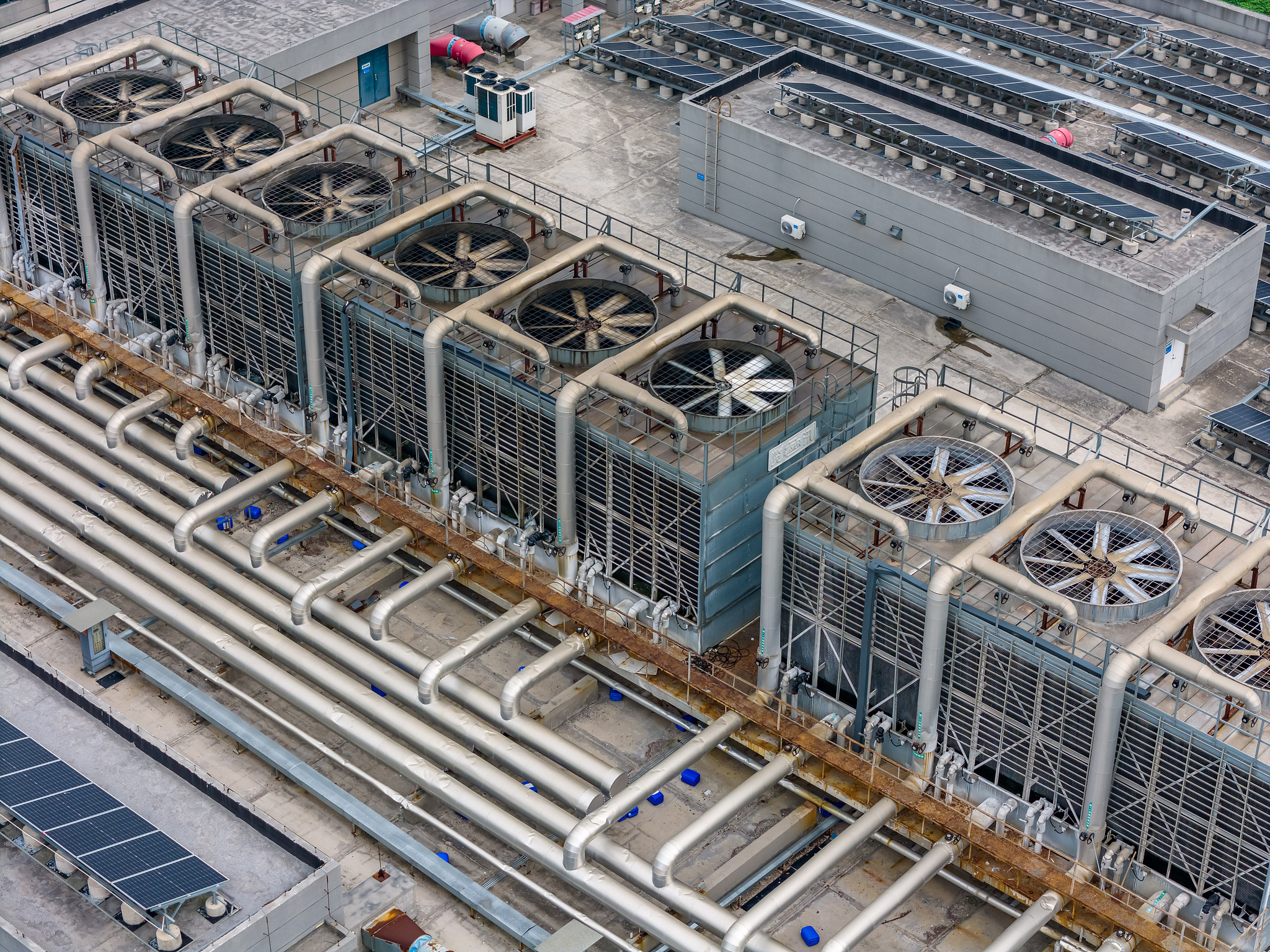
Aerial view of the construction site of China Mobile data center in Zhengzhou High‑tech Zone, Zhengzhou, Henan Province, China, August 18, 2026. (File photo: CGTN)
Chinese technology companies have continued to increase investment in research and development and accelerate innovation in AI computing power, cloud computing, large language models and commercial applications. Homegrown innovation is increasingly moving beyond technological breakthroughs toward large-scale deployment.
Alibaba's financial results show that revenue from AI cloud and computing services grew 53% year on year, while revenue from external commercialization rose 64%. Revenue from AI-related products has recorded triple-digit growth for 13 consecutive quarters. At the Yunqi Conference, Alibaba's chip subsidiary T-Head unveiled its next-generation AI chip, Zhenwu V900, which is scheduled to go on sale in the first quarter of 2027. A next-generation supernode product powered by the chip was also introduced.
Tencent continues to upgrade its Hy large language model, with more computing resources allocated to model-as-a-service offerings and GPU leasing, further accelerating growth in cloud services revenue. When Hy4 was released in November, it ranked first among Chinese models on the Agent Arena leaderboard, demonstrating strong capabilities in real-world tasks, including task success rate, user satisfaction and steerability.
WorkBuddy has become China's most widely used AI product by large language model token consumption. More than 10 million users collectively consume over 100 trillion tokens daily, while its enterprise customer base continues to grow.
Computing power is not a closed digital asset, but a development tool that can be shared. In Egypt, Chinese companies have covered computing services and training costs for eligible startups and helped develop Arabic-language models, lowering the barriers to entry for local businesses. The US publication The Hill has reported that, as Chinese AI products and services see growing use across Africa, Asia and Latin America to support local infrastructure, classrooms, airports and government services, localized cloud services are helping Chinese companies expand their presence in the Global South.
Tan Poh Hwee, president of the Asia Academy of Digital Economics in Singapore, said in an interview with Xinhua that one of China's most notable contributions in recent years has been its ability to move technologies from laboratories and pilot projects into large-scale production, making them more accessible for practical use. A model in Singapore's national Sea-Lion large language model series is based on a Chinese AI model, allowing local teams to build on an existing foundation rather than train a foundational model from scratch. This enables them to devote limited resources to regional languages, industry-specific knowledge and real-world applications.
Simon Bridges, CEO of the Auckland Business Chamber in New Zealand, told Xinhua at the APEC CEO Summit that cooperation is more important than ever amid the current global landscape, including in science, technology and innovation. Citing open-source AI models as an example, Bridges said China has been working to make the benefits of technological innovation more widely accessible to people across the region.