


Huawei reports over 8,000 AI patents by end-2025
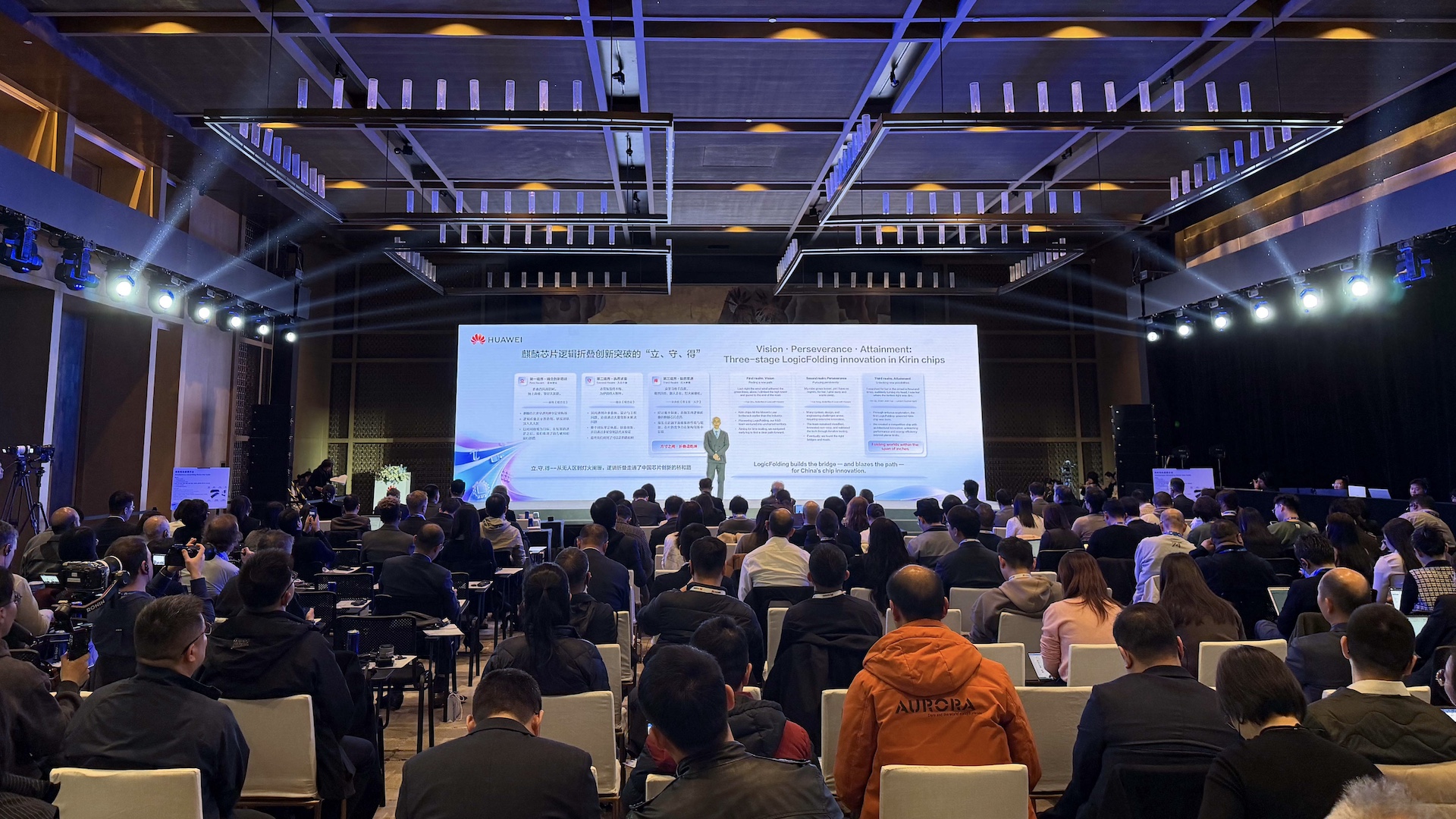
Cover: Huawei held its seventh Innovation and Intellectual Property Forum in Beijing, China, November 24, 2026. (Photo: Huawei)
China's tech company Huawei reported that it has held over 8,000 AI related patents by the end of 2025, during its seventh Innovation and Intellectual Property (IP) Forum on Tuesday in Beijing.
In 2025, Huawei signed 20 new licensees across industries including network and communications equipment, consumer electronics and computing, IoT, automotive, streaming, and semiconductors. By the end of 2025, the company had filed more than 450,000 patent applications, and held more than 165,000 active granted patents worldwide.
"At Huawei, a patent represents more than a legal right. It represents an innovative achievement and a source of pride for the people behind it," said Alan Fan, Vice President and Chief Intellectual Property Officer of Huawei.
To date, the cumulative value of Huawei's outbound patent licensing agreements exceeds US$6.9 billion. In 2025, Huawei's patent licensing revenue was approximately US$800 million, and by the end of that same year, Huawei's patented technologies had been used in more than 3.2 billion 5G devices, over 1.6 billion Wi-Fi consumer electronics devices, and more than 4.1 billion multimedia devices.
Wireless communications (41%), terminal hardware (16%), and AI and computing (13%) account for the largest shares of Huawei's active granted patents.
"These numbers reflect one thing: strong commitment of sustained investment in research and development in key technological areas, year after year. Patents are simply the visible record of that investment," said Emil Zhang, Head of Huawei's IP Strategic Planning & Key Project Department.
Sir Robin Jacob, Former Judge of the Court of Appeal of England and Wales, stated that Huawei has become one of the world's leading holders of standard-essential patents (SEPs), and that the SEP licensing system underpins open collaboration, stimulates competition, and encourages innovation.
During the forum, the inventors behind the Tau (τ) Scaling Law, UnifiedBus, near-packaged optics (NPO), and 6G took the stage to share their 0-to-1 breakthroughs, along with stories about their long-term commitment to breakthroughs.
Drawing inspiration from the traditional Chinese mortise-and-tenon design, the core technology of the Tau (τ) Scaling Law – LogicFolding – features hybrid bonding that enables ultra-short-distance interconnects with near-zero spacing.
The UnifiedBus team has systematically reinvented technologies that have already entered large-scale commercial use, including multi-chip interconnect, PCIe (Peripheral Component Interconnect Express), high-performance networking, and storage networking, representing breakthroughs from underlying chips to software and hardware.
The commercial deployment of Hi-ONE, an NPO optical engine, marks another milestone in applying the company’s 30 years of deep optical-domain expertise in the age of AI.