


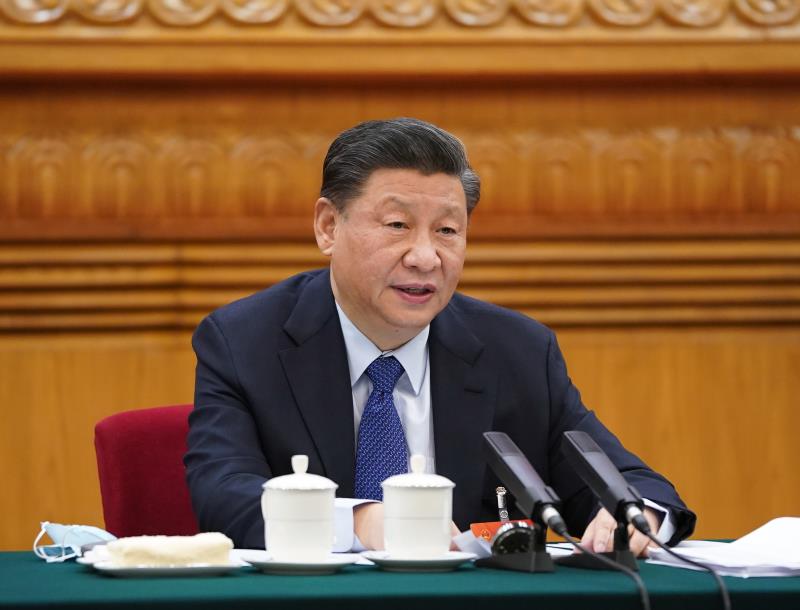
President Xi Jinping, also general secretary of the Communist Party of China Central Committee and chairman of the Central Military Commission, takes part in a deliberation with lawmakers from Qinghai province, at the fourth session of the 13th National People's Congress in Beijing, March 7, 2021. (Photo: Xinhua)
On March 7, the Qinghai delegation of the fourth session of the 13th National People’s Congress held a meeting. After Huzhu Tu Autonomous County delegate A Shengqing gave a speech, President Xi Jinping asked her, "What is the electric-heated bed situation?”
A few years ago, when Xi visited the village, locals didn’t have this kind of bed yet.
"It's more affordable. It costs just a kilowatt of electricity, which is a few cents a night," A Shengqing responded.
What are "electric-heated ‘kang’ beds?"
They are made by installing a carbon fiber heating plate on the surface of a bed. After turning it on, heat is generated, and the temperature is adjusted through a thermostat to keep a steady temperature. The electric-heated bed has the advantages of both a traditional fire-heated kang bed and an electric blanket. An electric kang can not only produce heat without pollution, but also make people sleep better.
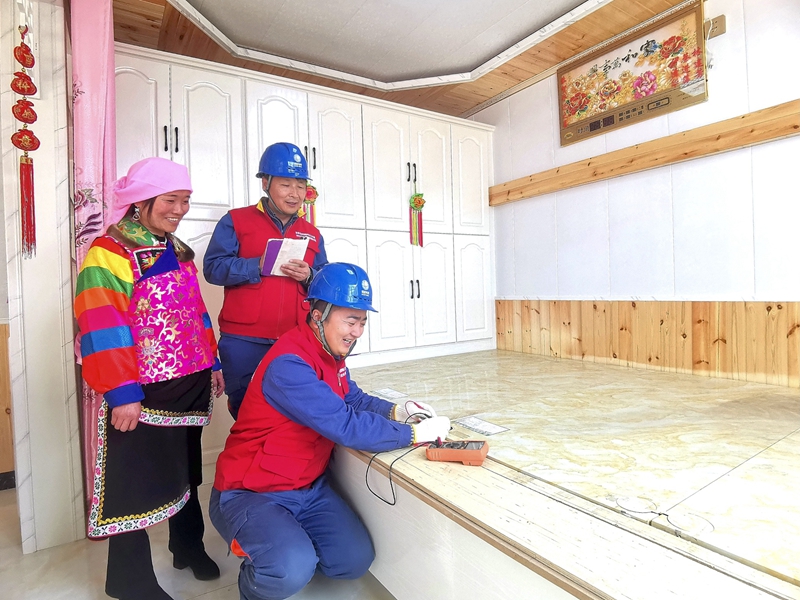
(Photo: Li Yongpeng/People's Daily Online)
An electric kang consumes only 1.2 kWh of electricity in 10 hours. It will only cost a little more than 100 yuan ($15.36) over 180 days.
Banyan village is located in Huzhu Tu Autonomous County in Northwest China’s Qinghai Province. Its 484 villagers and 129 households once lived on a hilltop, and the poverty rate was as high as 56 percent.
In 2016, Qinghai Province placed the people of Banyan Village into a relocation program for poverty alleviation. The residents moved into a new village.
"Everything in the new village was good except during the winter. Every family used a traditional fire-heated kang. The chimneys were full of soot. It was neither clean nor beautiful," said Yuan Guangping, the first secretary of Banyan Village.
In the old times, people basked in the sun during the day, and at night they would use a kang to keep warm. If the fire was too strong, the cloth on the kang would burn. If the fire was too weak, people would feel cold in the middle of the night. There was a risk of carbon monoxide poisoning if the kang was poorly built.
Heating a kang by burning cow dung or straw was also a problem. In winter, the village was shrouded in smoke, which blackened the walls.
In January 2018, Banyan New Village implemented a project switching from wood to electricity. Each household installed two 6-square-meter electric-heated beds.
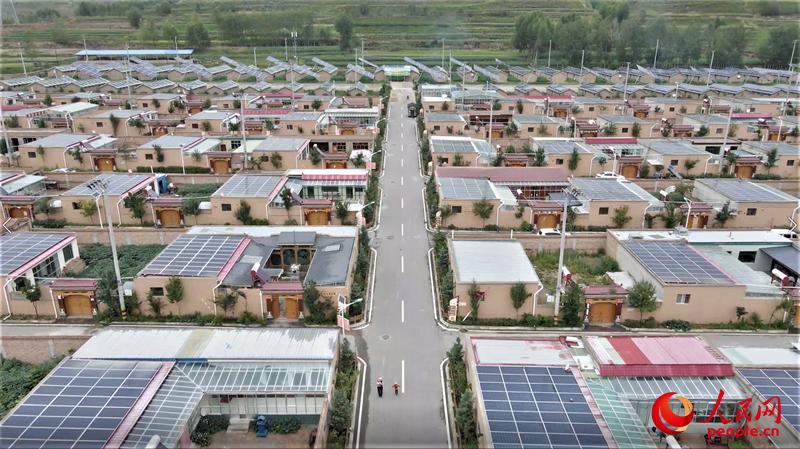
Banyan village, Northwest China’s Qinghai Province (Photo: People's Daily Online)
Over the years, the electric bed warmed the body and heart. “The electric-heated kang is clean and convenient. Just set the desired temperature and you can sleep all night warmly,” a villager said.
The dung and straw that was previously piled up in the alleys and courtyards was gone, and the old chimneys that had once spewed out smoke all year round were also "retired." Without the choking smell of smoke, the air in the village would be much cleaner.
"When the living environment is better, people will be more energetic and motivated," Yuan said.
The electric-heated bed is just one example. "The construction of new villages must be combined with the development of production and a boost in employment, so as to achieve sustainable development,” Yuan added.
The village still has a long way to go to tackle the roots of poverty.
Investing 2 million yuan ($307,000) to build a wine workshop, the village is focused on building the "Banyan" traditional wine brand. The village also invested 4.5 million yuan ($691,000) to build an ecological farm, five land-saving solar energy-saving greenhouses, a research base and other tourist attractions, forming a basis for tourism.
Boosted by nearly ten industries, Banyan Village's per capita disposable income reached 7,309 yuan ($1,123) in 2017, lifting its people out of poverty. The village collective income achieved a breakthrough 230,000 yuan ($35,338) in 2019.
From the traditional kang to today's electric-heated bed, the heating method is changing, and so is people’s life.
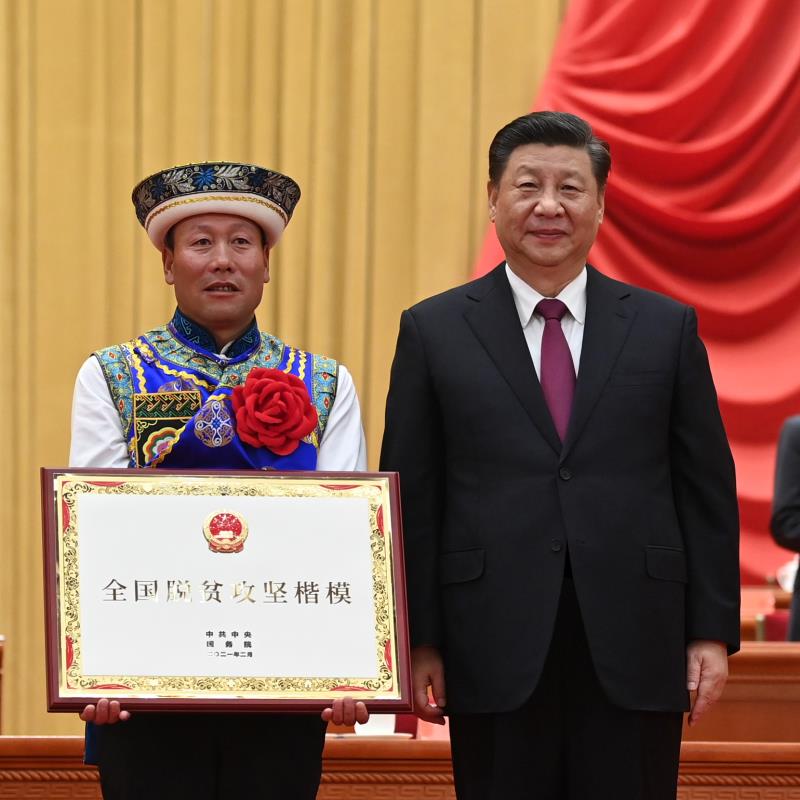
President Xi Jinping, also general secretary of the Communist Party of China Central Committee and chairman of the Central Military Commission, presents an award to Banyan village of Huzhu Tu autonomous county in Qinghai province, a role model in China's poverty alleviation fight, during a grand gathering to mark the nation's poverty alleviation accomplishments and honor model poverty fighters at the Great Hall of the People in Beijing, capital of China, Feb 25, 2021. (Photo: Xinhua)
At this year's National Poverty Alleviation Commendation Conference, Banyan Village was given the honorary title of “national poverty alleviation model." It is a successful case of poverty alleviation and rural revitalization in Qinghai Province.
Every trivial thing matters to Xi. Behind his concerns are the smiling faces and more prosperous life of Banyan’s villagers.
(Translated by Huo Jiamian, edited by Xu Zheqi and Bao Han. Original story by People's Daily Online)