


Chinese boy band TFBOYS will hold a concert in Xi’an, capital of Shaanxi Province, on August 6.
There are 29,000 seats, but hundreds of thousands of people are expected to crowd the city. It is said online that their arrival will make the city into a hotspot.
Examples abound. By holding concerts, previously obscure cities have caught the hearts of young music lovers, presented their city images nationwide and created incomes and opportunities.
Small city in concert spotlight
“I’d never heard of Quzhou,” said Qu Chang, who visited the city in July for the concert given by veteran Chinese singer Jacky Cheung.
In the past Quzhou was arguably one of the most obscure cities even in Zhejiang Province, let alone the entire country.
With a relatively humble GDP and a lukewarm tourism industry, the city didn’t seem to be embracing a bright future.
Things changed in a few months.
In February the news that popular Chinese singer Xue Zhiqian would gave a concert in Quzhou made the city a trending topic on China’s Twitter-like Sina Weibo social media platform.
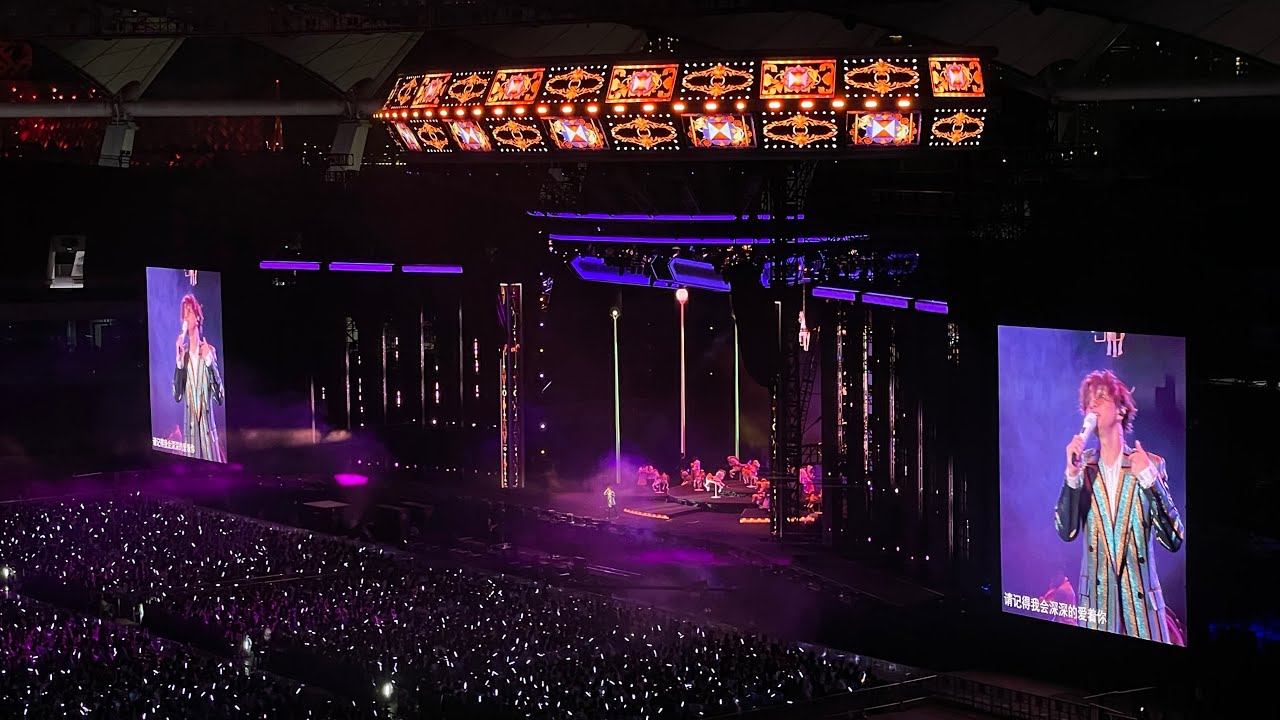
Xue Zhiqian performs in Quzhou on March 18. (File photo)
Quzhou received hundreds of millions of views.
Xue’s concert attracted over 56,000 fans, 85 percent from other regions.
The visitors not only enjoyed the performance, but also spent 690 million yuan ($96.39 million) .
Xue’s concert was followed by Luming Music Festival in June and Jacky Cheung’s concert in July. A constellation of singers are also going to show up there in August.
Qu joined long lines of diners at a Quzhou food market after seeing posts on social media recommending the place as a heaven for breakfast.
“Now I know why those stars selected such a little-known city,” Qu said.
In addition to the cuisine, the culture and history of the small city appealed to her.
Quzhou earned its name being the gateway to four neighboring provinces (“qu” means “gateway” in Chinese). It is also a holy place for Confucians.
The historical background of the city left a deep impression on the concertgoers.
Cities seize concert opportunity
More than 100 artists are holding some 550 concerts and music festivals as of June, Beijing Youth Daily reported. Nearly 100 gigs will be held in second- and third-tier cities.
Some cities are so obscure that people don’t even know the province.
Music fans from across the country have put the cities on social media and on the map.
Concerts and fans nourish the soil of these cities like raindrops, providing growth opportunities buried under the earth which may sprout and bloom in the future.
Small city authorities can appeal to concert organizers by offering one-chop approvals and facilitating performances.
For concertgoers, the governments may lay on security and free transport while helping to arrange accommodation if hotels are out of rooms.
Before Xue Zhiqian’s concert, Quzhou authorities set up a special task force which coordinated the public security, fire protection, meteorology, culture and transportation departments.
It took only one day for the government to approve all concert matters.
“Local buses picked me up at the airport,” Qu said. “When I arrived at the concert venue, I saw a space reserved for luggage deposit.”
Services provided by the government made her trip even more enjoyable, she said.
Small city authorities try to publicize and present their beauty to visitors via the musical events.
In Hengyang, Hunan Province, concertgoers could visit scenic spots for half-price.
Some cities, not content with the fleeting attention of a concert, are integrating concerts into their long-term planning.
Xiamen in Fujian Province is reducing the rent of venues by 30 percent in an effort to bring more concerts to the city.
Yangzhou government in Jiangsu Province has slashed corporate income tax and business tax for concert organizers.
Haikou city in Hainan Province is developing a concert economy with special subsidies and awards to concert-related industries to boost tourism and consumption.
To attract enterprises, Zhangzhou in Fujian Province has established an industrial park with the aim of taking the concert economy to new heights.
Meeting young people’s needs
With the COVID-19 pandemic drawing to an end, young people are rushing to concert venues to let off steam, even though it may entail a long journey to a place of which they know nothing.
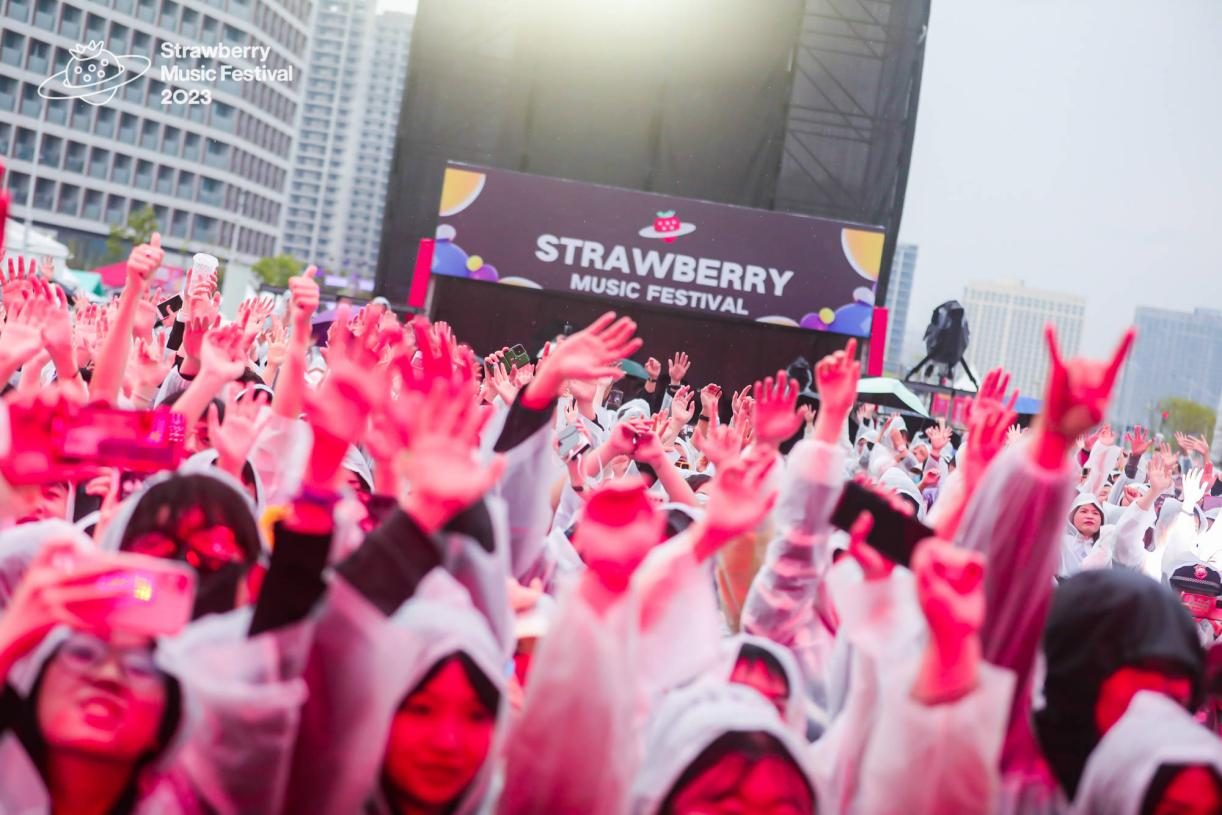
Put your hands in the air Nanchang! Young people enjoy the Strawberry Music Festival in the Jiangxi Province city of Nanchang on April 1. (Photo: Beijing News)
They don’t always have high hopes, but the small cities often ended up pleasantly surprising them.
It was once thought only big cities could stage big concerts.
But today the smaller cities have made it clear that they too can satisfy concert organizers and goers.
Big cities like Beijing, Shanghai and Guangzhou offer restrictions, high venue costs and long lines.
Smaller cities may be just what concert organizers are looking for.
“I never imagined I would go to a remote city for a concert,” said Qu after her visit to Quzhou. “But it’s worth a try. Going forward, I’ll be glad to attend concerts in cities like Quzhou.”
Qu is among those young concertgoers to travel from a big city.
Amid the crowds at concerts held by small cities are young people who now live there.
They represent a trend of youth moving to second- and third-tier cities to enjoy a less costly and more relaxed life.
In 2022, the number of residents declined in China’s four largest metropolises for the first time in history.
Beijing saw a drop of 135,400, Shanghai 43,000, Guangzhou 76,500 and Shenzhen 19,800, according to Shanghai-based financial outlet Yicai.