


From bluer skies and greener lands to cleaner waters, China has witnessed environmental progress in leaps and bounds under the guidance of President Xi Jinping’s ecological vision.
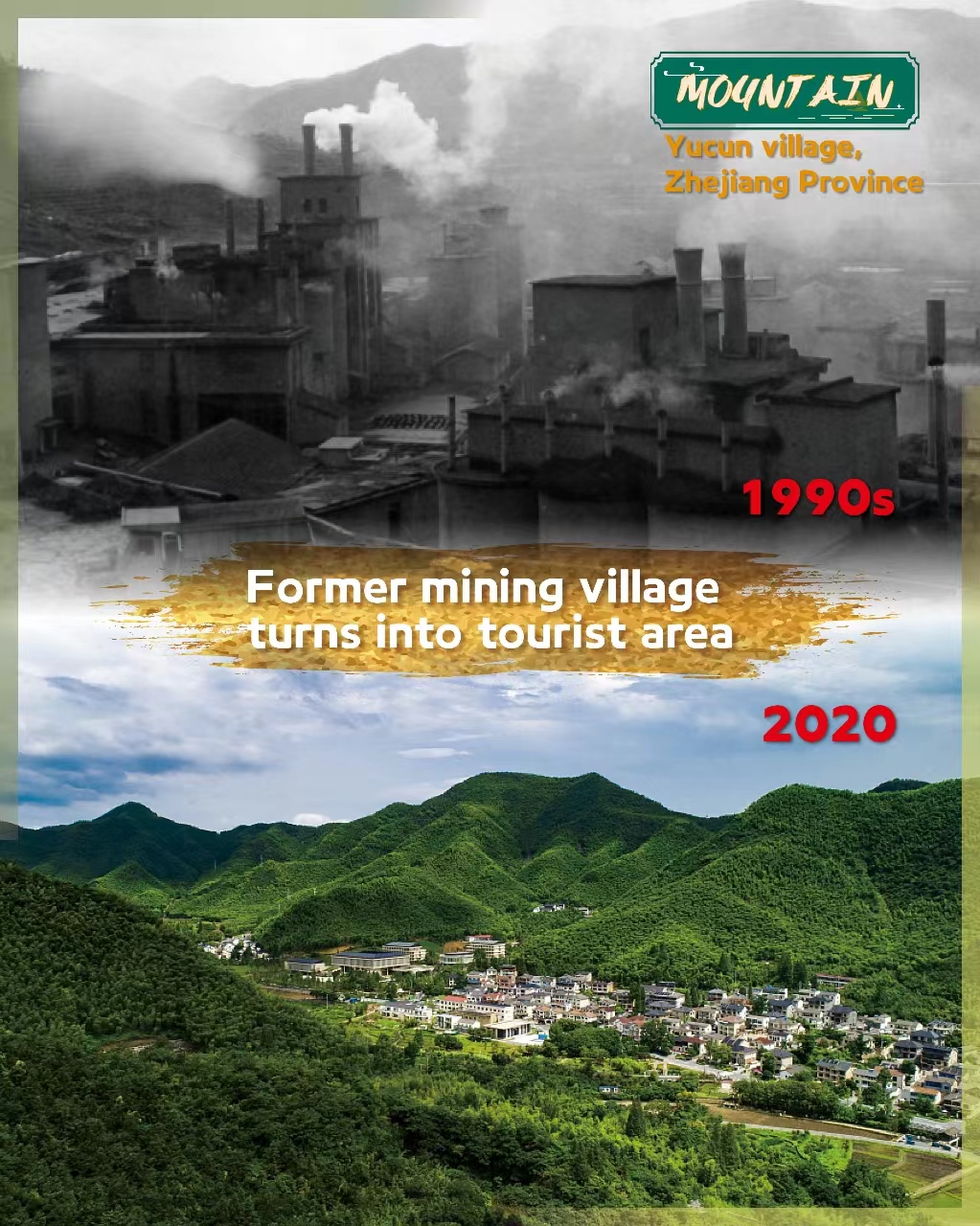
Once a mining area, Yucun village in Zhejiang Province had sacrificed its environment for economic growth.
In 2005, Xi proposed that “clear waters and lush mountains are invaluable assets” when he visited Yucun as provincial Party chief.
After years of ecological improvement, the mountains once shrouded in coal dust have turned green. Yucun is now a sought-after tourist attraction for its natural beauty.
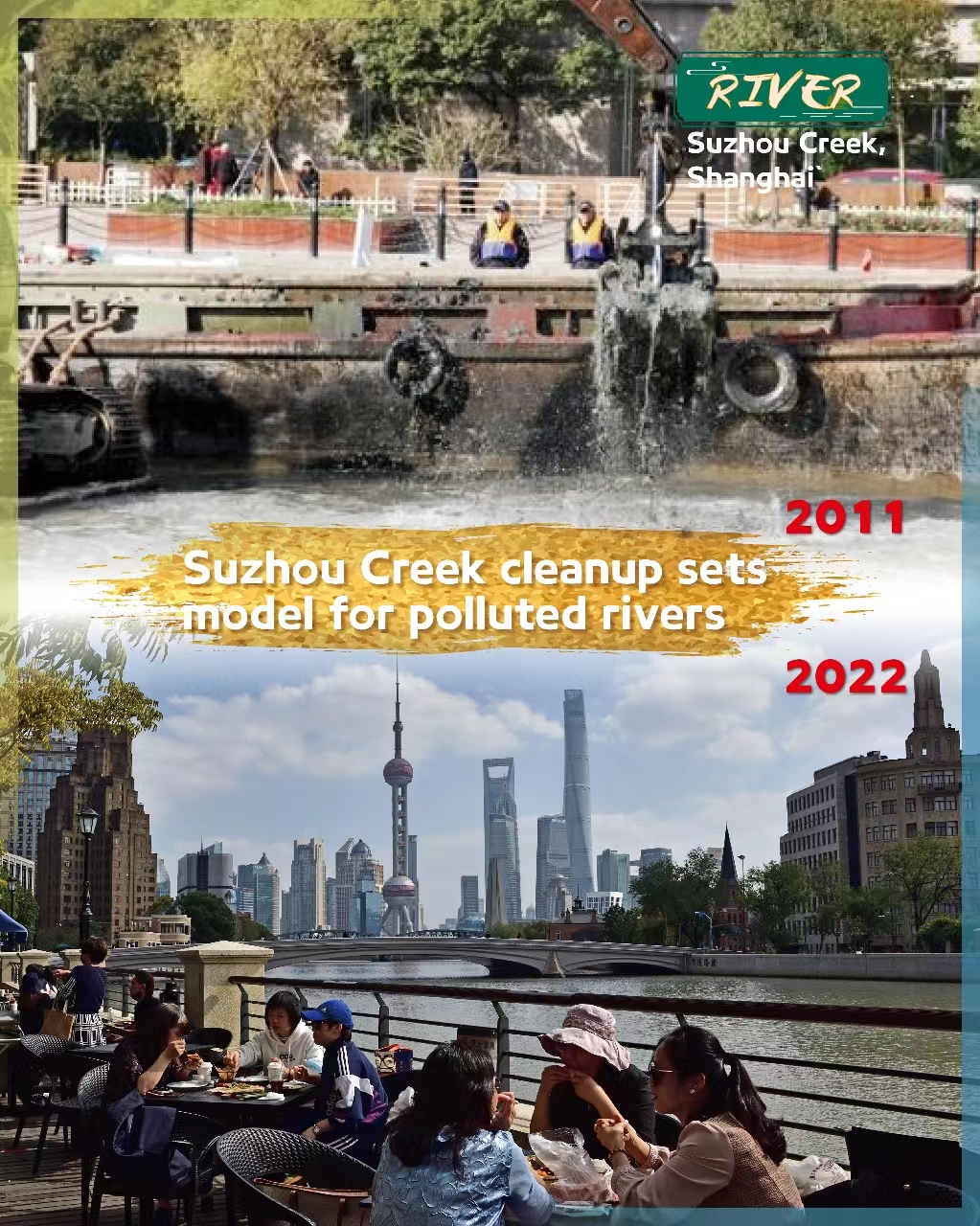
Suzhou Creek, known as the “mother river” of Shanghai, was heavily polluted by industrial and residential dumping in the last century. Since 1990s, the city has launched rounds of projects to clean up the creek.
When inspecting Putuo district of the city as Shanghai Party chief in 2007, Xi stressed water quality treatment and landscape renovation of the river.
Today, tourists can enjoy a fashionable cruise on the creek, which has become a cultural landmark after decades of rehabilitation work.
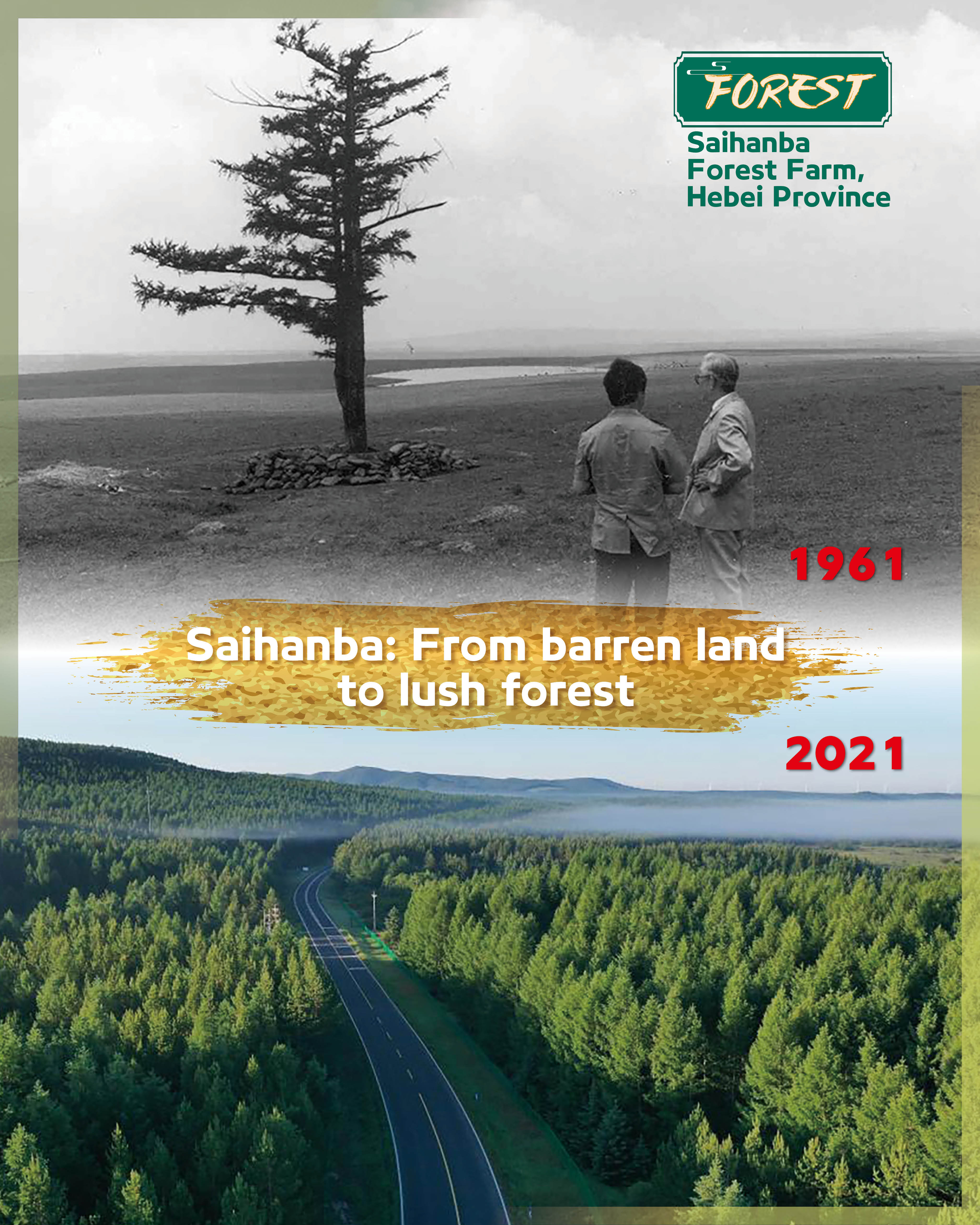
Saihanba Forest Farm sits on what was nearly deserted land more than 50 years ago. Thanks to the efforts by three generations of foresters, the farm is among the world’s largest artificial plantations. In 2017, the Saihanba afforestation community won the UN Champions of the Earth Award.
During his visit to the farm in 2021, Xi hailed it as an example of the global history of ecological progress.
China is one of the countries facing serious land salinization. In the No.1 Central Document, the first policy statement released by China's central authorities in 2022, the country outlined plans to transform suitable saline-alkali soil into arable land in an appropriate and orderly manner.
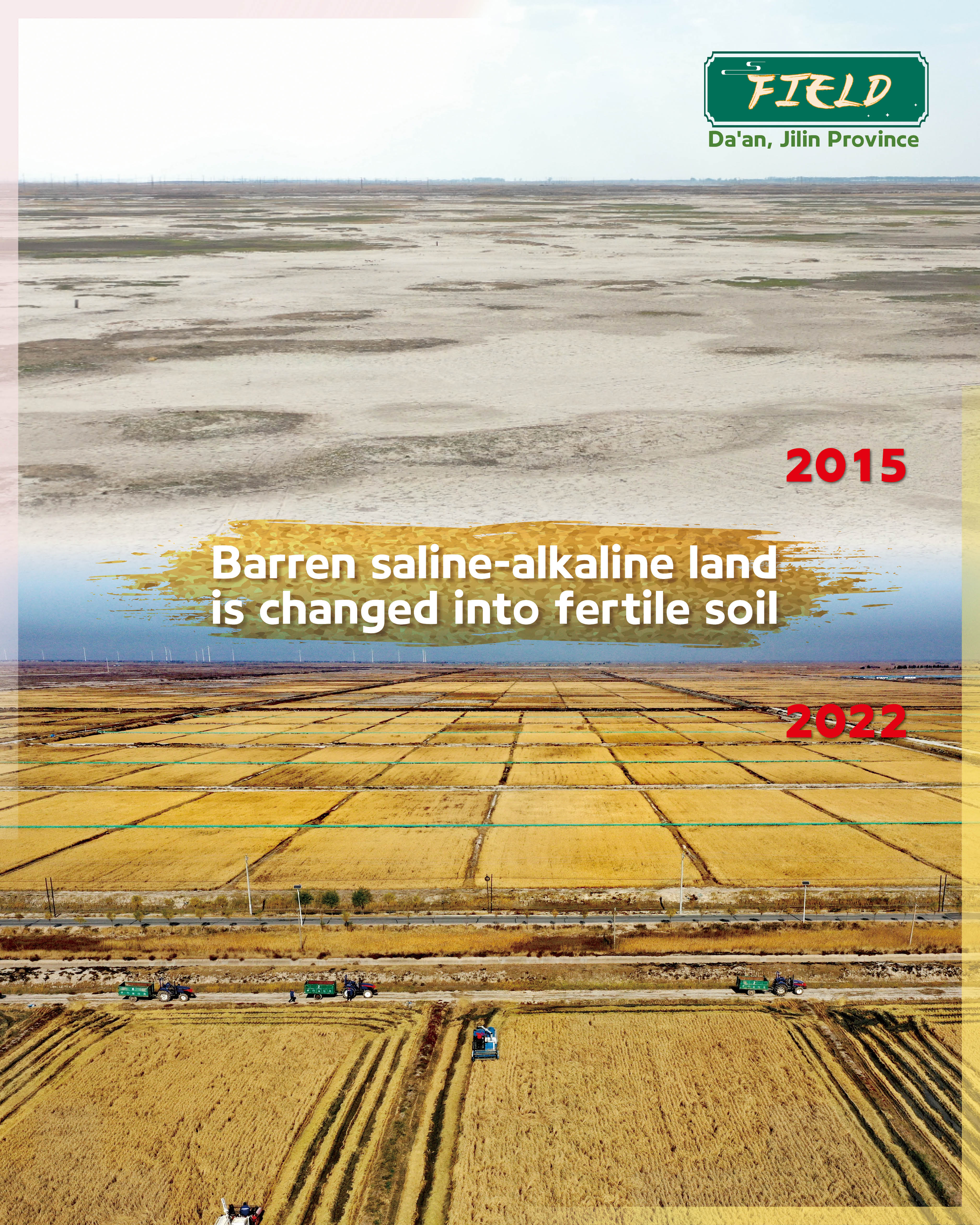
The west of Jilin Province in China is home to one of the world's three largest saline-alkali soil areas. Da'an in Jilin has been successfully reclaiming cropland since 2015. Over the last few years, the city has implemented water diversion and drainage projects and technology to gradually reduce soil salinity.
To date, Da'an has improved 8,666 hectares of land and increased its grain production capacity by 77.5 million kilograms. This year, 2,000 hectares of saline-alkali land will be improved.
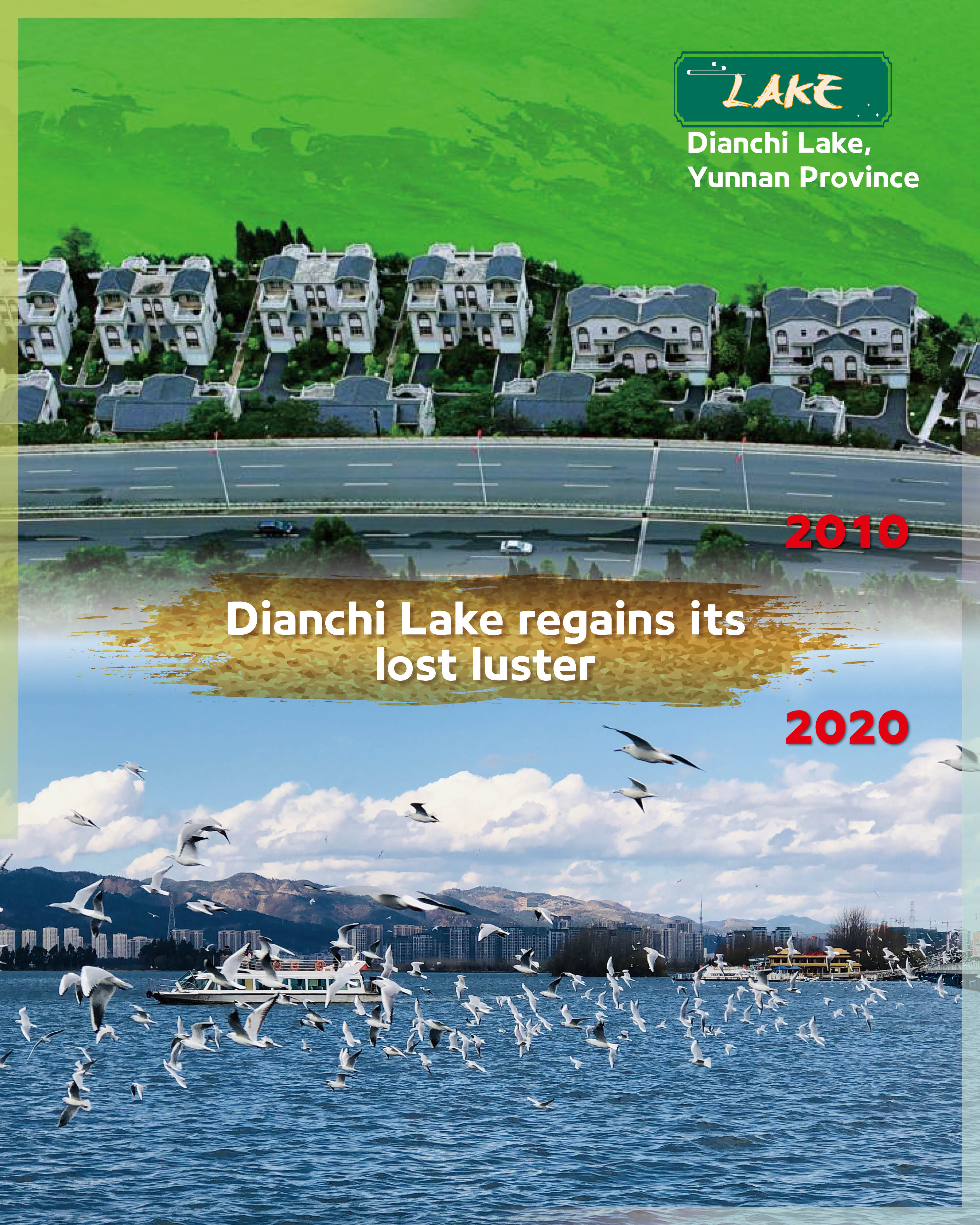
Dianchi Lake was once among the most polluted in China during the wave of industrialization in the 1980s. To save the lake, the local government implemented a series of measures including building wastewater treatment plants and appointing “river chiefs.”
Xi visited the lake in 2020, urging continuous efforts to restore the ecology of the lake.
Years of conservation efforts are helping the lake regain its former splendor. The lake’s water quality has improved and wildlife has returned in recent years.
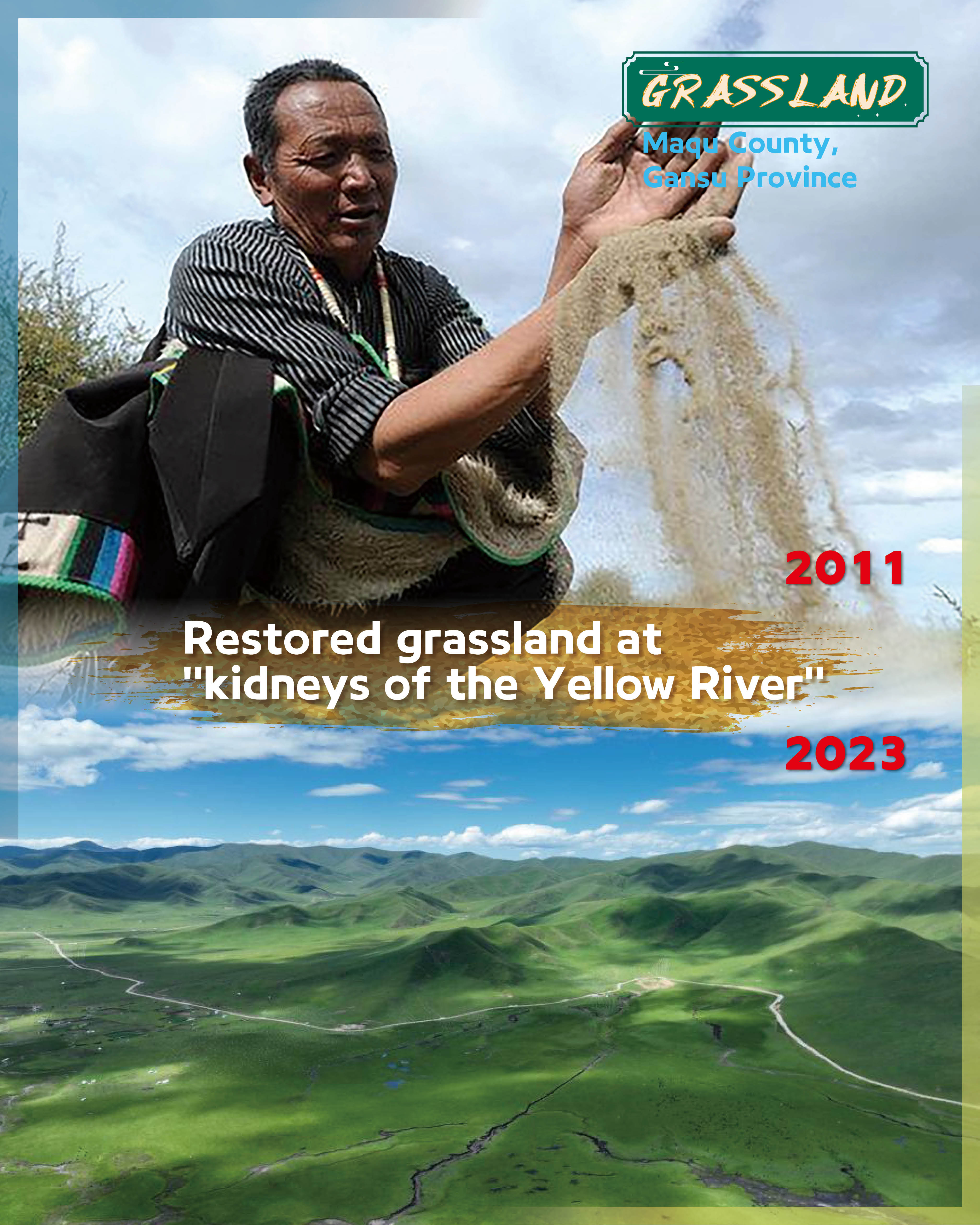
Maqu County boasts extensive grasslands and wetlands known as the “kidneys of the Yellow River.” However, by the end of the 20th century, they had suffered from years of degeneration and desertification.
During an inspection trip to Gansu in 2019, Xi urged the province to shoulder its key task of ecological restoration, water and soil conservation, and pollution control at the upper reaches of the Yellow River.
Through a series of environmental preservation programs in recent years, a substantial part of the once damaged vegetation has been restored in the county.
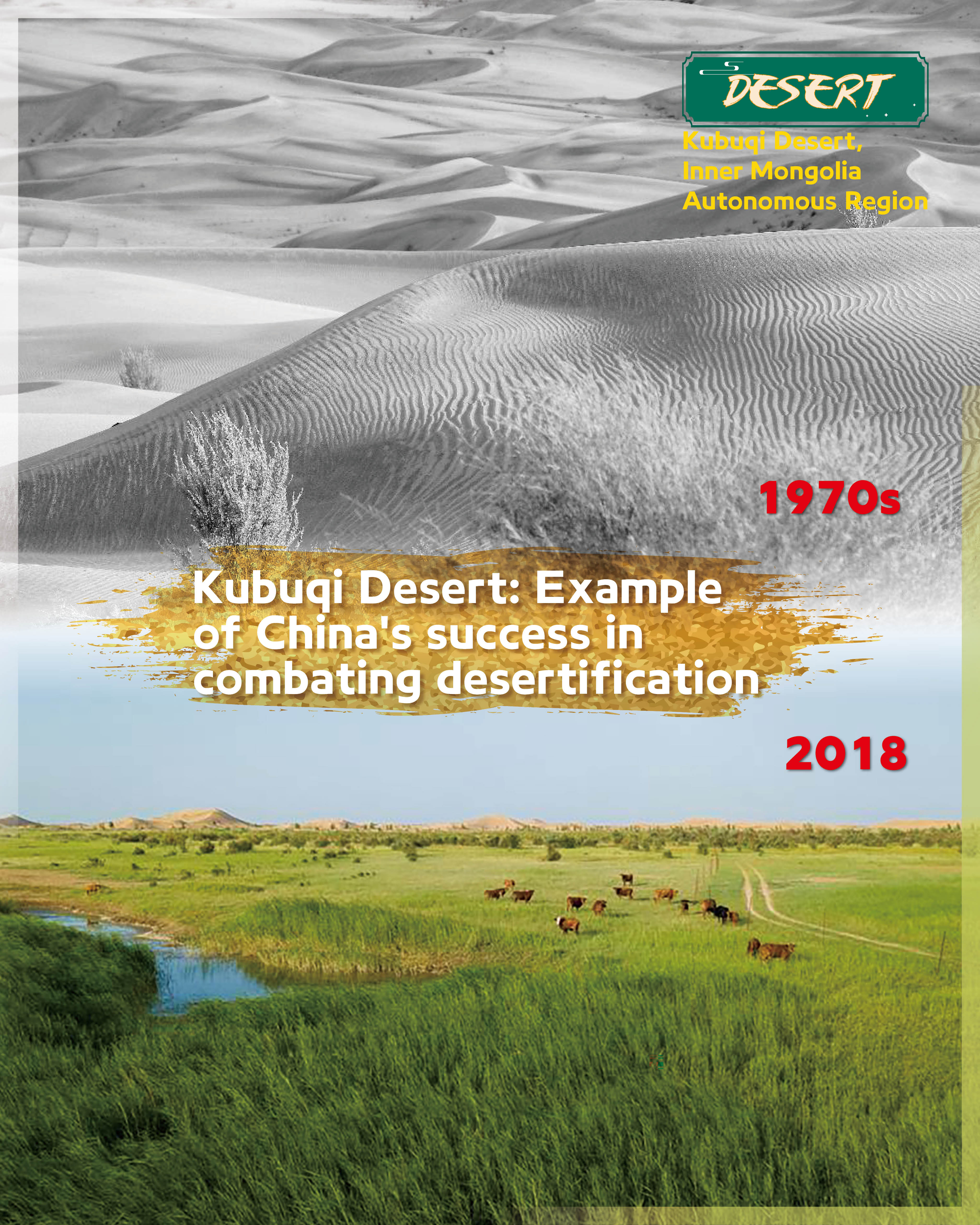
The Kubuqi Desert, located on the Ordos Plateau in Inner Mongolia Autonomous Region, covers 18,600 square kilometers. Once completely barren, it was known locally as the “sea of death.” Today, the desert has 3,200 square kilometers of green area thanks to the efforts of the local people, enterprises and government.
Curbing desertification in the Kubuqi Desert offers the world China’s experience in environmental treatment as well as realizing the UN 2030 Agenda goals, said President Xi, in his congratulatory letter to the 7th Kubuqi International Desert Forum in 2019.
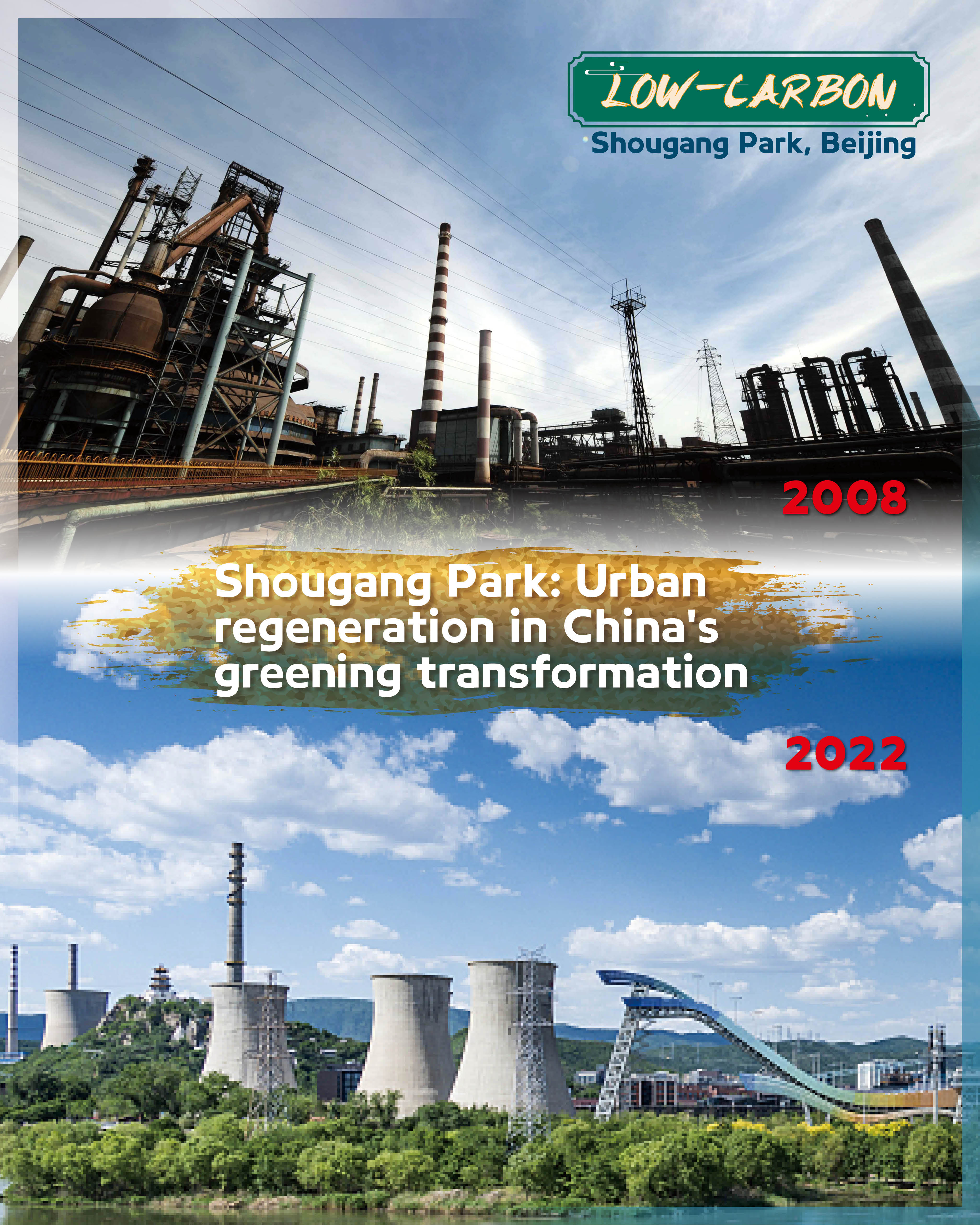
Big Air Shougang, repurposed into one of the most impressive venues for Beijing 2022 Olympic Winter Games, was renovated from the former Shougang Steel Mill, which had its facilities moved out of Beijing in an effort to reduce air pollution in the capital.
A symbol of urban regeneration, Shougang Park shows how, with creativity, drive and innovation, a country can transform city landscapes into more livable, citizen-friendly and greener spaces.
Aiming for a greener and more sustainable future, China has ramped up policy support to achieve the goals of carbon peaking before 2030 and carbon neutrality before 2060, which Xi put forward in 2020 at the General Debate of the 75th Session of the UN General Assembly.