


"Listen to advice and you will eat your fill," runs an old Chinese saying. From that old expression arose a new buzz phrase: "listening to advice," or ting quan in Chinese.
When young people seek assistance online using that key phrase, they tend to display humble sincerity. Often they receive generous support, with an army of well-informed strangers sharing their valuable experience and advice. The advice seekers can even form a meaningful bond with the advisors through ongoing social media interactions.
Ting quan has emerged as one of the top-three lifestyle trends of 2023, according to data from China's Instagram-like Xiaohongshu. Relevant topics have garnered more than 900 million views on the platform, while the term’s search volume has increased 51 times year-on-year, with users creating around three million ting quan-related posts.
Make-up, weight loss, travel, interior decoration or even career decisions: Ting quan is a brand new style of learning and social networking.

A young woman takes a selfie at the Qianmen area in Beijing with a local tanghulu snack in hand. (Photo: CFP)
Tingquan explained
Among the most famous ting quan stories is the transformation of Little Ai, a 28-year-old Xiaohongshu user now dubbed as "the most ting quan man on the Internet."
Perplexed over his perpetual single status, Little Ai shared a photo of himself in December 2021 and asked the platform's users: "I can't seem to find a partner. What do you think might be my issue?"
The photo showed a homely looking young man with a round face and slanted bangs in a black suit and dark blue tie.
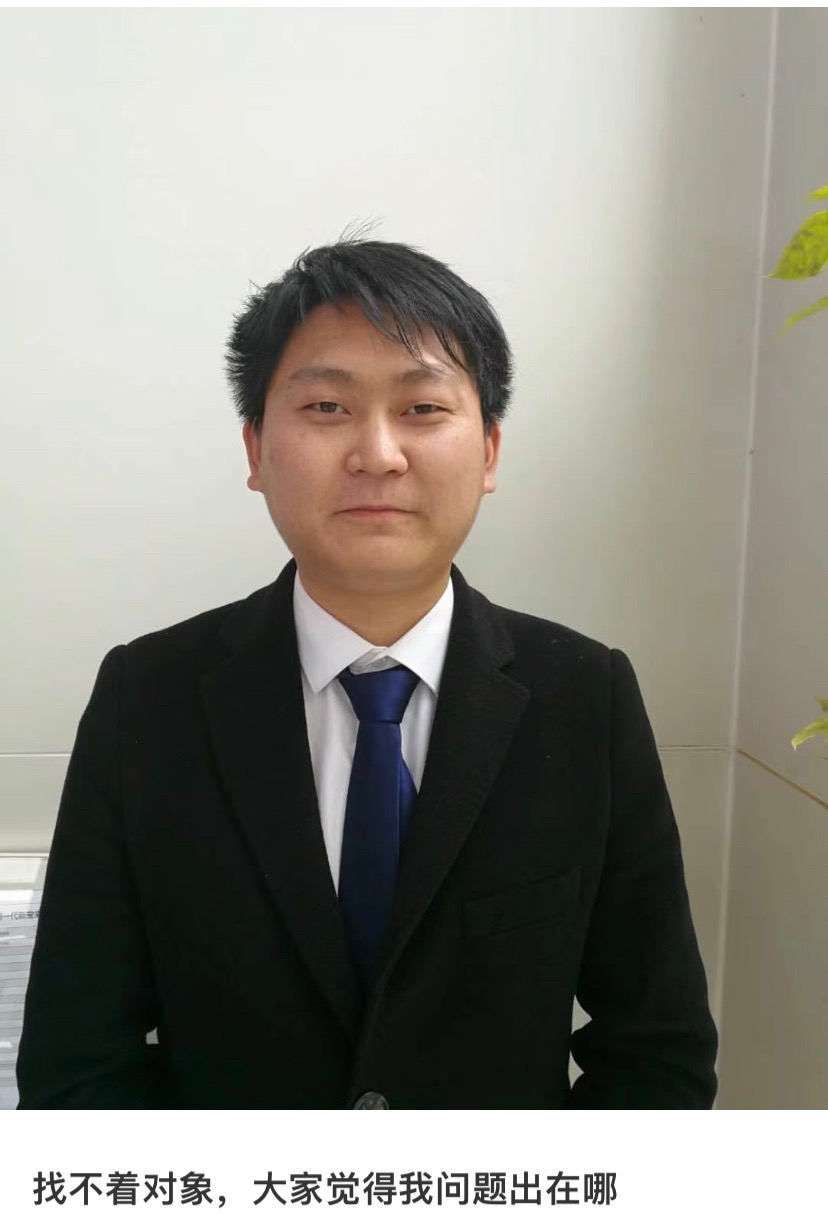
Little Ai's post on December 6, 2021
Despite having only around 200 followers at the time, Little Ai's post accumulated tens of thousands of likes and comments. Netizens got to work in earnest, giving suggestions for his hair, weight loss regimen and style.
From harsh criticism to sincere encouragement, he accepted it all with an open mind and tried their suggestions, documenting his efforts on the platform as he went. He even replied to comments about his career, family background and finances for more targeted guidance.
Over the following year, Little Ai changed his hairstyle and fashion, lost weight, improved his skincare routine and even learned about make-up. His hard work paid off: Soon after Ai's "insurance salesman" vibe morphed into that of a "handsome Korean star," he found a girlfriend. They recently tied the knot, marking a significant milestone in his life.
The metamorphosis has inspired many online to seek guidance on their appearance and embark on their own journeys of personal growth.

Little Ai's before and after (Photo courtesy of Little Ai)
Ting quan hit travel too.
The 2023 National Day travel report released by Xiaohongshu in October 2023 reveals that mutual-help travel has emerged as a new trend, surpassing the traditional form of one-way travel tip sharing. Hashtags such as "listening to travel advice" and "travel whitelists" have gone viral.
Typical headings are: "I'll be traveling to Chongqing in October. Please give me some tips," "Can you help me improve my travel plans? I'm open to your advice!" and "Listen to my advice, and avoid doing the following things when you travel here."
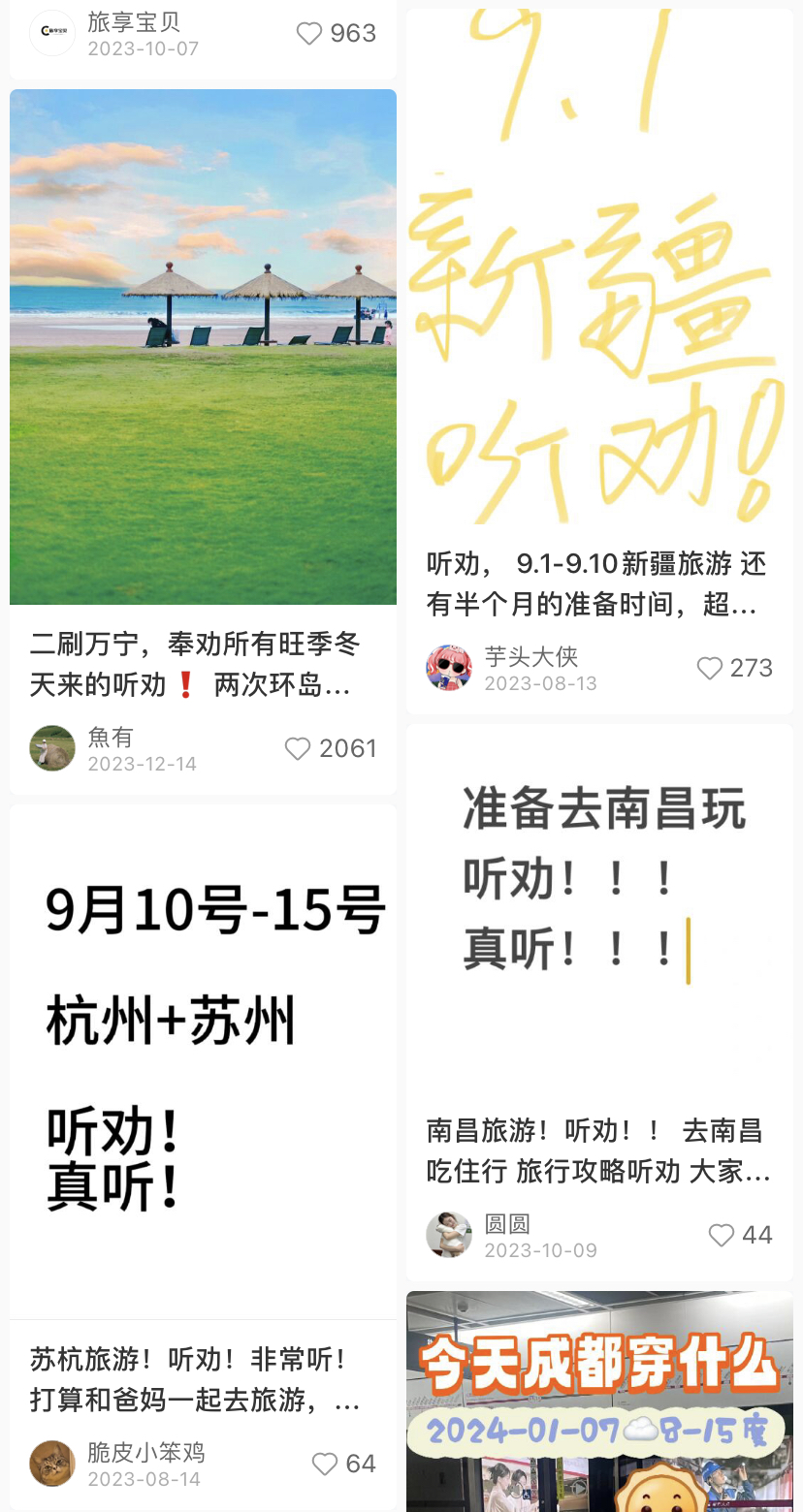
Travel-related ting quan posts
Ting quan-style travel comes in two types: posts soliciting advice from others and posts sharing helpful information about a specific travel destination.
Whether recommendations from locals or personal travel experiences, these sincere suggestions enable people to tailor their travel plans and steer clear of tourist traps.
Behind the trend
Chinese experts note that the trend has one interesting characteristic: Whereas in the past people sought out offline acquaintances for help when they encountered problems, today's youngsters often turn to strangers online.
"This is a manifestation of the transformation from strong to weak social connections, or more generally, from a society of acquaintances to that of strangers," said Liu Dong, associate professor at Renmin University of China in Beijing.
Young people are less familiar with people around them such as relatives and neighbors compared to their parents, so posting questions online becomes a more practical method for solving problems, said Liu, who studies communication psychology.
At first glance it can seem counter-intuitive for strangers to offer more useful help than acquaintances, Liu said. But classmates tend to work in the same field and friends often share similar values. "Consulting people around you is more like confirming biases than gaining fresh insight, especially in fields new to you."
Acquaintances might have limited experience of the given subject whereas the internet accommodates countless individuals with masses of relevant information. The value of these weak social connections is the sheer number, Liu said, noting that one question can garner millions of replies in an open discussion on social media platforms.
There is no doubt that social media makes it easier for people to forge weak ties, Liu noted. "Hiding one's identity frees users from stress and burden," he said, "Thus true thoughts are more likely to be heard."
These ting quan posts have empowered a more direct, effective and accurate connection, bypassing the need for small talk or cost-benefit analysis, he concluded. The kindness of strangers can be appreciated online by the humble posts seeking advice and the sincere answers.