


HARBIN, Jan. 25 (Xinhua) -- In the sprawling rice-packaging plant of Qiaofu Dayuan Agricultural Co., Ltd. in northeast China's Heilongjiang Province, robotic arms stack bags of premium rice ready for shipping to its customers.
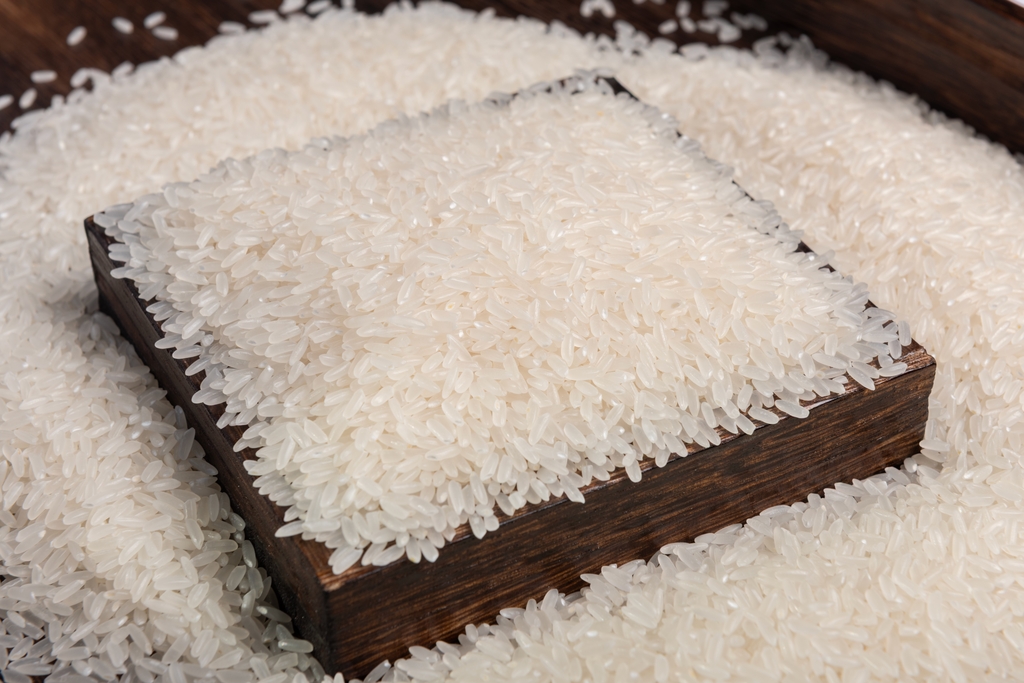
File photo: IC
Among hundreds of rice-producing firms in Wuchang, a city administered by Heilongjiang's capital of Harbin and regarded as Heilongjiang's premier area for growing high-quality rice, the firm is seen as a flagship company in the field of high-quality rice production.
Each of its rice bags carries a unique QR code. Scanning these codes, buyers can trace the whole journey of this rice, from seed breeding and planting to processing, storage and delivery to check whether all the specifications meet the custom criteria.
This system offers visible proof of rice quality, core to a growing trend, namely customized farming.
As a national agricultural powerhouse, Heilongjiang Province is leveraging its fertile black soil to advance customized agriculture, thereby transforming how food is grown, tracked and tailored for individual consumers and businesses.
Huang Changming, field manager of Qiaofu Dayuan Agricultural Co., Ltd., said 11,267 hectares of the company's 16,000-hectare rice fields across Wuchang's core rice zone have been especially designated for custom orders, mainly clients representing restaurant chains in the Yangtze River and Pearl River deltas in south and east China.
Each plot designated for custom orders bears a marker with the client's name. To ensure quality, the company has developed an ecological duck-rice farming standard, releasing 18 ducks per mu (about 0.06 hectares) to naturally control pests and weeds, paired with smart farming systems.
"Even in the winter offseason, we're preparing for spring planting and sourcing farm supplies," said Huang. "We keep refining field management to protect quality."
"Premium rice isn't just about taste. It is about the experience," said Qiao Wenzhi, head of the company, adding that by combining product customization with experiential value, the premium for their rice has risen by up to 40 percent.
Notably, the firm's contract-farming fields have also become a local tourism attraction and an agricultural education base.
The custom mode, meanwhile, is spreading into the livestock sector in Heilongjiang. At Heilongjiang Hei Zun Niu Industrial Management Group Co., Ltd. in Sunwu County, Angus cattle, listening to soothing music, are fed a nutrient-rich diet containing sea buckthorn pulp.
This beef supplier serves high-spending customers, chain restaurants and premium supermarkets, offering customized cuts via a fully tracked supply chain.
Its processing plant uses low-temperature slaughtering and precision cutting for steaks, rolls and more.
"We customize based on preferences for cut and marbling, and deliver via cold chain to lock in freshness," said Yue Yongchao, head of the company.
After surpassing 80 million tonnes in total grain production in 2024, Heilongjiang saw its 22nd bumper harvest with a record-breaking grain output reaching 82 million tonnes in 2025, marking its 16th straight year as the top grain-producing region in China.
To ensure consecutive high yields and enhance agricultural returns, the province has focused on innovating farming methods. As one of these endeavors, Heilongjiang's custom farming sector is scaling rapidly.
In 2025, the province had 310 agricultural businesses engaged in this agricultural mode, with 55 newly opened. The total area of implementation reached 92,467 hectares and sales hit 5.05 billion yuan (about 725 million U.S. dollars) last year, generating 1.35 billion yuan in additional income.
"Custom farming in Heilongjiang has evolved from fragmented experiments to organized, scaled and diversified development," said Peng Bo, head of the provincial agriculture department's custom farming task force.
He noted that the department is committed to expanding this agricultural development mode from rice to fresh corn, soybeans, seasonal fruits, vegetables, livestock and fishery products.