


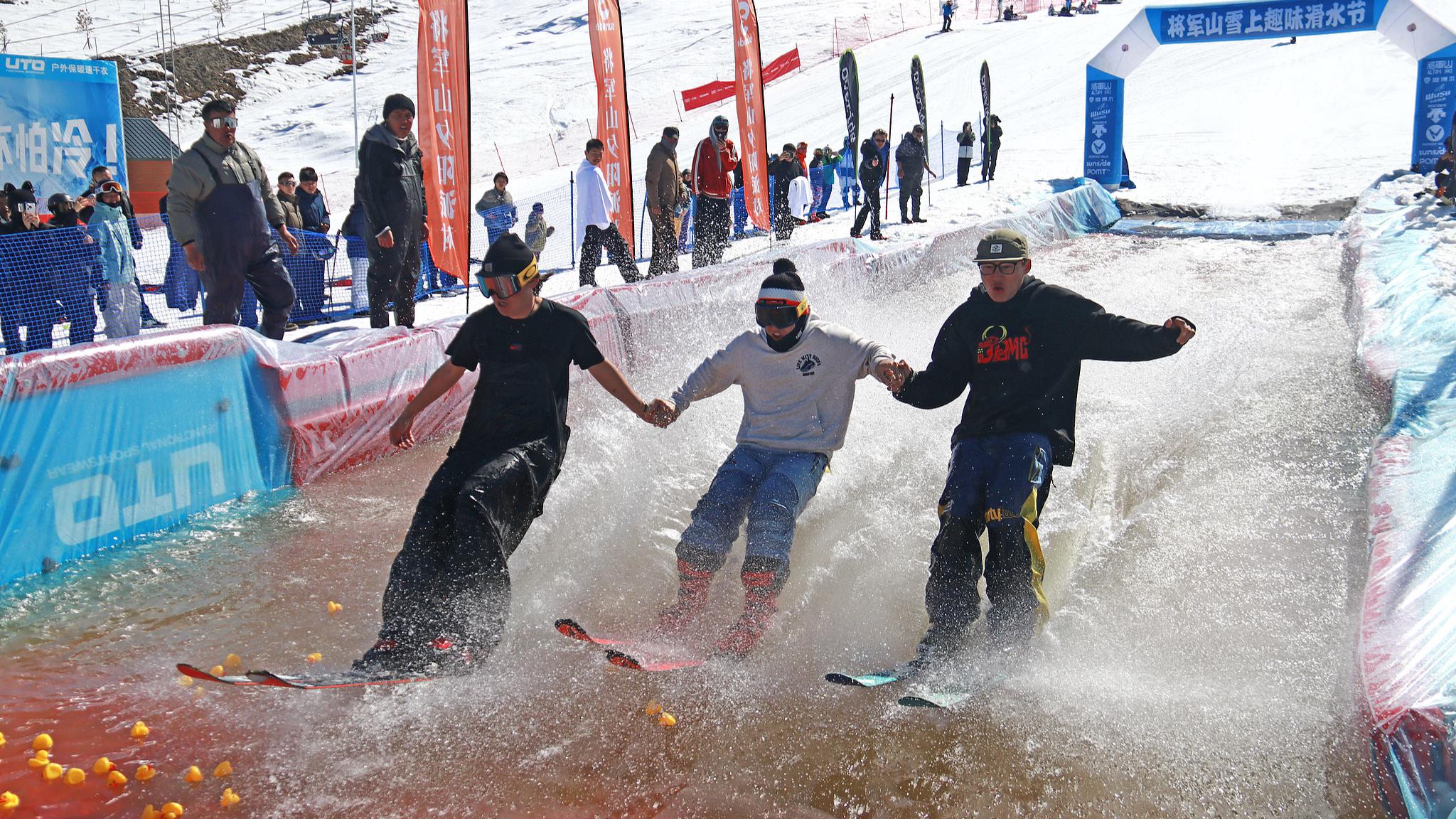
A waterskiing festival at the Jiangjunshan International Ski Resort in Altay, Xinjiang Uygur Autonomous Region, northwest China, March 29, 2025. (File photo: CFP)
Editor's note: Shang Jianglong is a special commentator on current affairs for CGTN. The article reflects the author's opinions and not necessarily the views of CGTN.
As dawn breaks over General's Mountain in the city of Altay in northern Xinjiang, skiers carve tracks through fresh snow – a dynamic scene mirroring the region's thriving ice-snow economy. By leveraging its unique snow resources, the region has turned "cold assets" into "hot growth" through innovative "ice-snow+" development models.
Unlocking ice-snow economic potential
Xinjiang, located in the "Golden Latitude Zone for Snow and Ice," is renowned for its long snow season, pristine snow, and dramatic ski trail elevation changes. Altay, dubbed the "cradle of human skiing," enjoys up to 210 snow-covered days annually with light, dry snow – earning the title "warm skiing destination." This unique endowment provides an unmatched foundation for developing Xinjiang's vibrant ice-snow economy.
Xinjiang hosts over 100 ski resorts, including six five-star and 10 four-star facilities. The Keketuohai International Ski Resort leads with a 240-day snow season and over 1,000-meter slope drop, making it the resort to open earliest in China. The Jiangjunshan International Ski Resort, an "urban ski destination," serves as Xinjiang's winter haven. Together, these top-tier resorts form the backbone of Xinjiang's ice-snow economy.
Business integration unleashes vitality
Xinjiang's ice-snow economy has transcended the boundaries of traditional skiing, integrating culture, tourism, sports, and education to create a full-chain, all-weather, multi-dimensional consumption ecosystem.
At the Jiangjunshan International Ski Resort, the "skiing + night economy" model has become a standout feature. Night skiing and activities like "sunset parties" extend operational hours, boosting consumption across catering, accommodation, and transportation.
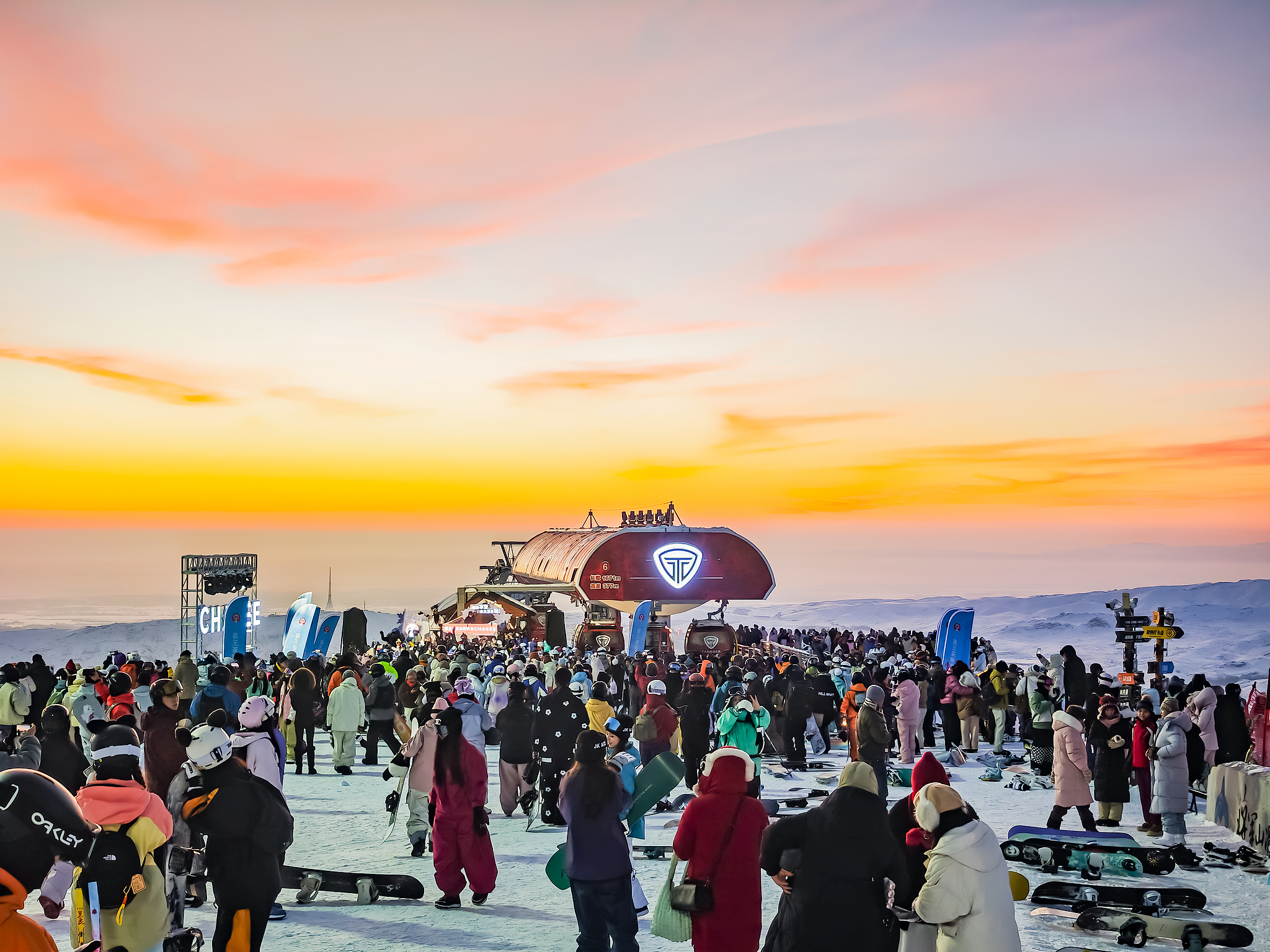
A sunset party at the Jiangjunshan International Ski Resort in Altay, Xinjiang, northwest China, December 22, 2025. (File photo: CFP)
This expanded spectrum of experiences – from snowmobiling and floating ice tours to ice entertainment in the Tianchi scenic area and winter fishing in Bosten Lake – has fundamentally shifted the tourism paradigm from passive observation to immersive engagement. This transformation has deepened the visitor's connection to the region and unlocked greater economic value.
Policy-driven upgrading
In late 2024, the regional government issued a plan for stimulating ice-snow economy through high-quality ice-snow sports development. The target is a 200-billion-yuan ($28.78 billion) ice-snow industry output by 2030 and making Xinjiang an internationally influential ice-snow economy leader.
Under policy guidance, Xinjiang's ice-snow economy surged. In the 2024-2025 snow season, premier S-level ski resorts received over 3.5 million visitors, a year-on-year increase of 10.22 percent, generating revenue of 844 million yuan ($121.47 million), a year-on-year increase of 39.13 percent.
Beyond tourism, the ice-snow economy has become a rural revitalization engine. In Pingxiliang, a village in regional capital Urumqi, farmers and herdsmen now work as ski resort trainer, or security staff, or run homestays and catering, achieving "employment at home" and improving livelihoods significantly.
Challenges and opportunities
However, despite its impressive progress, Xinjiang's ice-snow economy confronts persistent challenges. Besides inadequate systematic planning and homogenized offerings, resource integration and branding is weak and there is a shortage of skilled professionals.
Looking ahead, Xinjiang aims to create tailored experiences for diverse tourist segments, as well as improve service quality by modernizing facilities. This dual focus on optimization and innovation will be pivotal for sustained growth.
Xinjiang's ice-snow economy is charting a remarkable course of transformation. It has evolved from merely "generating revenue from snow" to strategically "forging value chains with snow," shifting from a monoculture of skiing to a vibrant, diversified "ice-snow+" ecosystem.
Now at a new historical juncture, Xinjiang's ice-snow economy is poised to reshape China's winter sports and tourism map through continued innovation, serving as a dynamic blueprint for high-quality, sustainable development.
(If you want to contribute and have specific expertise, please contact us at opinions@cgtn.com. Follow @thouse_opinions on X, formerly Twitter, to discover the latest commentaries in the CGTN Opinion Section.)