


As regional "Two Sessions" convene across China, provinces and municipalities are unveiling their economic growth targets and blueprints for 2026.
Major economic powerhouses have set their sights on moderate growth for the year. Beijing and Henan Province are aiming for around 5 percent growth. Chongqing, China's southwest municipality, is setting a regional GDP growth target of over 5 percent. Zhejiang has set its goal at 5-5.5 percent, while Guangdong, China's largest provincial economy for 37 years, targets a slightly more conservative 4.5-5 percent.
These targets are set against a backdrop of solid 2025 performances, with Henan (5.6 percent), Zhejiang (5.5 percent) and Beijing (5.4 percent) all outpacing the national average of 5 percent.

Sunset at the Central Business District of Beijing, China, January 7, 2026. (Photo: VCG)
Beyond GDP figures, strategic emerging industries are reshaping regional economies. In the 2026 Two Sessions, Beijing announced plans to vigorously advance key projects, including green and advanced energy, new energy vehicles, robotics and commercial spaceflight. The city also aims to cultivate emerging growth areas such as 6G, quantum technology and bio-manufacturing. In 2025, Beijing's humanoid robot industry accounted for about one-third of the national total.
As China's southeast powerhouse, Zhejiang Province will prioritize advanced manufacturing in 2026. It will support the cluster development of new materials, new energy, integrated circuits and other emerging sectors, targeting a share of about 35 percent for strategic emerging industries in the value-added of large-scale industries. The core digital economy industry is expected to grow by 7 percent.
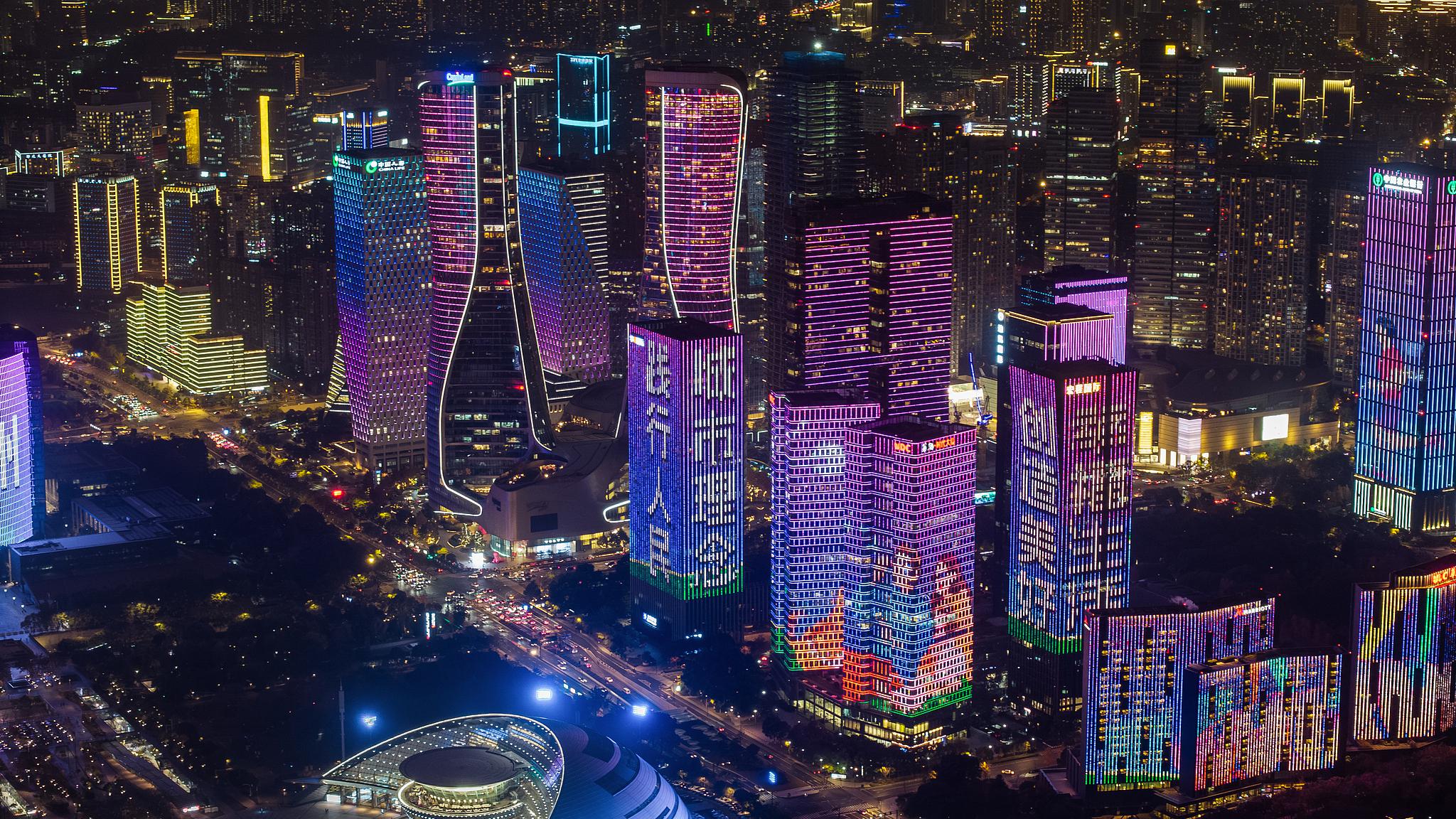
Night view of iconic buildings in Hangzhou, Zhejiang Province, China, December 9, 2025. (Photo: VCG)
Guangdong will further strengthen and expand key industries such as new energy, advanced materials, intelligent connected vehicles and smart robotics, while cultivating additional pillar industries. In 2025, the province produced 90 percent of China's drones and 40 percent of its industrial robots.
Chongqing will continue to prioritize the development of intelligent connected new energy vehicles, next-generation electronic information manufacturing, and advanced basic and new materials. Chongqing's intelligent new energy vehicle cluster saw output surge 13.4 percent in 2025, contributing over 60 percent to the city's industrial growth.