


Humanoid robots are becoming increasingly common at commercial events, corporate gatherings, and cultural celebrations throughout China. These versatile machines transition seamlessly between different roles, greeting guests one day and performing on stage the next. They are actively participating in short-term assignments, contributing to what is now known as the "robot gig economy."
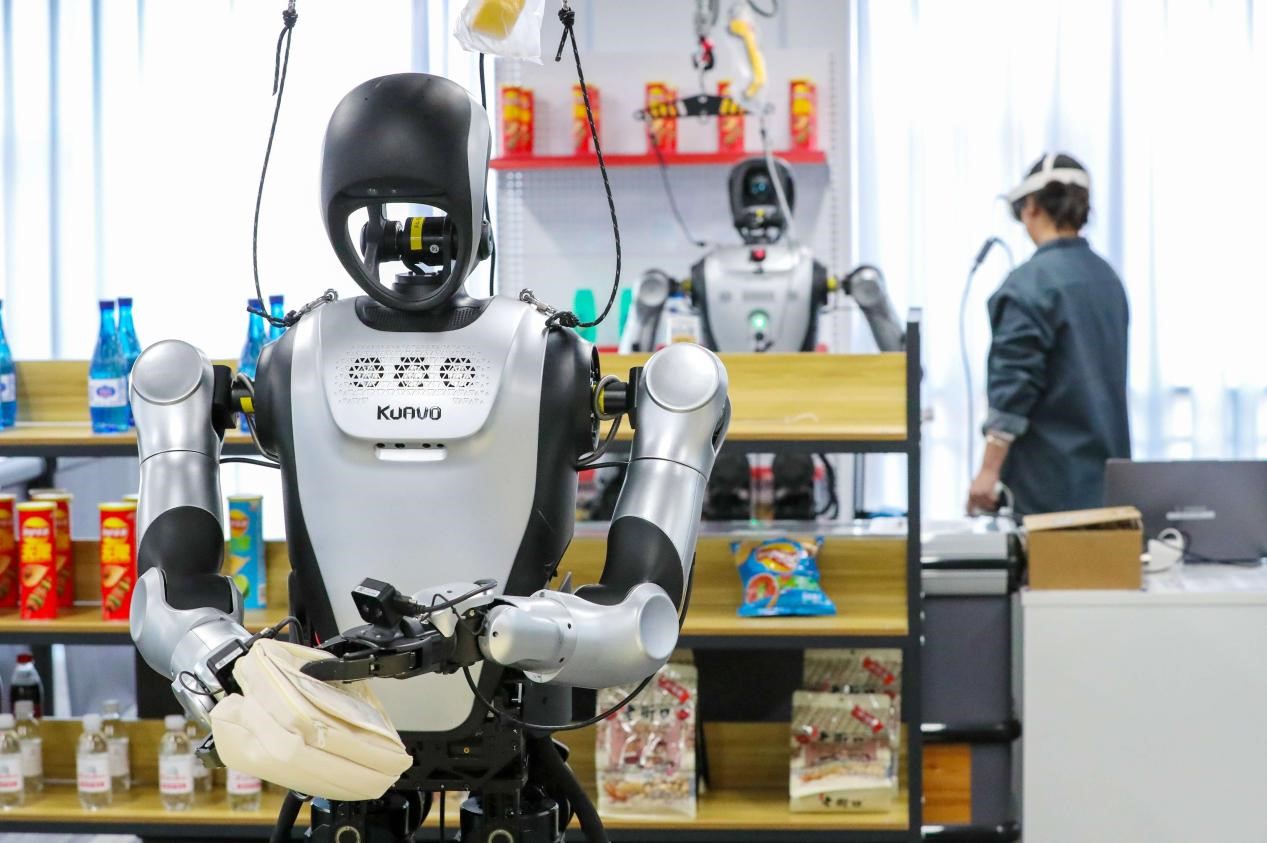
A humanoid robot learns how to stack shelves at a humanoid data collection and training base in Qingdao, Shandong Province, East China. (Photo: Zhang Jingang/People's Daily)
The introduction of specialized rental platforms has shifted this concept from a trial phase to a widely applicable model. Industry analysts note that this approach lowers adoption barriers, expands potential use cases and fosters improvements in product development, service standardization, and supply chain development, creating multiple emerging trends.
Robotics firms AgiBot and Flycode have jointly launched a rental platform featuring scenario-specific packages. A festive celebration bundle, priced at 2,500 yuan ($358.87) daily, includes two humanoid robots and a robotic dog for guest interactions and performances. Custom options are available for corporate events, mall promotions, sports competitions, trade shows, concerts and tourism services.
According to an AgiBot executive, current rentals focus on emotional engagement and interactive experiences, primarily to drive foot traffic, enhance live events and provide tech-themed activations. Market-based pricing ranges from hundreds to tens of thousands of yuan per day, depending on model and duration.
"Since the platform officially launched on December 22, 2025, it has quickly attracted more than 160,000 registered users. Daily order volumes have stabilized at over 200, and a significant surge is expected during the Chinese New Year period," the executive said.
Rental prices have decreased over the past year due to expanding provider networks. Typically, an on-site technical operator, usually one engineer per robot, supports deployments throughout engagements.
Hui Jianzhong, the general manager of a Shanghai-based robot rental company, reports that more than 95 percent of current demand is for short-term use.
"Most clients do not require permanent ownership," he explained.
"They are looking for impactful technology deployments for key moments and high-visibility events."
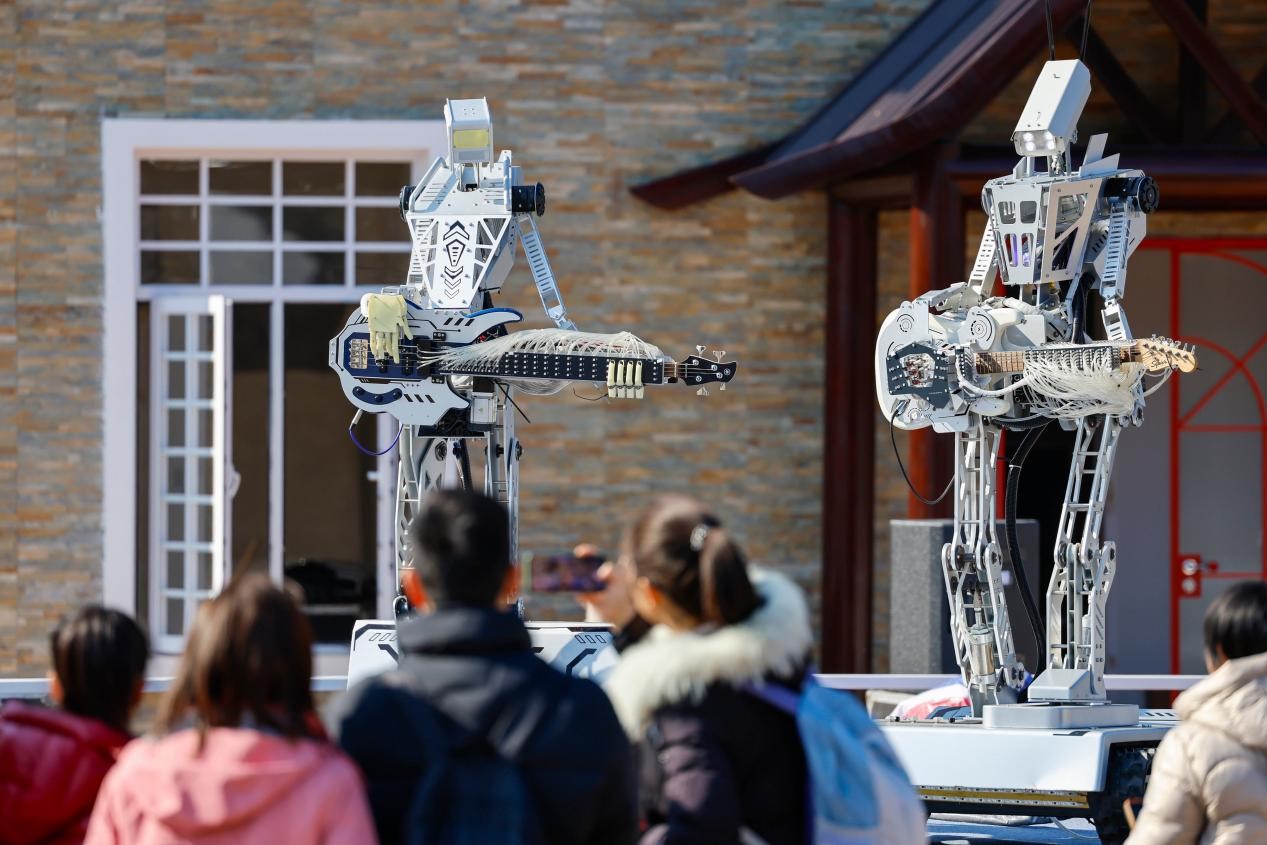
A robot band performs on stage in Shiqiao village, Huangshan, Anhui Province, East China. (Photo: Shi Yalei/People's Daily)
Among popular rental models, humanoid robots like the AgiBot X2 series—known for their interactive performance and futuristic design—are in high demand. Market feedback indicates that commercial clients particularly favor mid- to high-end models that rent for several thousand yuan per day. This preference stems from their well-rounded functionality and impressive visual appeal.
Industry projections suggest that China's humanoid robot rental market will reach at least 10 billion yuan by 2026.
"The robot gig economy represents a crucial pathway for embodied intelligence to achieve commercial scale," AgiBot's executive emphasized.
"It transforms high-value fixed assets into flexible on-demand services, significantly lowering usage barriers for enterprises, especially small and medium-sized businesses. Market demand for robots is real, application scenarios are expanding rapidly and the growth potential is enormous."
The rental model has found its earliest and most practical application in the entertainment and leisure sector. According to Zhang Lihua, Deputy Dean of the College of Intelligent Robotics and Advanced Manufacturing at Fudan University, robotic performances possess inherent visual appeal and strong potential for audience engagement. There is consistent, broad-based demand for such applications across scenarios, including concerts, film and television production, theme parks, commercial events and cultural tourism activities. This makes entertainment one of the most promising fields for humanoid robots to achieve a commercially sustainable model at present.
Zhang highlighted dual industry shifts: specialized firms are emerging to manage robot procurement, operations and service delivery, while rental demand is reshaping manufacturers' design priorities.
"Companies are increasingly focusing on scenario-specific capabilities rather than pursuing purely general-purpose humanoid robots," she observed.
The rental model itself is evolving from basic device leasing toward integrated solutions encompassing hardware, motion-skill packages, content choreography, operational support and safety management. This transition enables sustainable ongoing service rather than one-off deliveries.
"As robotics technology matures and hardware costs steadily decline," Zhang projected, "humanoid robots will expand into diverse fields, gradually transitioning from gig workers to permanent employees in the workforce."